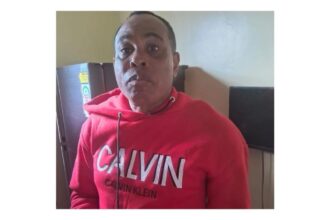
A sprawling international romance scam, allegedly orchestrated by Nigerian socialite and internet fraudster Nzube Henry Ikeji, has exposed how identity theft, emotional manipulation and digital deception were combined to defraud a Romanian woman of millions of dollars over several years.
Investigations by the Organised Crime and Corruption Reporting Project (OCCRP) revealed that Ikeji allegedly impersonated the Crown Prince of Dubai, Sheikh Hamdan Mohammed Bin Rashid Al Maktoum, to lure foreign women seeking companionship into fraudulent relationships. Using the prestige and global appeal of the Emirati royal family, the syndicate reportedly built trust, manufactured intimacy and ultimately siphoned vast sums of money from unsuspecting victims.
According to the investigation, Ikeji—known in elite Nigerian social circles and frequently photographed with influential figures such as businessman Obi Cubana and Grammy-nominated music star Davido—was at the centre of a network that specifically targeted vulnerable women overseas through professional and social networking platforms.
One of the victims, a Romanian woman identified only as Laura, said she was first contacted on LinkedIn about three years ago by a profile claiming to belong to the Dubai crown prince. At the time, the supposed royal presented himself as an investor interested in supporting humanitarian causes in Romania and sought her professional advice on foundations that could benefit from financial backing.
What began as a seemingly professional exchange gradually evolved into regular conversations and, over time, a deeply personal relationship. Laura told investigators that after years of constant communication, the relationship became romantic, with the impersonator discussing marriage and long-term plans.

Still posing as Sheikh Hamdan, Ikeji allegedly introduced Laura to a man described as his financial manager, one “Matthew Cros,” and asked her to meet him in London to discuss funding arrangements and the opening of a Barclays account in her name. Trusting the relationship she believed she had built with the crown prince, Laura agreed.
In London, she met Cros—later identified by British police as Martins Abhulimhen, a Nigerian socialite and philanthropist. Abhulimhen, who had previously run a non-governmental organisation known as the Jose Foundation, had been photographed with senior Nigerian political figures, including Senate President Godswill Akpabio and Lagos State Governor Babajide Sanwo-Olu.
During their meetings, Abhulimhen allegedly presented himself as a senior financial handler for the Emirati royals. To avoid suspicion, Laura discreetly brought a friend to some of the meetings, who secretly took photographs. Abhulimhen reportedly wore a taqiyah, a cap associated with Muslim men, raising questions later about whether the attire was part of a deliberate disguise to reinforce the illusion of royal affiliation.
Laura was later given login details for what she was told was an online investment account in her name. When she logged in, she saw a balance of approximately £202 million. Unaware that the account was allegedly fabricated and contained no real funds, she was informed that she needed to deposit £7,000 to unlock access and enable withdrawals.
Believing the amount to be insignificant compared to the vast sum displayed in the account—and after already wiring hundreds of thousands of dollars to the man she believed was a prince—Laura made the payment. Instead of gaining access, she was repeatedly asked to pay additional fees. Over time, these demands escalated, and Laura ultimately transferred an estimated £2.5 million in the belief that she was close to accessing the supposed £202 million.
Behind the scenes, the OCCRP investigation suggests that tensions were brewing among the alleged conspirators. Disputes reportedly arose over how to share the proceeds of the fraud, with Ikeji accused of growing increasingly greedy.
The scheme began to unravel when a man named James Patrick Normoyle, who claimed to be a financial adviser, contacted Laura. He warned her to stop sending money to anyone promising marriage and informed her that documents she had received—such as a so-called “pre-marital visitation acknowledgement form”—were fraudulent.
“He defrauded you of more than three million euros,” Normoyle bluntly told her in an email.
Further alarm bells rang when Abhulimhen, the same man she had met in London, sent Laura a message claiming she had been placed under an “African black magic” spell by the person impersonating the Dubai crown prince.
“African magic juju and voodoo he has used on you to make you believe he was a real prince to marry you,” he wrote via an encrypted messaging platform.
When Laura asked about the multimillion-pound account, Abhulimhen reportedly admitted it was fake, describing it as “a lie from the pit of hell.” Confronted with this information, Laura challenged the man she knew as Sheikh Hamdan. He dismissed the warnings, claiming that his advisers were conspiring to sabotage their relationship.
At that point, Laura realised she had been scammed. In emotional messages, she pleaded for a refund and demanded explanations. Feeling betrayed and desperate for answers, she returned to Normoyle and Abhulimhen for help. It was then, investigators say, that one of the conspirators revealed the true identity of the fake prince: Nzube Henry Ikeji.
The informant reportedly provided journalists with videos of Ikeji’s newly built home, information that helped investigators trace him to a lavish mansion in an upscale Abuja estate. OCCRP reporter Matt Sarnecki travelled to Nigeria, working alongside journalist Chikezie Omeje, to track down Ikeji.
Investigators found that Ikeji’s digital footprint openly displayed his wealth. His Instagram account featured images of luxury vehicles, expensive watches and international travel. He and his wife, Confidence Amara Ikeji, were frequently seen vacationing abroad and flying business class. In one video, the couple shopped at a Louis Vuitton store in the UK, posing with designer bags and wearing fur clothing.
Ikeji reportedly owned high-end vehicles including a Lexus 570 and a 2020 Range Rover Vogue, as well as luxury watches such as a Hublot. His flamboyant display of wealth earned him the nickname “Access Money” among associates.
An Igbo man by origin, Ikeji also held traditional titles, including Sarkin Gabas Matasan of Nasarawa and Ojichukwu Ndi Igbo na South East, conferred in 2024.
While investigations continue, the case underscores the sophistication of modern romance scams and how social status, digital tools and emotional manipulation can be weaponised across borders—often with devastating financial and psychological consequences for victims.