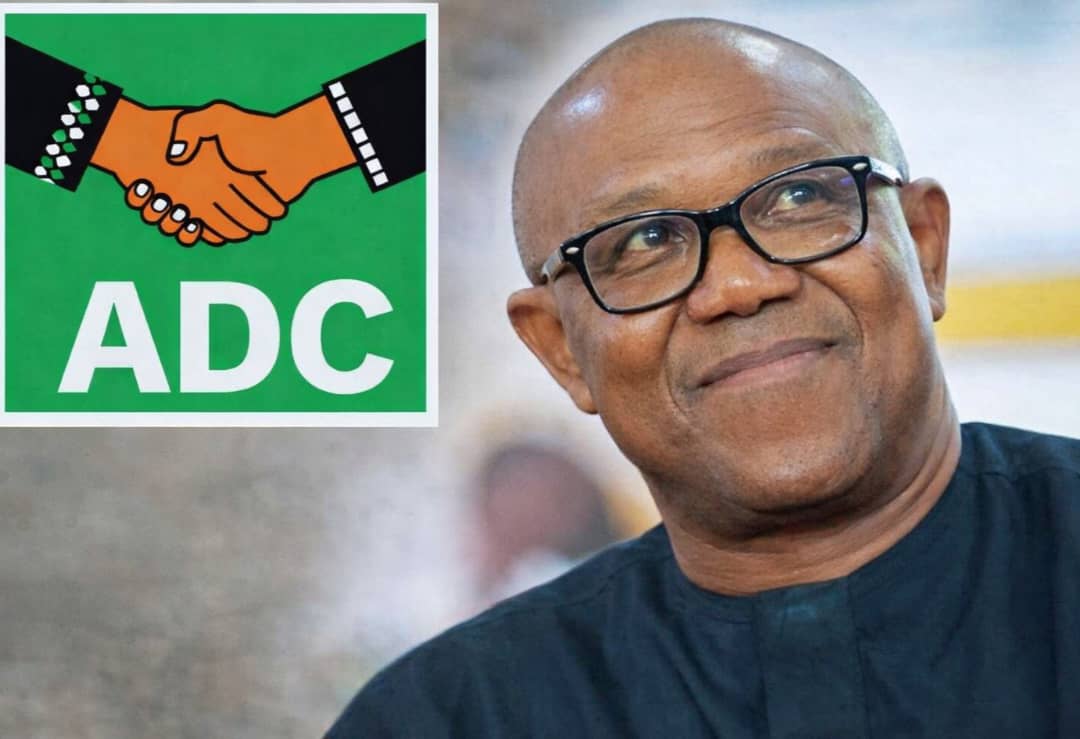
African Democratic Congress presidential aspirant and former Governor of Anambra State, Peter Obi, has strongly criticised the Federal Government over reports that it spent about $9 million on a public relations and lobbying contract in the United States, describing the move as a tragic reflection of Nigeria’s misplaced priorities and leadership failures.
In a statement released on Thursday, Obi expressed deep concern that public resources continue to be channelled into what he described as waste, propaganda, and image laundering, while critical sectors that directly affect the wellbeing of Nigerians remain grossly underfunded and neglected.
According to him, the reported expenditure of $9 million of taxpayers’ money on lobbyists in Washington is not only indefensible but also emblematic of a broader culture of waste and corruption that has undermined Nigeria’s development for decades.
Related posts:
- PDP Slams Tinubu Government Over Controversial $9m US Lobbying Contract, Questions Transparency and Priorities
- Reps condemns U.S. bill alleging genocide against Christians in Nigeria
- OmoBarca congratulates Ajeromi Ifelodun constituents on Nigeria’s 65th Independence Anniversary, hails Peter Obi for visit to Trade Fair Complex
- FOSAD condemns exclusion of South-East & South-South in President Tinubu’s US–Nigeria Security Working Group, demands immediate reconstitution
“It is both tragic and deeply concerning that our leaders continue to prioritise waste, corruption, propaganda, and the promotion of false narratives over investments that would genuinely improve the lives of Nigerians,” Obi said.
He argued that the reported $9 million contract represents only a fraction of similar expenditures globally, all of which contribute to what he described as the disgraceful state of the nation. For Obi, the issue is not merely about one contract but about a long standing pattern of governance that favours image management over real development.
The former governor linked the expenditure to Nigeria’s poor performance on key development indicators, particularly the Human Development Index, which measures life expectancy, education, and per capita income. He noted that Nigeria has remained trapped in the low human development category for 35 consecutive years, from 1990 to 2025, without meaningful progress.
Obi contrasted Nigeria’s stagnation with the trajectory of countries such as China and Indonesia, which were in comparable positions decades ago. He recalled that in 1990, Nigeria’s per capita income was about three times higher than that of China. Yet, while Nigeria has remained in the low development bracket, China and Indonesia have steadily advanced, moving from low to medium, and now into the high human development category.
According to him, the success of these countries did not come by chance or through miraculous interventions, but through deliberate choices, sound prioritisation, and leadership that focused on long term development rather than short term political gains.
“These outcomes are not a function of fate, miracles, or natural endowments,” Obi stated. “They are the result of choices, and the cumulative impact of good or bad leadership over time. Development is about priorities.”
Using the $9 million expenditure as a case study, Obi examined Nigeria’s failures across the three core components of the Human Development Index. On health, he said Nigeria’s situation is alarming, noting that the country now ranks among those with the lowest life expectancy in the world. He also pointed out that Nigeria is one of the top two countries globally in maternal mortality, making childbirth an increasingly dangerous experience for Nigerian women.
He questioned the logic of spending approximately ₦14 billion, the naira equivalent of the $9 million, on foreign lobbyists while hospitals across the country lack basic equipment, drugs, and infrastructure needed to save lives.
“Instead of investing in life saving systems and strengthening our healthcare institutions, we spend millions trying to cover up our failures,” he said.
To further illustrate his point, Obi highlighted budgetary allocations to Nigeria’s major teaching hospitals, which serve as the backbone of the country’s healthcare system. Drawing from the 2024 capital budget, which remains in operation, he listed allocations to six teaching hospitals, one from each geopolitical zone.
According to him, the University College Hospital, Ibadan, received ₦2.67 billion; Ahmadu Bello University Teaching Hospital, Zaria, ₦2.46 billion; University of Nigeria Teaching Hospital, Enugu, ₦2.8 billion; University of Benin Teaching Hospital, Benin City, ₦2.43 billion; University of Ilorin Teaching Hospital, Ilorin, ₦1.16 billion; and University of Maiduguri Teaching Hospital, Maiduguri, ₦2.37 billion. The combined total, he noted, was ₦13.9 billion.
Obi stressed that the $9 million reportedly spent on public relations abroad could have funded the entire 2024 capital budgets of these premier medical institutions. He argued that such an investment would have had immediate and tangible benefits, including improved survival rates, better quality of care, enhanced training for medical professionals, and ultimately, longer life expectancy for Nigerians.
“This amount is enough to fund the capital budget of at least one major teaching hospital in each zone of the country,” he said. “The funds exist. What is lacking is prioritisation, discipline, and leadership.”
Beyond healthcare, Obi said the same resources could have been deployed to strengthen education, reduce poverty, and address other structural challenges facing the country. He maintained that Nigeria’s poor global image is not a result of inadequate public relations but of the lived experiences of its citizens, including failing hospitals, deteriorating schools, unemployment, and widespread poverty.
“No amount of foreign lobbying can hide the reality on the ground,” he said. “A nation’s image is shaped by the wellbeing of its people, not by paid narratives abroad.”
The former presidential candidate described the situation as unacceptable, insisting that every naira of public money must work for the Nigerian people. He lamented that while citizens die in under equipped hospitals, the government continues to allocate scarce resources to what he described as cosmetic solutions.
“We cannot continue to live in an illusion while our reality keeps deteriorating,” Obi said. “The constant prioritisation of trivial matters over life saving and development oriented investments must come to an end.”
He called for a fundamental shift in governance philosophy, urging leaders to focus on measurable outcomes in health, education, and economic empowerment. According to him, Nigeria’s challenges are not insurmountable, but overcoming them requires courage, integrity, and a commitment to prudent management of public resources.
Obi concluded by reaffirming his belief that meaningful change is possible if the country adopts a new approach to leadership and public spending.
“A New Nigeria is possible,” he said, stressing that such a future can only be achieved when leaders choose service over self interest and development over propaganda.