The Chief Executive Officer of the Nigerian Midstream and Downstream Petroleum Regulatory Authority (NMDPRA), Engr. Farouk Ahmed, has rejected allegations questioning the source of funds used to educate his children abroad and casting doubts on his integrity in office, describing the claims as misleading, incomplete and taken out of proper context.
In a detailed statement issued in response to the allegations, Ahmed said he was compelled to address the matter not out of fear of scrutiny but to provide clarity grounded in his more than three decades of service in Nigeria’s petroleum sector.
“These allegations necessitated this response, not because I fear scrutiny of my finances, which I welcome, but because the timing and nature of these claims demand context that only three decades of public service can provide,” he said.
Ahmed traced his professional career to 1991, noting that his progression through the ranks of the petroleum industry was based on merit, competence and technical expertise rather than political patronage. According to him, his experience cuts across technical operations, crude oil marketing, gas supply monitoring and downstream regulation.
“I spent my formative years in the technical divisions, where decisions are measured not by political expediency but by engineering precision and market realities,” Ahmed stated, adding that his decisions in office have consistently been guided by what he described as the national interest.
He recalled his appointment as General Manager of the Crude Oil Marketing Division in 2012 and his elevation to Deputy Director in 2015, before being named Chief Executive of the NMDPRA in 2021. Ahmed said he assumed office at a critical moment, when the Petroleum Industry Act (PIA) was being implemented, a reform he acknowledged would inevitably face resistance due to its emphasis on transparency and accountability in a sector historically plagued by opacity.
Addressing the specific allegations relating to his children’s education, Ahmed dismissed claims that he spent up to five million dollars on schooling in Switzerland as grossly exaggerated. He explained that three of his four children benefited from merit-based scholarships covering between 40 and 65 per cent of tuition costs, stressing that these claims are verifiable.
“Three of my four children received substantial merit-based scholarships ranging from 40 per cent to 65 per cent of tuition costs. Verifiable information is available to any authorised investigation,” he said.
Ahmed further disclosed that additional financial support came from his late father, a Northern Nigerian businessman, while the remainder was funded from personal savings accumulated over his long career.
“When scholarships, family contributions and my own savings accumulated over three decades are properly accounted for, my personal financial obligation was entirely consistent with someone of my professional standing and length of service,” he added.
The NMDPRA chief also clarified that his annual compensation, estimated at about N48 million including allowances, is publicly documented. He said he has consistently complied with asset declaration requirements, submitting detailed declarations to the Code of Conduct Bureau throughout his career.
Ahmed linked the resurfacing of the allegations to recent regulatory actions taken by the authority, suggesting that vested interests affected by reforms may be behind the claims.
“These allegations resurface precisely when NMDPRA has enforced quality standards revealing substandard petroleum products in the market, implemented stricter licensing requirements, and insisted on transparent pricing mechanisms that eliminate opacity benefiting certain market players. This timing is not coincidental,” he said.
He defended the authority’s decision to issue fuel import licences, arguing that such actions are in line with Section 7 of the Petroleum Industry Act, which mandates the regulator to ensure supply security and prevent scarcity.
“Granting import licences when domestic supply proves insufficient is not sabotage; it is our legal duty,” Ahmed stated.
In a move he described as an affirmation of transparency, Ahmed formally invited investigations into his finances and professional conduct. He called on the Code of Conduct Bureau to review all his asset declarations dating back to 1991, urged the Economic and Financial Crimes Commission to examine his financial transactions, and asked the National Assembly to exercise its oversight functions.
“I will cooperate fully, provide all documentation, and answer all questions under oath if required,” he said.
He concluded by reiterating his commitment to regulatory independence and integrity, stressing that his record would withstand any credible inquiry.
“Three decades of service to Nigeria’s petroleum sector have taught me that integrity is tested not in comfortable moments but when powerful interests demand compromise. Investigate thoroughly, examine every claim, scrutinise every transaction. My record, both financial and professional, will withstand any legitimate inquiry,” Ahmed said.
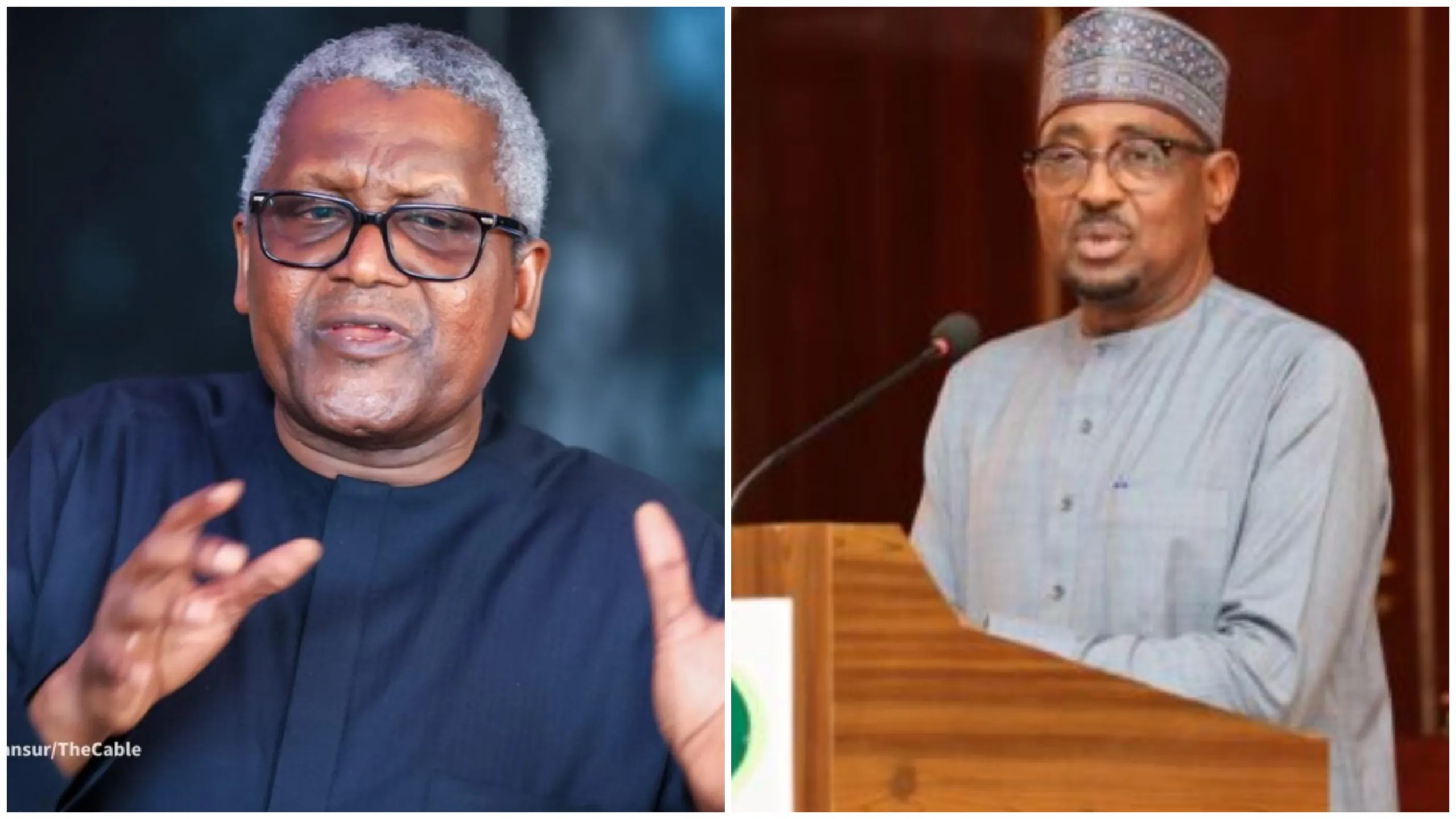
Meanwhile, the allegations against Ahmed were formally escalated following a petition by Aliko Dangote, President and Chief Executive Officer of the Dangote Group, to the Independent Corrupt Practices and Other Related Offences Commission (ICPC).
In the petition dated December 16 and addressed to the ICPC Chairman, Musa Adamu Aliyu (SAN), Dangote accused the NMDPRA boss of corruption, abuse of office and illicit enrichment, calling for his arrest, investigation and prosecution.
Dangote alleged that Ahmed spent more than seven million dollars on the education of his four children in Switzerland, with tuition reportedly paid upfront for six years. He argued that such expenditure could not be justified by the cumulative earnings of a career public servant.
The billionaire businessman provided details of the schools attended and the amounts allegedly paid, urging the ICPC to verify the claims, which he described as clear evidence of corrupt enrichment.
Dangote further accused Ahmed of abusing his office by diverting public funds for personal use and turning the regulatory authority into a tool for private interests, particularly through the continued issuance of fuel import licences, which he claimed undermined local refining.
“It is without doubt that the above facts in relation to abuse of office, breach of the Code of Conduct for public officers, corrupt enrichment and embezzlement constitute gross acts of corruption,” Dangote stated in the petition.
He urged the ICPC to act in line with Section 19 of the ICPC Act, which prescribes a five-year jail term without an option of fine for such offences, and said he was prepared to appear before investigators with documentary evidence to substantiate his claims.
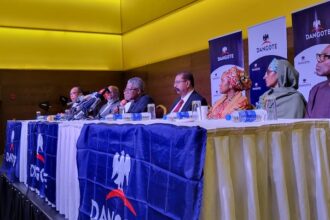
Dangote had first raised the allegations publicly during a media interaction at the Dangote Refinery in Lekki, Lagos, where he questioned Ahmed’s source of wealth and criticised the regulator’s policies.
“Nigerians deserve to know the source of these sums of money paid by a public officer while many parents in his home state of Sokoto cannot afford N10,000 school fees for their children,” Dangote said.
As investigations are awaited, the controversy has intensified debate over regulatory independence, transparency and accountability in Nigeria’s petroleum sector.