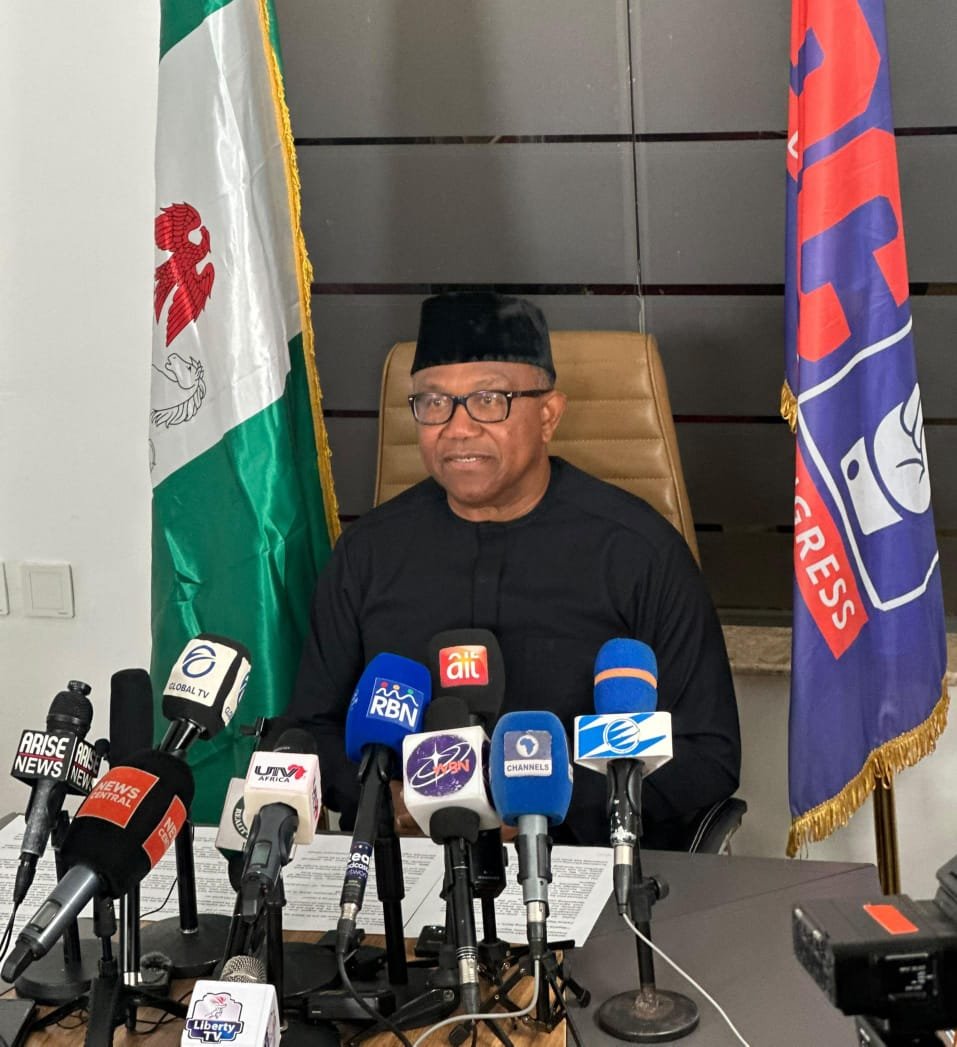
Former Anambra State Governor and presidential candidate Peter Obi has called on Nigerians to use the 66th Independence anniversary to reflect honestly on the country’s journey since 1960 and confront the challenges preventing Nigeria from achieving its full potential.
In an Independence Day message to Nigerians, Obi said October 1 should not only be a day of celebration and thanksgiving but also an opportunity to examine the nation’s progress, acknowledge its shortcomings and determine how to build a more prosperous and secure future.
He said Nigeria remained richly endowed with human and natural resources, agricultural potential and other advantages that should position the country for sustainable development.
According to him, Nigerians should also remember the country’s founding fathers and others who made significant sacrifices for the birth, survival and development of the nation. He added that the contributions of past and present leaders, despite their imperfections, should be recognised.
Obi, however, stressed that Independence anniversaries should go beyond ceremonies and celebrations.
He said every serious nation must periodically ask three fundamental questions: “Where are we today? Where do we want to be? How do we get from where we are to where we want to be?”
He argued that these questions had become particularly urgent because of the difficulties confronting Nigerians across several sectors.
According to Obi, despite the promises made by the APC-led administration during the 2023 election campaign, millions of Nigerians continue to experience poverty, insecurity, hunger, unemployment and limited access to essential social services.
He cited what he described as alarming figures across several areas of national development.
Obi said more than 140 million Nigerians were living in poverty and severe hardship, while more than 18 million children were out of school, leaving Nigeria with one of the world’s largest populations of out-of-school children.
He also expressed concern over persistent insecurity, including terrorism, banditry and kidnapping, which he said continued to threaten lives and livelihoods.
Referring to the recent deaths of 37 young Nigerians, Obi said the loss underscored the devastating consequences of insecurity on the nation’s productive population.
He further warned that food insecurity was worsening, projecting that more than 40 million Nigerians could face extreme hunger by the end of 2026.
The former governor also highlighted Nigeria’s maternal and infant mortality rates, youth unemployment and underemployment, drug abuse and low life expectancy as major indicators of the country’s development challenges.
He said more than 35 million young Nigerians were affected by unemployment and underemployment, while drug abuse and substance misuse were increasingly threatening the country’s youthful population.
Obi cited a drug-use rate of about 14 per cent in Nigeria, compared with a global average of approximately six per cent, and said Nigeria’s life expectancy of about 54 years remained significantly below the global average of 74 years.
Against this backdrop, Obi called for sober national reflection, questioning whether Nigeria’s difficulties were the result of fate or the consequences of choices and failures that had been tolerated over the years.
He rejected the idea that Nigeria was a cursed nation, arguing instead that the country was richly endowed but had failed to translate its resources into human development, productivity, security and shared prosperity.
Obi said the country’s greatest challenge was therefore not a shortage of resources but the failure to effectively manage and deploy those resources for the benefit of citizens.
He disclosed that he and former Kano State Governor Rabiu Kwankwaso had recently returned from a two-day visit to Sokoto State, where they held consultations with residents on insecurity, poverty, out-of-school children, youth unemployment, drug abuse and other challenges.
According to Obi, the most disturbing part of the visit was their trip to the Internally Displaced Persons camp at Ramin Kura in Sokoto metropolis.
He said thousands of women and children were living in difficult conditions after being forced from their communities by insecurity.
Many of the displaced children, he noted, lacked access to education, while mothers and children faced limited access to basic healthcare.
Obi argued that these Nigerians should be living in their communities, attending school, farming their land, running businesses and contributing productively to the national economy.
Instead, he said, they had become internally displaced persons in their own country.
He maintained that Nigeria’s 66th Independence anniversary should therefore serve as a reminder of the urgent need to change the country’s development trajectory.
For Obi, the anniversary presents an opportunity for Nigerians to look beyond celebration, honestly assess the nation’s present condition and develop practical strategies for transforming Nigeria’s enormous potential into improved living standards, security, education, healthcare, employment and economic opportunity.
He urged Nigerians to honour the sacrifices of the nation’s founders by committing themselves to building a country that delivers greater prosperity, dignity and opportunity for its citizens.