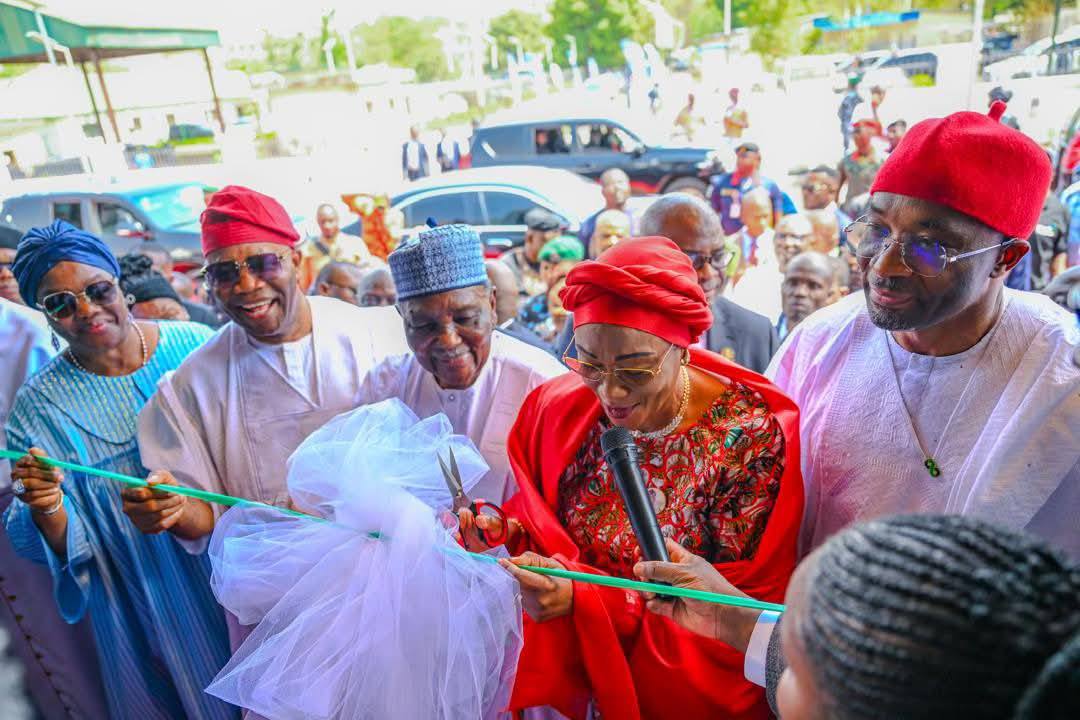
Lawmakers at the National Assembly of Nigeria witnessed what was widely described as a historic milestone with the formal commissioning of the institution’s first Christian Chapel by the First Lady, Oluremi Tinubu, CON.
The event drew members from both chambers of the federal legislature, senior government officials, and distinguished guests, marking the culmination of years of advocacy and planning within the parliamentary community. Among those present was the Deputy Speaker of the House of Representatives, Benjamin Okezie Kalu, who described the moment as a significant spiritual and institutional development for Nigeria’s highest lawmaking body.
In his remarks, Kalu reflected on the weighty responsibility borne by lawmakers entrusted with shaping laws and policies for a nation of over 200 million people. He stated that beyond constitutional authority and legislative procedure, there must remain a consciousness of divine accountability.
“As lawmakers entrusted with the responsibility of making laws for over 200 million Nigerians, we must remain conscious of our duty to serve under the authority of the Almighty,” he said. “It is His guidance that gives meaning and direction to every human institution.”
Kalu emphasized that the establishment of the Chapel within the National Assembly complex is not merely symbolic but foundational — a reminder that governance, at its core, must be anchored in moral clarity, humility, and service. According to him, the Chapel will serve as a place of reflection, prayer, and spiritual renewal for lawmakers navigating the complexities of national leadership.
The Deputy Speaker also paid tribute to the perseverance and commitment of the Christian Legislators Fellowship, whose sustained advocacy across multiple legislative tenures made the project possible. He acknowledged the foundational efforts of members of the 7th, 8th, and 9th Assemblies who conceived the vision and worked steadily to bring it to fruition.
He noted that institutional change often requires continuity of purpose beyond a single legislative cycle, praising past Assemblies for laying the groundwork and maintaining focus despite competing priorities. Their sacrifices, he said, ensured that the vision of a Christian worship space within the federal legislature was not abandoned.
Kalu extended special appreciation to Nigeria’s former Head of State, Yakubu Gowon, GCFR, who graced the commissioning ceremony. He described Gowon’s presence as deeply symbolic, given the former leader’s longstanding advocacy for national unity, reconciliation, and faith-based engagement in governance.
The commissioning ceremony also underscored the leadership role of the current 10th National Assembly in completing the project. Kalu commended the Senate President, Godswill Akpabio, GCON, and the Speaker of the House of Representatives, Tajudeen Abbas, GCON, for their commitment to ensuring that the long-standing vision became a reality.
He described the 10th Assembly’s action as the fulfillment of an institutional promise conceived years earlier. According to him, history will record that this generation of lawmakers did not abandon the aspiration but carried it through to completion.
“This Assembly has fulfilled a vision conceived years ago,” he said. “History will record that this generation, this legislature, and this administration did not abandon the vision but fulfilled it.”
Observers note that the establishment of the Chapel reflects broader efforts within the National Assembly to provide structured spaces for spiritual engagement among lawmakers, complementing existing facilities for other faith traditions within the legislative complex. The development is seen as part of a continuing commitment to religious inclusivity and accommodation within Nigeria’s pluralistic democracy.
Supporters argue that such spaces foster moral introspection and reinforce ethical leadership, particularly in an era when public trust in institutions is often tested. For many legislators present, the Chapel stands as a tangible reminder that governance must be exercised with integrity and reverence for higher principles.
Kalu concluded his remarks by stressing that the Chapel’s significance transcends the present moment. While it is now part of the National Assembly’s physical and historical landscape, he said its true value lies in its enduring role in shaping the character of future leaders.
“This Chapel belongs not only to history but to the future,” he declared, underscoring its intended legacy as a place where conscience, faith, and public duty intersect.
The commissioning ceremony ended with prayers and expressions of gratitude, marking what participants described as both a spiritual and institutional landmark. As the 10th National Assembly continues its legislative agenda, the newly inaugurated Chapel now stands within the complex as a permanent fixture — a symbol of continuity, faith, and the enduring relationship between moral conviction and public service in Nigeria’s democratic journey.