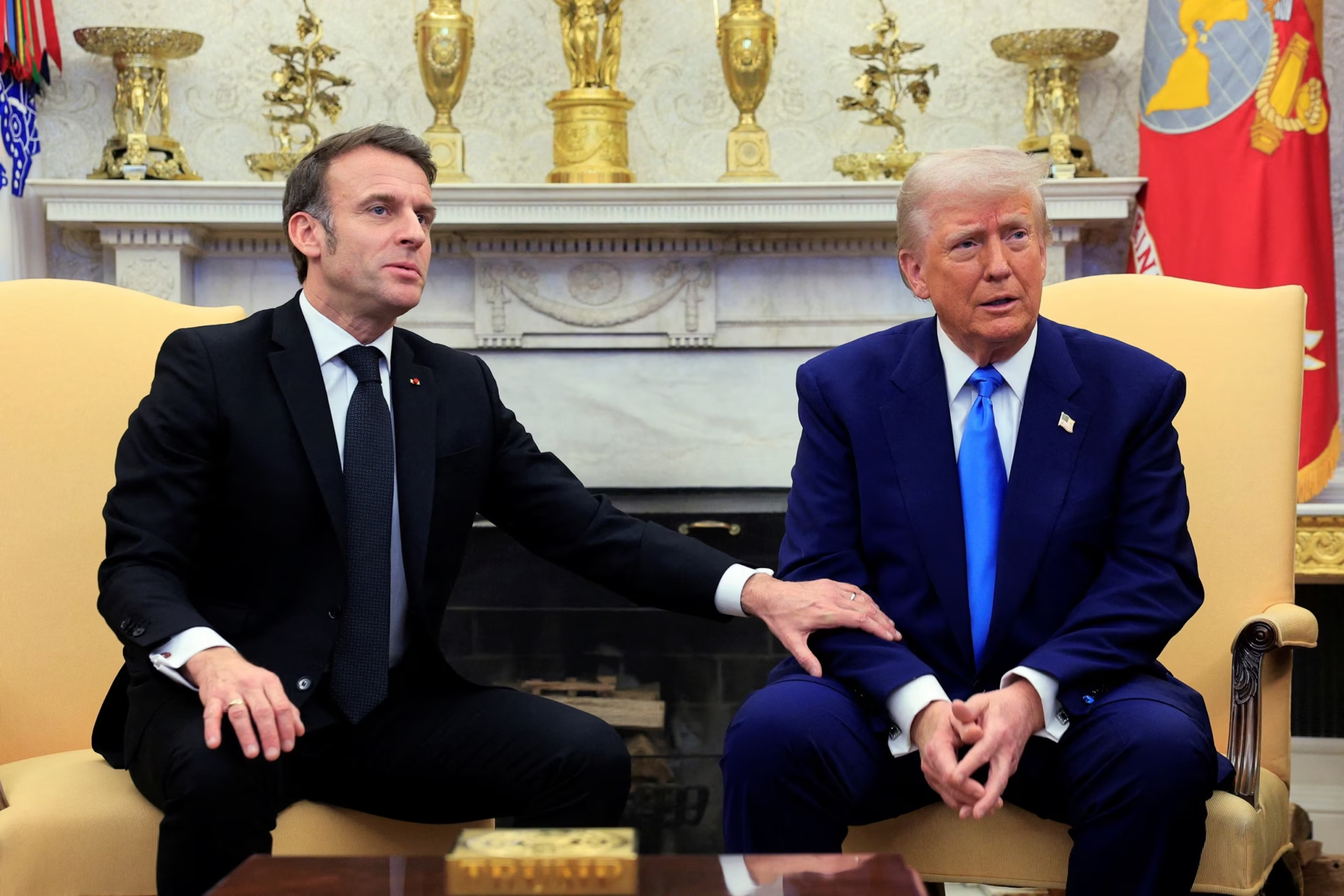
French President Emmanuel Macron has responded to recent mocking comments made by U.S. President Donald Trump, choosing restraint over confrontation and emphasizing the need for global leaders to focus on more pressing international challenges.
Breaking his silence during an interview broadcast on Thursday night, Macron addressed the controversy in measured terms, making it clear that he would not be drawn into a public exchange of insults. Speaking in French, he described the remarks attributed to Trump as lacking substance and falling below the level expected of leaders on the global stage.
“Listen, I’m not going to respond. We are dealing with matters that are far too serious. We are talking about war,” Macron said, setting the tone for a response that shifted attention away from personal attacks and toward broader global concerns.
Rather than engage directly with the content of Trump’s comments—some of which reportedly touched on Macron’s personal life—the French president used the moment to highlight the gravity of ongoing conflicts around the world. He stressed that global leaders have a responsibility to address issues that directly affect millions of people, rather than diverting attention to what he characterized as trivial or inappropriate commentary.
Macron underscored the human cost of current conflicts, pointing to the lives lost and the suffering endured by civilians caught in war zones. “We are talking today about men and women at war, about civilians who are being killed,” he said, reinforcing his view that the focus of international discourse should remain on humanitarian and security challenges.
Beyond the immediate human toll, Macron also highlighted the economic ripple effects of these conflicts. He noted that both Europe and the United States are grappling with rising energy costs, inflationary pressures, and broader economic instability linked to geopolitical tensions.
“We are also talking about the consequences of this war on our economies,” he added, suggesting that the stakes are global and interconnected.
Macron’s remarks were also a subtle critique of the tone and substance of Trump’s earlier statements. Without repeating the comments, he dismissed them as neither “elegant” nor appropriate for the office of a world leader. “The words I heard are not up to the mark. They do not deserve a response,” he said, signaling his decision to rise above the controversy.
The exchange follows a viral video in which Trump reportedly mocked Macron and made disparaging remarks about his wife, Brigitte Macron. The comments revived a controversial moment from 2025 that had previously attracted widespread media attention.
The incident in question occurred during an official visit to Hanoi, Vietnam, where footage showed Brigitte Macron placing her hands on the French president’s face in a gesture that some interpreted as a shove. The clip quickly circulated online, sparking speculation and debate.
At the time, Macron dismissed the moment as harmless, explaining that it was a private joke between him and his wife. The French presidency also downplayed the incident, describing it as a display of “complicity” that had been misinterpreted when taken out of context.
Despite these explanations, the episode has lingered in public discourse and has periodically resurfaced, most recently following Trump’s renewed comments.
In addition to the personal remarks, Trump reportedly questioned France’s commitment to international security efforts. He claimed that Macron had declined a request to deploy French naval forces to the Gulf region—an assertion that has not been independently confirmed.
While Macron did not directly address this claim, his broader comments suggested a desire to move beyond political point-scoring and toward constructive engagement on global issues.
Central to his message was a call for de-escalation, particularly in regions experiencing active conflict. Macron urged world leaders to prioritize ceasefires and the resumption of diplomatic negotiations, arguing that prolonged hostilities only deepen human suffering and economic disruption.
“What needs to be done is to act for de-escalation, for a ceasefire, and for the resumption of negotiations,” he said. “All of us are victims of the consequences of this war.”
His remarks reflect France’s longstanding position in favor of multilateral diplomacy and conflict resolution, as well as its efforts to play a mediating role in international crises.
Analysts say Macron’s response illustrates a deliberate strategy to maintain diplomatic decorum while reinforcing France’s image as a serious global actor. By refusing to engage in a personal dispute, he positioned himself as focused on substantive issues rather than political theatrics.
At the same time, the episode highlights the increasingly blurred lines between politics and media in the digital age, where viral clips and personal remarks can quickly overshadow policy discussions.
For many observers, the contrast between the two leaders’ approaches underscores broader differences in political style. While Trump’s rhetoric often embraces directness and confrontation, Macron has tended to favor a more measured and technocratic tone, particularly in matters of international diplomacy.
As tensions continue to shape global politics, Macron’s remarks serve as a reminder of the importance of leadership grounded in responsibility and restraint. His insistence on focusing on war, economic stability, and human welfare reflects a broader appeal for unity and seriousness in addressing the challenges facing the international community.
Ultimately, while the controversy surrounding Trump’s comments may continue to generate headlines, Macron’s response suggests a conscious effort to redirect attention toward issues that, in his view, truly matter—conflict resolution, economic resilience, and the well-being of people around the world.