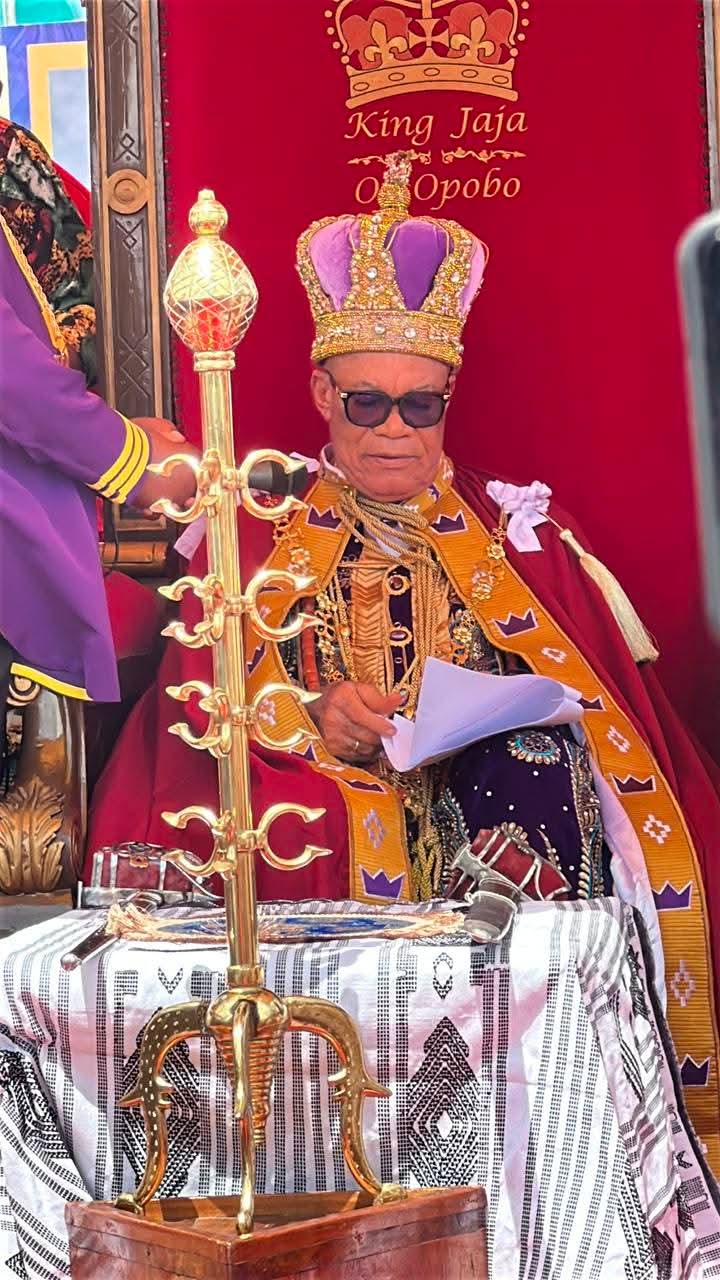
King Charles Douglas MacPepple Jaja was on Saturday formally crowned and coronated as the sixth Amanyanabo of Opobo Kingdom in Rivers State, succeeding the late King Dandeson Douglas Jaja, who died last year and was buried on April 11, 2026.
The colourful coronation ceremony, held at King Jaja Square in the heart of Opobo, attracted prominent Nigerians, traditional rulers, political leaders, members of the royal family and other distinguished guests from across the country.
The ceremony marked a significant moment in the history of the ancient kingdom as King Charles Douglas MacPepple Jaja formally assumed the traditional title of Jeki VI, succeeding the late King Dandeson Douglas Jaja.
The new monarch’s title also connects his reign to the legacy of the legendary King Jaja of Opobo, who founded the Opobo Kingdom following the historic exodus of 1870.
King Jaja remains one of the most prominent figures in the history of the Niger Delta, particularly for his resistance to external control and his efforts to protect the economic and political interests of his people.
The coronation ceremony therefore combined traditional rites with reflections on the history, struggles and aspirations of the Opobo people.
The new monarch was anointed and crowned by the Bishop of the Niger Delta Diocese, Rt. Rev. Emmanuel Oko-Jaja, during the elaborate ceremony.
Speaking after his coronation, King Charles expressed appreciation to the dignitaries, traditional rulers, political leaders, members of the royal family and the people of Opobo who travelled from different parts of Nigeria and beyond to witness the historic occasion.
The monarch pledged that his reign would be guided by a commitment to protecting the freedom, rights and interests of the people of Opobo.
He also promised to uphold the dignity and integrity of the traditional institution and preserve the values associated with the throne he had inherited.
“I will never bring dishonour to the throne that Chief Jaja and the founders of Opobo built with courage. The exodus of 1870 was a journey to freedom. Our journey in 2026 is a journey to development, unity and global relevance,” the monarch declared.
The statement captured the central message of the new reign, linking the historical struggle associated with the founding of Opobo Kingdom to the contemporary aspirations of its people.

King Charles indicated that while the history of the kingdom remained important, his administration of the traditional institution would also focus on the future and on issues capable of promoting development, unity and wider recognition for Opobo.
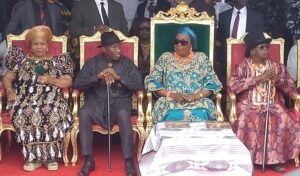
Former President Goodluck Jonathan congratulated King Charles Douglas MacPepple Jaja and the people of Opobo Kingdom on the successful coronation.
Jonathan, who attended the ceremony, recalled the historical significance of King Jaja of Opobo and described him as a prominent historical figure whose struggle for freedom had attracted recognition beyond Nigeria.
The former president urged the new monarch to use his reign to promote peace, development and unity within the kingdom.
He also called on the monarch to uphold the dignity of the Opobo throne and preserve the respect associated with the traditional institution.
The Rivers State Governor, Siminalayi Fubara, who was represented at the ceremony by his Deputy, Prof. Ngozi Odu, described the coronation as a celebration of the identity, history and culture of Rivers State.
The governor said traditional institutions remained important in preserving the cultural values, customs, traditions and heritage of communities across the state.
He congratulated the new Amanyanabo and prayed that his reign would be characterised by wisdom, peace, unity and progress.
Governor Fubara’s message also underscored the role of traditional rulers in maintaining social cohesion and preserving historical memory within their respective communities.
The Obi of Onitsha, Igwe Nnaemeka Achebe, also attended the coronation and highlighted the longstanding historical relationship between Onitsha and Opobo.
Achebe described King Jaja of Opobo as an honest and courageous leader who fought for the freedom and prosperity of his people.
He prayed for peace, stability and progress in Opobo Kingdom under the new monarch.
The presence of Igwe Achebe and other traditional rulers further highlighted the wider traditional and cultural significance attached to the coronation.
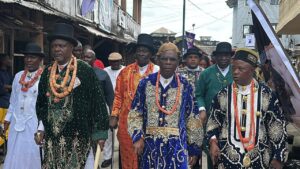
The ceremony attracted traditional rulers from different parts of Nigeria.
Among those present were the Obong of Calabar; the Amanyanabo of Bonny, King Edward Asimini Dappa Pepple; the Olu of Warri, Ogiame Atuwatse III; Eze Eberechi Oji, Eze Aro; Eze Iweka III of Obosi; King Buribaye Dakolo of Ekpetiama Kingdom in Bayelsa State; and Eze Eberiuogo of Omuma, among others.
The gathering of monarchs from different parts of the country reflected the importance attached to the installation of a new traditional ruler in one of the historic kingdoms of the Niger Delta.
The ceremony also provided an opportunity for traditional rulers to renew relationships and engage with one another on issues concerning the preservation of culture and traditional institutions.
The historical connection between the new monarch and King Jaja is particularly significant to the identity of Opobo Kingdom.
The kingdom emerged from the historic movement associated with King Jaja in 1870. His leadership, commercial activities and resistance to British imperial interests became an important part of the history of the Niger Delta.
Over the decades, the name King Jaja has remained closely associated with the courage, independence and determination of the Opobo people.
By assuming the title Jeki VI, King Charles Douglas MacPepple Jaja now becomes the latest custodian of that historical institution.
His coronation comes at a time when traditional institutions continue to play important roles in cultural preservation, community leadership and the promotion of peace and development.
For the people of Opobo, the ceremony also marked the conclusion of a period of transition following the death of the late King Dandeson Douglas Jaja.
The late monarch was buried on April 11, 2026, after his death last year.
The installation of his successor consequently represents the continuation of the traditional lineage and the transfer of responsibility from one generation of leadership to another.
Beyond the elaborate traditional ceremonies, the new monarch has indicated that his reign will focus on translating the historical legacy of Opobo into contemporary development aspirations.
His reference to the 1870 exodus as a “journey to freedom” and the present period as a “journey to development, unity and global relevance” provided a framework for his vision for the kingdom.
The coronation was also marked by cultural displays, interactions among traditional rulers and dignitaries, and the celebration of Opobo’s rich heritage.
Among the dignitaries at the ceremony were former President Goodluck Jonathan and his wife, Dr Patience Goodluck Jonathan, Rivers State Deputy Governor Prof. Ngozi Odu and several traditional rulers.
The gathering underscored the national significance of the occasion and the enduring relevance of Opobo Kingdom in the historical and cultural landscape of the Niger Delta.
As King Charles Douglas MacPepple Jaja begins his reign as Jeki VI, attention will now turn to how the new monarch translates his pledge of unity, development and global relevance into initiatives that will benefit the people of Opobo.
For the kingdom, however, Saturday’s coronation represented more than the installation of a new traditional ruler. It was a celebration of history, identity and continuity, linking the legacy of King Jaja and the founders of Opobo with the aspirations of a new generation.