Tensions in the Middle East have taken a troubling new turn as Iran’s powerful paramilitary force, the Islamic Revolutionary Guard Corps (IRGC), issued a warning that American-affiliated university campuses in the region could become targets in the wake of recent U.S.-Israeli strikes.
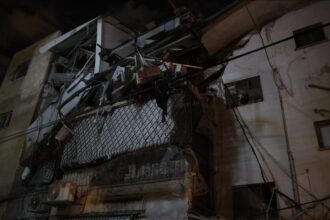
According to statements reported by Iranian media, the IRGC is reacting to what it describes as attacks on Iranian academic institutions during a wave of airstrikes carried out between Friday and Saturday. The strikes reportedly hit several locations in Tehran, including facilities linked to the Iran University of Science and Technology. While structural damage was reported, there were no confirmed casualties from the incident.
In its statement, the IRGC framed the attacks as a direct assault on educational infrastructure and intellectual development, warning that failure by the United States to publicly condemn the strikes could trigger retaliation. The group issued a firm ultimatum, calling on Washington to respond within a specific timeframe.
“If the U.S. government wants its universities in the region to be free from retaliation, it must condemn the bombing of the universities in an official statement by 12 noon on Monday, March 30, Tehran time,” the statement read.
The warning did not stop at governments. The IRGC also issued a direct advisory to civilians associated with American-linked institutions across the Middle East. It urged faculty members, students, administrative staff, and even residents living near such campuses to maintain a distance of at least one kilometre, citing potential security risks.
“We advise all employees, professors, and students of American universities in the region and residents of their surrounding areas to stay a kilometre away from campuses,” the statement added, underscoring the seriousness of the threat.
The development has raised alarm among security analysts and international observers, as it marks a potential expansion of targets beyond conventional military or strategic infrastructure. Traditionally, conflicts in the region have focused on military bases, energy facilities, and government installations. However, the inclusion of academic institutions—particularly those with international affiliations—signals a shift that could have far-reaching implications.
Several prominent American universities operate branch campuses across the Gulf region. These include Texas A&M University at Qatar and New York University Abu Dhabi, both of which host thousands of students from diverse national and international backgrounds. These institutions are widely regarded as hubs of academic exchange and innovation, making them symbolic as well as practical targets.
The threat has heightened concerns about the safety of students and staff in these institutions, many of whom are foreign nationals. It also raises questions about the broader impact on educational collaboration and international partnerships in the region, which have grown significantly over the past two decades.
At the same time, the warning reflects the broader escalation of hostilities involving Iran, the United States, and Israel. The ongoing conflict has already seen strikes on critical infrastructure, disruptions to global energy markets, and heightened geopolitical uncertainty. The possibility that civilian-linked institutions such as universities could be drawn into the conflict adds another layer of complexity.
Analysts note that the IRGC’s statement appears designed not only as a military warning but also as a form of psychological pressure. By targeting institutions associated with education and international cooperation, the message extends beyond governments to ordinary people, amplifying fear and uncertainty across the region.
Despite the strong rhetoric, there has been no immediate response from U.S. officials regarding the specific demand to condemn the strikes. It remains unclear whether Washington will address the issue publicly or treat the statement as part of broader wartime messaging.
Meanwhile, regional governments and university authorities are likely to reassess security arrangements around campuses, especially those with visible American affiliations. Enhanced surveillance, restricted access, and contingency planning may become necessary in the coming days as the situation evolves.
The incident also highlights the increasingly blurred lines between civilian and strategic targets in modern conflicts. Educational institutions, once considered neutral spaces, are now being drawn into geopolitical rivalries, raising ethical and legal concerns under international norms.
As tensions continue to rise, the situation remains fluid, with the potential for further escalation if diplomatic channels fail to ease the standoff. For now, the warning from the Islamic Revolutionary Guard Corps serves as a stark reminder of how rapidly the scope of conflict can expand, affecting not just governments and militaries, but also students, educators, and communities across the Middle East.
The coming days will be critical in determining whether the crisis deepens or whether diplomatic efforts can prevent the targeting of institutions that have long been symbols of knowledge, cooperation, and global exchange.