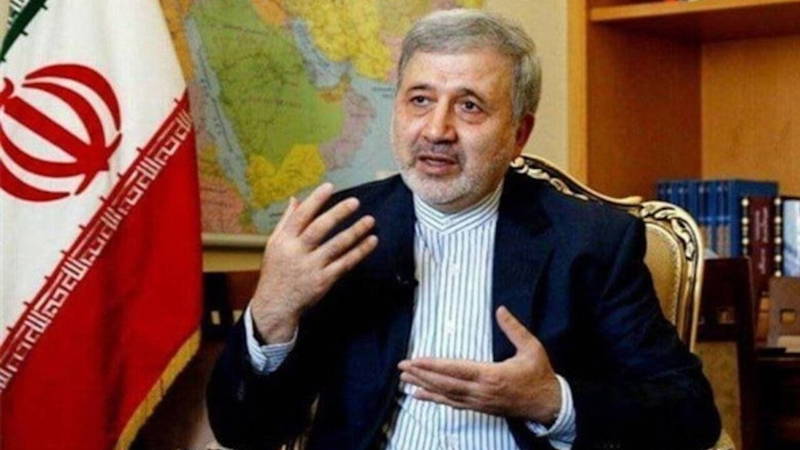
Iran’s ambassador to Saudi Arabia, Alireza Enayati, has strongly rejected allegations that Iran was responsible for a drone attack targeting the United States embassy in Riyadh earlier this week.
The denial comes after Saudi authorities accused Tehran of launching drones at the American diplomatic compound located in the Saudi capital, an accusation that Iranian officials have firmly dismissed. The incident, which reportedly triggered a fire within the embassy compound, has further heightened tensions in a region already strained by escalating military confrontations.
Saudi officials had earlier suggested that the attack formed part of a broader pattern of Iranian drone and missile operations directed at strategic targets within the kingdom. Riyadh has repeatedly accused Tehran of carrying out such strikes over the years and has warned that it reserves the right to defend its territory and respond with retaliatory measures if necessary.
However, Enayati insisted that Iran had no involvement whatsoever in the reported attack on the U.S. diplomatic facility. Speaking to reporters, the envoy said Tehran had no reason to conceal responsibility if it had indeed conducted such an operation.
“We confirmed that Iran has no role in the attack on the U.S. embassy in Riyadh,” Enayati said. “If the military operations command in Tehran carried out any strike, it would openly acknowledge responsibility.”
The ambassador stressed that the allegations linking Iran to the attack were unfounded and appeared to be part of a broader narrative aimed at escalating regional tensions.
The controversy surrounding the embassy incident comes amid a wider wave of accusations and counter-accusations between regional powers. Saudi Arabia has in recent years accused Iran of launching missile and drone attacks against several strategic locations across the kingdom, including critical energy infrastructure.
One of the most notable recent accusations involved the massive Ras Tanura Refinery, one of the largest oil processing facilities in the Middle East and a vital component of Saudi Arabia’s petroleum export network. Saudi officials claimed that the refinery had been targeted twice by drone strikes, an allegation that Tehran also rejected.
Iranian authorities dismissed the claims, reiterating that they had no role in any attack on the refinery. Tehran has consistently argued that accusations of this nature are often politically motivated and aimed at undermining its regional standing.
The diplomatic dispute unfolds against the backdrop of intensifying military tensions across the Middle East. The region has been on edge following joint strikes carried out by the United States and Israel that reportedly resulted in the death of Iran’s supreme leader, Ali Khamenei.
The strikes triggered a wave of retaliatory actions by Tehran, which has since launched missile and drone attacks against Israeli targets and other locations across the region. The escalation has raised fears of a broader conflict that could engulf multiple countries in the Gulf and beyond.
Reports indicate that at least 13 people have died across several Gulf countries since Iran began its retaliatory operations over the weekend. Among those reported dead are at least seven civilians, highlighting the growing humanitarian concerns associated with the ongoing hostilities.
Despite the worsening security situation, Enayati maintained that Iran has no intention of expanding the conflict into a full-scale regional war. According to the ambassador, Tehran views the current crisis as one that was imposed on the region rather than initiated by it.
“This is not a regional war, and it is not our war,” he said. “It was imposed on the region.”
The ambassador’s remarks appeared aimed at reassuring neighbouring countries that Iran’s military responses are limited in scope and directed primarily at those it considers responsible for the recent escalation.
Prior to the latest crisis, Saudi Arabia had supported diplomatic efforts aimed at reducing tensions between Tehran and Washington. Riyadh had also indicated that it would not allow its territory or airspace to be used as a platform for military operations against Iran.
According to Enayati, Tehran welcomes and appreciates this position from the Saudi government.
“We appreciate what we have repeatedly heard from Saudi Arabia—that it does not allow its airspace, waters, or territory to be used against the Islamic Republic of Iran,” the ambassador said. “We welcome and affirm this position.”
Observers say this acknowledgement reflects the cautious diplomatic thaw that has been taking place between Iran and Saudi Arabia in recent years.
The two regional rivals formally resumed diplomatic relations in March 2023 after years of hostility, following a landmark agreement brokered by China. The deal was widely viewed as a major diplomatic breakthrough, given the deep-rooted rivalry between the two countries.
Iran and Saudi Arabia had severed diplomatic ties in 2016 after Saudi diplomatic missions in the Iranian cities of Tehran and Mashhad were attacked by protesters. The demonstrations erupted in response to Saudi Arabia’s execution of prominent Shiite cleric Nimr al-Nimr, an event that triggered widespread outrage across parts of the Shia Muslim world.
The restoration of relations in 2023 raised hopes that the two powers could gradually stabilise their relationship and reduce proxy conflicts across the region.
However, the latest developments have raised concerns among analysts that the fragile diplomatic progress could come under strain if the broader regional conflict continues to escalate.
Security experts warn that incidents such as the alleged embassy attack risk inflaming tensions further, particularly if accusations and counterclaims continue to circulate without clear evidence.
For now, Iranian officials appear determined to distance themselves from the Riyadh incident while emphasising their willingness to maintain diplomatic channels with Saudi Arabia.
Whether those efforts will be enough to prevent further deterioration in regional relations remains uncertain as the Middle East navigates one of its most volatile security environments in recent years.