Bola Ahmed Tinubu has reaffirmed his dedication to safeguarding democracy and the rule of law in Nigeria, describing himself as a “die-hard democrat” whose political life has been shaped by the struggle to defend democratic governance.
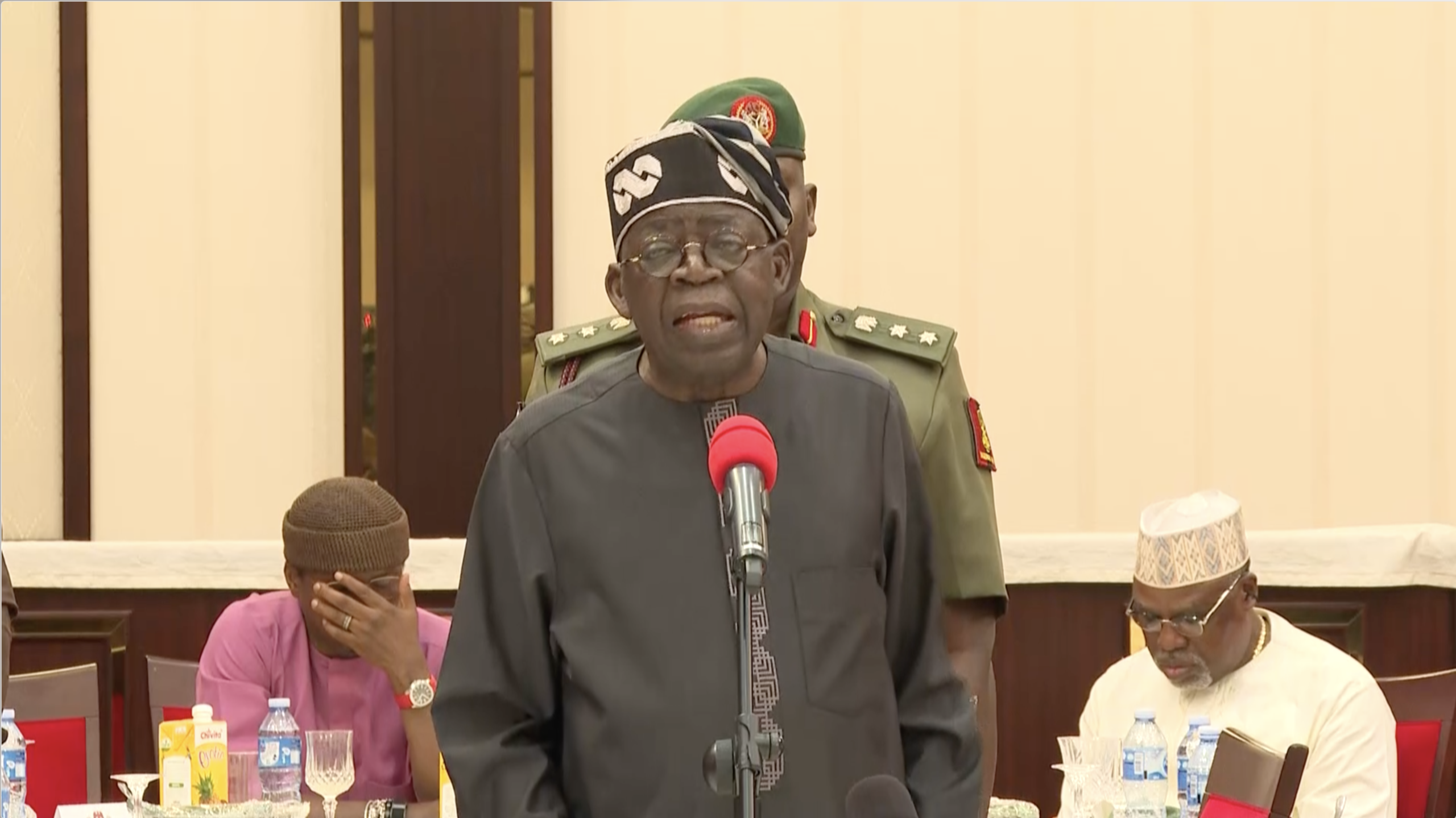
The president made the remarks during an inter-faith breaking of the fast held at the Presidential Villa in Abuja. The event brought together members of the National Working Committee of the All Progressives Congress and leaders of the Inter‑Party Advisory Council.
The gathering provided an opportunity for political leaders across party lines to reflect on Nigeria’s democratic journey and discuss issues affecting the country’s political system, particularly in light of recent electoral reforms and debates over democratic practices.
Speaking at the event, President Tinubu said Nigeria’s democratic system has been sustained through the sacrifices of many individuals who struggled against military rule.
According to him, the country’s current democratic dispensation was built through years of activism, protests, and political resistance by pro-democracy advocates.
“The Chairman of IPAC, Yusuf Dantalle, provoked some questions,” Tinubu said. “I am glad we are all democrats, and we all subscribe to this democracy voluntarily and willingly. We have been committed to it selflessly over the last 26 years.”
He recalled the hardships faced by pro-democracy activists during Nigeria’s years of military rule, noting that many were detained, forced into exile, or subjected to persecution because of their beliefs.
“Some of us were bruised while struggling for democracy,” the president said. “We were detained, we protested on the streets, we organised demonstrations, and some of us went into exile.”
Tinubu also highlighted the role of the pro-democracy movement National Democratic Coalition, popularly known as NADECO, which played a key role in opposing military dictatorship in the 1990s.
“We formed NADECO and continued to fight for democratic governance,” he said. “I followed the leadership destiny that God has chosen for me, and there is no doubt about it—I am a die-hard democrat.”
The president emphasised that his commitment to democracy is closely tied to his belief in a united and stable Nigeria.
According to him, the principles of democracy, national unity, and political inclusion have guided his political career and will continue to shape his leadership.
“I followed that belief wholeheartedly,” Tinubu said. “I am committed to a united Nigeria, and that philosophy will live and die with me.”
He added that democratic governance must be anchored on good leadership and responsible management of national resources.
Tinubu stated that the unity and stability of the country depend largely on the ability of leaders to provide effective governance and ensure that democratic institutions function properly.
He assured political leaders and citizens that his administration would remain committed to protecting democratic values and strengthening the nation’s political institutions.
The president also stressed the importance of strengthening internal democracy within political parties, noting that credible electoral systems begin with transparent party processes.
According to him, political parties must allow their members to play active roles in selecting candidates for elective positions.
Tinubu specifically endorsed the use of direct primaries, arguing that the system provides greater participation for party members.
He explained that direct primaries enable ordinary party members to determine who represents them in elections, thereby deepening democratic participation.
For him, stronger internal party democracy will ultimately lead to more credible elections and stronger governance structures.
President Tinubu also spoke about the importance of balancing majority rule with the protection of minority rights within a democratic system.
He explained that democracy allows the majority to make decisions while ensuring that minority voices are not silenced.
“The majority will have their way,” the president said, “and the minority will have their say and their way. I must not stand in their way.”
He described this balance as the “sweetness” and essence of democracy.
According to him, the rule of law must always prevail in democratic societies to prevent abuse of power and ensure fairness for all citizens.
Tinubu assured participants at the gathering that his administration would uphold the rule of law and maintain a democratic environment in which political actors can operate freely.
“There is no threat from any democrat under my watch,” he said.
The president also reaffirmed his loyalty to the APC, the political platform that brought him to power.
“I am a registered voter,” Tinubu said. “I am on the same platform as you, and I am going to stick to my platform.”
He noted that during earlier phases of his political career, he remained committed to democratic principles even when political circumstances were unfavourable to him.
“When it was against me years ago, I toed the line,” he said. “I was in opposition without posing any threat to anyone, except the military junta.”
Tinubu said his experience as an opposition politician reinforced his belief in democratic competition and peaceful political engagement.
“Now that democracy has returned and is firmly rooted here, there is a fundamental voluntariness in it,” he said. “I am extremely glad to listen to you.”
The National Chairman of the APC, Nentawe Yilwatda, used the occasion to commend the president for his leadership.
Yilwatda praised Tinubu for managing the country’s human and material resources effectively despite the complexities of governing a diverse and multi-ethnic nation.
According to him, the president has demonstrated strong leadership and commitment to national development.
“We are grateful to God to have you as the leader of this country,” Yilwatda said.
He assured the president that the ruling party would continue to support his administration and work closely with him to achieve his vision for Nigeria.
“We will support you and stand by you as a party,” he added.
During the meeting, the Chairman of IPAC, Yusuf Dantalle, raised concerns about certain provisions in the newly signed 2026 Electoral Law.
Dantalle appealed to the president to reconsider the requirement that the National Identity Management Commission number—commonly known as the National Identity Number (NIN)—should be mandatory for voter registration.
According to him, the policy could potentially disenfranchise many Nigerians who are eligible to vote but have not yet obtained the identification number.
He also expressed concerns about the removal of the indirect method of party nominations under the new electoral law.
Dantalle argued that restricting nomination methods could reduce the flexibility of political parties in selecting candidates.
In addition, he appealed for the restoration of financial support from the Independent National Electoral Commission to political parties.
According to him, such support previously helped parties operate more effectively within Nigeria’s democratic framework.
The IPAC chairman also informed the president that a documentary film celebrating Nigeria’s democratic progress has been produced.
The film, titled “Unbroken Democracy,” chronicles Nigeria’s 26-year journey since the return to civilian rule in 1999.
According to Dantalle, the project received support from Hope Uzodimma, who currently chairs the Progressive Governors Forum.
He said the documentary is expected to premiere soon at the State House, highlighting the milestones and challenges of Nigeria’s democratic experience.
The inter-faith gathering concluded with renewed calls for cooperation among political parties to strengthen Nigeria’s democratic system.
President Tinubu reiterated that democratic governance remains the best framework for managing Nigeria’s diversity and ensuring national progress.
He urged political leaders across party lines to remain committed to dialogue, tolerance, and respect for the rule of law.
According to him, democracy will continue to thrive in Nigeria as long as political actors remain dedicated to its principles and institutions.
For Tinubu, the country’s democratic journey is not only a political achievement but also a collective responsibility that must be protected for future generations.