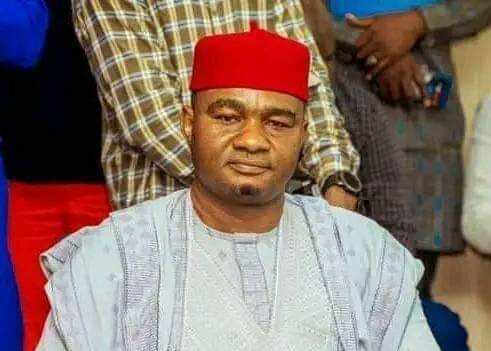
A viral video from the Senate plenary has captured the growing frustration over Nigeria’s skyrocketing airfares, with Senator Onyekachi Nwebonyi of Ebonyi North lamenting what he described as an “unheard-of and unbearable” spike in ticket prices for domestic flights across the country. The senator, speaking passionately on the floor of the Senate, recounted his personal experience while attempting to book a flight from Abuja to Enugu scheduled for December 13, 2025.
According to the senator, his shock began when he instructed his personal assistant to secure a one-way ticket for the short domestic route. To his astonishment, Air Peace reportedly charged N500,000 for the journey, while Ibom Air’s fare stood at N460,000. Nwebonyi described the situation as unacceptable and reflective of the hardship Nigerians continue to face due to the rising cost of air travel.
“I called my personal assistant to get the ticket for me for December 13th from Abuja to Enugu. Shockingly, the cost for a one-way ticket from Abuja to Enugu is N500k with Air Peace and N460k for Ibom Air,” the senator said. “This is unheard of.”
The senator’s remarks sparked murmurs across the chamber, with several lawmakers visibly expressing disbelief at the exorbitant fare. Nwebonyi argued that the cost of air travel in Nigeria has risen astronomically in 2025, pushing the once-accessible mode of transportation out of the reach of ordinary citizens. He said the development amounts to a national crisis, as air travel remains a critical link for business, governance, and emergency movements.
He went further to highlight how the sharp increase in airfares reflects a broader economic struggle across the country, with inflation, high operational costs, and rising energy prices all contributing to the hardship faced by Nigerians.
“Nigerians are passing through untold hardship due to high air ticket prices,” he said. “The Ministry of Aviation must intervene urgently to review air tickets downward.”
Nwebonyi stressed that the aviation sector cannot be left at the mercy of private airlines whose pricing policies are often driven by operational constraints, market realities, and profit motives. He insisted that the federal government must step in to protect consumers from what he termed “excesses and exploitative tendencies” within the industry.
He added that the current price regime is unsustainable and could cripple economic activity by discouraging business trips, limiting mobility, and reducing efficiency in industries that depend heavily on domestic air travel.
The senator also used the opportunity to advocate for the establishment of a national air carrier, emphasising that Nigeria must follow the example of Ghana and several other African countries that have invested in government-backed airlines to stabilise the aviation market.
According to him, the absence of a functional national carrier leaves Nigeria entirely dependent on private operators, who now control pricing without a regulatory benchmark that ensures affordability.
“Nigeria is due to have an air carrier like Ghana and other African countries to check the excesses of private airlines,” he said. “We cannot continue like this. The government must take bold steps to ensure Nigerians have access to affordable air travel.”
The senator’s call comes at a time when the aviation sector faces mounting pressures, including the rising cost of aviation fuel, heavy taxes, aircraft maintenance challenges, and foreign exchange scarcity—all of which have been cited by airline operators as reasons for the surge in ticket prices.
Industry experts note that aviation fuel, also known as Jet A1, has experienced repeated cost spikes in the past year, often accounting for more than 60% of airline operating expenses. The scarcity of forex has also forced many airlines to source forex at higher rates to pay for aircraft parts, insurance, and leasing contracts.
Despite these challenges, consumer groups have continued to pressure the government to regulate pricing and ensure that air travel does not become a luxury exclusive to the elite.
Senator Nwebonyi urged the Senate to summon officials of the Ministry of Aviation and relevant regulatory agencies to provide explanations and outline steps being taken to address the crisis. He warned that unless swift action is taken, Nigerians may soon abandon air travel altogether, leading to further economic strain and loss of operational revenue for airlines.
The Senate is expected to deliberate further on the matter and determine whether to mandate the Ministry of Aviation to intervene directly, initiate price regulation mechanisms, or accelerate plans for the establishment of a national carrier.
For now, the senator’s remarks have triggered national debate, with many Nigerians echoing the same concerns on social media, describing the current air travel cost as “punitive,” “unjustifiable,” and “a reflection of a deepening economic crisis.”
As the aviation sector grapples with continued instability, the question remains whether the federal government will respond with the urgency lawmakers like Nwebonyi have demanded—or whether rising airfares will persist, further widening the gap between the needs of the public and the realities of Nigeria’s struggling aviation industry.
Watch video: