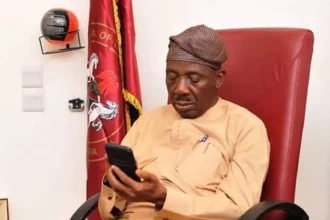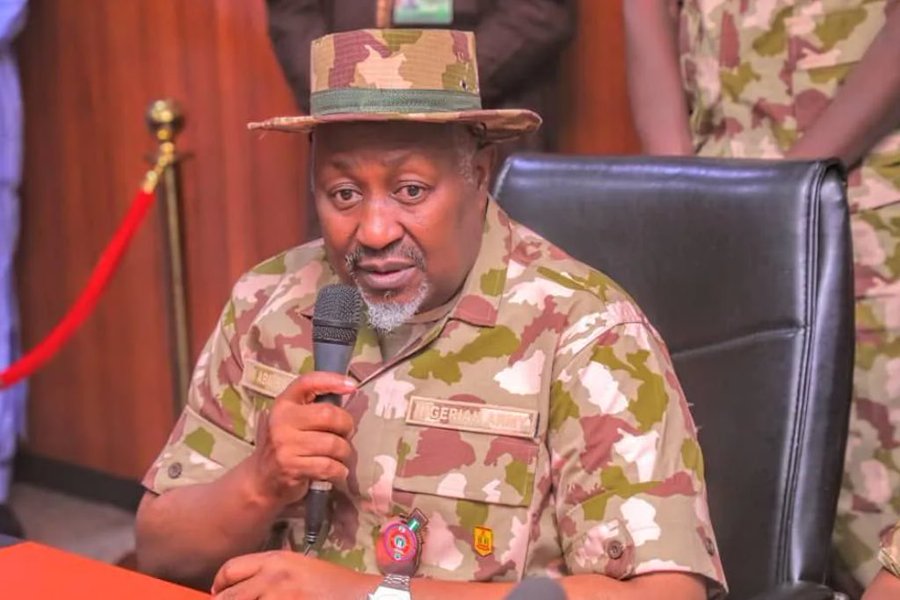
Nigeria’s Minister of Defence, Alhaji Mohammed Badaru Abubakar, has resigned from office with immediate effect, citing health concerns. His sudden departure comes at a critical moment for the nation, only days after President Bola Ahmed Tinubu declared a national security emergency and signalled sweeping reforms to address escalating insecurity across the country.
The resignation was formally communicated to the president in a letter dated December 1, in which Badaru stated that he was stepping down due to health-related issues that would not allow him continue in the demanding role of Defence Minister. The president has accepted his resignation.
The announcement was confirmed by Bayo Onanuga, Special Adviser to the President on Information and Strategy, who issued a statement on Monday acknowledging Badaru’s exit and expressing the president’s gratitude for his service.
According to Onanuga, President Tinubu has extended his “sincere appreciation to Alhaji Mohammed Badaru Abubakar for his diligent service, commitment, and contributions to the nation.” The president wished the outgoing minister a full and speedy recovery.
A Minister’s Sudden Exit at a Turbulent Time
Badaru’s resignation arrives at a pivotal moment in Nigeria’s security landscape. Just days earlier, President Tinubu declared a national security emergency, signalling a new phase of heightened military and security operations across multiple regions. The president is expected to elaborate on the full scope and operational framework of the emergency measures in the coming days.
The defence minister’s sudden departure in the midst of these developments has attracted significant public attention, prompting questions about the impact on ongoing military reforms, counterterrorism efforts, and security coordination across the country.
Government insiders indicate that President Tinubu will formally communicate Badaru’s replacement to the Senate before the end of the week, as required by constitutional procedure.
A Career in Public Service
Mohammed Badaru Abubakar, aged 63, is a prominent political figure and businessman who served as the Governor of Jigawa State for two terms, from 2015 to 2023. His tenure as governor was marked by initiatives in agriculture, infrastructure development, and public-sector reforms.
He was appointed Minister of Defence on August 21, 2023, shortly after President Tinubu assembled his cabinet. Upon taking office, Badaru became responsible for overseeing Nigeria’s armed forces at a time when the nation was confronting expanding security threats, including insurgency in the northeast, banditry in the northwest, farmer-herder conflicts, oil theft in the Niger Delta, and rising kidnapping incidents across the country.
During his time as minister, he worked closely with service chiefs, military commanders, and security agencies to strengthen strategic coordination and operational readiness. His leadership coincided with several major security operations and cooperative defence initiatives between Nigeria and its regional partners.
Tinubu’s New Security Approach
Badaru’s resignation may introduce new complexities to President Tinubu’s security agenda, which is expected to undergo a significant overhaul following the president’s declaration of a national security emergency.
According to senior administration officials, the emergency declaration is part of a new integrated strategy to improve national defence capacity, increase troop deployment in volatile zones, strengthen border security, and enhance intelligence-sharing among security agencies.
The president is also pushing for reforms aimed at addressing the shortage of security personnel in underserved areas. Last week, he ordered the withdrawal of police officers from VIP escort duties and instructed that they be redeployed to frontline policing roles. That directive has already been followed by an order from the Inspector General of Police for the arrest of any officer found escorting VIPs in violation of the new policy.
The departure of the defence minister may now require a rapid and seamless transition to avoid disruptions in ongoing operations, including military initiatives in Zamfara, Plateau, Kaduna, and Borno states.
What Comes Next?
With Badaru’s resignation now official, attention shifts to who President Tinubu will nominate to fill the key cabinet position. Given the administration’s ongoing security challenges, analysts expect the president to select a figure with extensive military, strategic, or security-sector experience.
The Senate will receive the president’s nomination shortly, and confirmation hearings are expected to be expedited in view of the declared national emergency and the urgency of maintaining continuity in defence leadership.
Security analysts note that the appointment of a new minister will play a pivotal role in determining the effectiveness of the administration’s renewed security strategy. The minister will be expected to work closely with the Chief of Defence Staff, service chiefs, and other security agencies to implement the president’s reforms and strengthen Nigeria’s overall defence posture.
A Nation Watching Closely
The timing of Badaru’s resignation—amid widespread insecurity, heightened public anxiety, and a new federal emergency declaration—has placed national attention squarely on the presidency’s next steps.
Public reaction has been mixed. Some Nigerians have expressed concern over the stability of the defence sector during a sensitive period, while others empathise with the minister’s health challenges and commend his decision to prioritise personal well-being.
Political observers also note that the president’s swift acceptance of the resignation, without delay or ambiguity, suggests an awareness of the need for decisive leadership in the defence sector.
As Nigeria confronts worsening security threats and transitions into a new phase of strategic defence operations, the sudden resignation of Defence Minister Mohammed Badaru Abubakar adds a new dimension to the national security discourse.
His departure marks the end of a significant chapter in his long public-service career, while opening the door for fresh leadership at a time when the country faces one of its most pressing challenges.
With the president expected to announce a successor shortly, Nigerians will be watching closely to see how the next defence minister will shape the direction of the nation’s military response and contribute to restoring peace and security across the country.