United States President Donald Trump has signed an order designating the Oval Office a national monument, renewing his focus on renovating and beautifying the White House just days after his Republican Party suffered significant defeats in the 2026 midterm elections.
Trump signed the order on Thursday, November 5, 2026, extending his administration’s focus on White House construction and renovation projects despite mounting criticism over economic concerns and the ongoing war with Iran.
The development came barely two days after Democrats secured victories in both chambers of Congress, winning control of the House of Representatives and the Senate.
Critics have accused the President of paying insufficient attention to voters’ concerns about rising living costs and the economic consequences of the war with Iran, arguing that he has prioritised construction projects and changes to the White House instead.
On Wednesday, a day after the Democratic victories, Trump largely avoided discussing the electoral setback while showcasing construction work on a new ballroom at the White House.
His latest attention has shifted to the Oval Office, which he has decorated with gold ornaments since returning to the presidency, as well as the adjoining Cabinet Room.
Explaining his decision to designate the Oval Office a national monument, Trump said the move was intended to prevent future presidents from altering or demolishing the historic rooms.
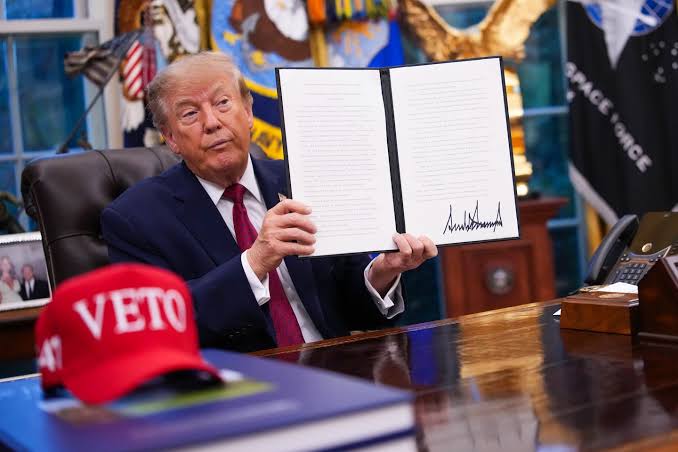
“It won’t be able to be taken down, destroyed, touched, or anything else. It’s called actually a national monument,” he told reporters during the signing ceremony.
Trump said the designation would protect what he described as an important part of America’s presidential heritage and prevent future administrations from undertaking changes to the two rooms.
However, the announcement has fuelled speculation about whether the President is considering further renovations to the White House’s West Wing.
The speculation follows previous comments by Trump suggesting that reporters could be relocated from the building’s famous press briefing room, which is situated close to the Oval Office.
The signing ceremony was not broadcast by major American television networks, following Trump’s decision to exclude CNN from the rotating pool of television outlets responsible for covering White House events.
Despite largely avoiding discussion of the Republican Party’s midterm losses, Trump made a symbolic reference to the elections during the ceremony.
A red baseball cap bearing the word “VETO” was placed on the Resolute Desk in front of him.
The display appeared to reflect the President’s warning that he would use his constitutional powers to block legislation introduced by the newly empowered Democratic majority in Congress.
Trump, who turned 80 this year, has threatened to veto Democratic-backed bills, although he has also indicated his willingness to cooperate with opposition lawmakers where their proposals align with his administration’s priorities.
The Democratic victories have significantly altered the political balance in Washington, giving the opposition greater influence over legislation, government oversight and investigations into the administration.
The election outcome has also intensified scrutiny of Trump’s leadership, particularly over the economy, the cost of living and the US military involvement in the conflict with Iran.
Nevertheless, the President’s latest action demonstrates his continued interest in reshaping the White House and preserving his preferred changes to the historic presidential residence.