Utomi raised the concerns in an interview with SaharaReporters, drawing parallels between Nigeria’s political climate and historical developments that preceded the rise of Adolf Hitler in Germany.
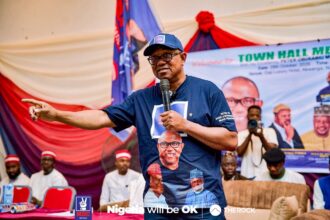
He expressed concern over what he described as the criminal hijacking of Nigeria’s political process, citing the alleged attempt to prevent a town hall meeting organised in Enugu by the Nigeria Democratic Congress (NDC) in support of its presidential candidate, Peter Obi.
“It is a bad signal for the kind of track that our democracy is travelling, the criminal hijack of politics in Nigeria,” Utomi said.
“I saw all the signs and I told them it would come to this, and this is what it has come to.”
The political economist argued that intimidation, suppression of political activities and disregard for democratic norms could further weaken public confidence in the country’s political institutions.
Utomi Recalls Earlier Warning About Nigeria’s Political System
Utomi referenced his 2019 book, Why Not: Citizenship, State Capture, Creeping Fascism and the Hijack of Politics in Nigeria, saying he had previously warned about what he regarded as the gradual deterioration of the country’s political environment.
He argued that structural shortcomings during Nigeria’s transition to democratic rule in 1999 created conditions that allowed individuals he considered unsuitable for public office to enter the political system.
According to him, these weaknesses have contributed to a political environment in which criminality and the subversion of democratic processes can thrive.
Utomi maintained that the challenges facing Nigeria’s democracy require a fundamental reassessment of how political power is acquired, exercised and protected.
His comments followed reports of an attempt to disrupt the NDC town hall meeting in Enugu, an incident he cited as an indication of the pressures confronting political participation.
The circumstances surrounding the reported attempt to stop the meeting were not independently established in the account of the interview.
Citizens, Not Political Parties, Constitute the Opposition
Despite his concerns about the state of Nigeria’s democracy, Utomi expressed optimism about the potential role of ordinary Nigerians in shaping the country’s political future ahead of the 2027 general elections.
He argued that the opposition should not be understood solely in terms of political parties or alliances, but also through the collective actions of citizens demanding accountability and better governance.
“It’s not a matter of a group of people running around saying ‘we are this party or that party’—it is actually the people that constitute the opposition today,” he said.
The professor suggested that public dissatisfaction with governance could become a significant force in determining the direction of the country’s politics.
He emphasised the importance of citizens organising around shared concerns rather than limiting political engagement to party affiliations.
According to him, the growing disillusionment among Nigerians, particularly young people, reflects wider frustrations over governance, electoral credibility and the perceived subversion of their political choices.
Warns Leaders Against Intimidation
Drawing comparisons with the political and social conditions that preceded the collapse of the Soviet Union, Utomi warned that leaders who rely on intimidation risk deepening public resentment.
He described the possible consequences of widespread frustration among disadvantaged Nigerians as “the revenge of the poor”, warning that continued disregard for citizens’ concerns could produce serious political consequences.
“When they come for their revenge, it will not be palatable for those who are doing these things today,” Utomi warned.
He urged political leaders to reconsider practices that undermine democratic participation and respect the rights of citizens to organise, express their views and participate in elections.
“So let them use their tongue and count their teeth and back away from where they’re travelling. The price might be too dear, but there will be a price when the revenge of the people comes,” he added.
Utomi’s remarks reflect his concern that persistent electoral controversies, political intimidation and public dissatisfaction could further erode confidence in Nigeria’s democratic institutions.
2027 Elections and the Future of Democracy
The political economist concluded that Nigerians, especially young people, were becoming increasingly conscious of the need to challenge practices they perceive as undermining their collective political will.
He argued that breaking the cycle of poor governance would require citizens to confront attempts to manipulate political processes and demand accountability from those in positions of authority.
His comments come as political parties and prospective candidates intensify preparations for the 2027 general elections, with questions surrounding electoral integrity, political freedoms and the conduct of public officials expected to remain prominent in national political debates.
Utomi’s warning places renewed emphasis on the importance of protecting democratic institutions, allowing political opposition to operate freely and ensuring that citizens can exercise their political rights without intimidation.
Whether these concerns translate into broader political mobilisation ahead of the 2027 elections remains to be seen. However, his central argument is that the durability of Nigeria’s democracy depends on accountable leadership, credible elections and the ability of citizens to participate meaningfully in determining the country’s future.