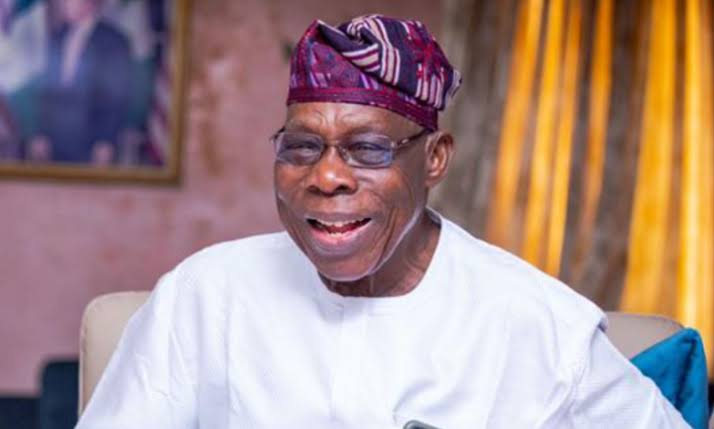
Former President Olusegun Obasanjo has declared that Nigeria has no justification for widespread poverty, arguing that the country’s abundant natural resources, agricultural potential and human capital provide sufficient foundations for building a prosperous economy.
Obasanjo made the assertion during an interview on C-Suite Café, where he examined Nigeria’s persistent economic challenges and the factors responsible for the country’s failure to fully harness its available resources.
The former president said Nigeria possesses enormous economic opportunities that, if properly managed, could transform the country into a productive and prosperous nation.
He pointed to the country’s vast arable land, favourable climatic conditions and abundant water resources as major advantages that could support large-scale agricultural production, guarantee food security and create opportunities for agricultural exports.
According to him, Nigeria has the capacity to produce much of the food it consumes while also developing an agricultural export sector capable of generating substantial foreign exchange.
Obasanjo also identified Nigeria’s human capital as one of its greatest economic assets. He noted that Nigerians possess considerable entrepreneurial, professional and intellectual abilities, both within the country and in the diaspora.
He expressed concern, however, that these talents have not been sufficiently harnessed to drive national development.
The former president argued that Nigeria’s economic potential extends beyond agriculture and human resources. He identified the country’s solid mineral deposits, crude oil and natural gas as strategic resources capable of generating wealth and diversifying government revenue.
While oil and gas have historically dominated Nigeria’s economy, Obasanjo stressed the importance of developing other sectors to reduce the country’s vulnerability to fluctuations in international oil prices.
He further criticised the lack of consistency in government policies, particularly the tendency of successive administrations to abandon development programmes initiated by their predecessors.
According to him, long-term economic development cannot be achieved when policies and programmes are frequently discontinued whenever there is a change in political leadership.
He specifically cited agricultural initiatives and other development strategies that, in his view, require continuity to produce sustainable results.
Obasanjo maintained that economic transformation requires governments to think beyond electoral cycles and establish policies capable of surviving changes in administration.
He also expressed concern about Nigeria’s rising debt burden, recalling the debt relief secured during his administration.
The former president noted that Nigeria obtained significant external debt relief between 2005 and 2006, with the country clearing approximately $30 billion in external debt during that period.
He used the experience to highlight the importance of prudent fiscal management and responsible borrowing.
According to Obasanjo, Nigeria’s present economic difficulties cannot be separated from problems associated with corruption, crude oil theft and other forms of revenue leakage.
He argued that resources meant for public development are frequently lost through corruption and weak systems of accountability, limiting the government’s ability to provide critical infrastructure and social services.
The former president said the country must strengthen its institutions and improve fiscal accountability if it is to convert its enormous resources into tangible improvements in the lives of citizens.
He also emphasised the importance of political will in addressing Nigeria’s economic challenges.
For Obasanjo, tackling poverty requires more than temporary interventions or short-term government programmes. He said it demands sustained commitment to policies that promote food production, employment, investment, infrastructure and efficient management of public resources.
He particularly stressed the need for continuity in policies relating to national food security, arguing that Nigeria cannot sustainably address poverty while depending heavily on imported food despite possessing significant agricultural resources.
The former president’s comments come against the backdrop of continuing concerns over poverty, unemployment, food insecurity, inflation and the rising cost of living across Nigeria.
Millions of Nigerians continue to face economic pressures, while businesses and households contend with high operating and living costs.
Obasanjo’s position is that the country’s natural and human resources should provide a foundation for overcoming these difficulties rather than leaving the majority of citizens trapped in poverty.
He maintained that Nigeria’s challenge is not fundamentally a lack of resources but the failure to manage and deploy those resources effectively.
He therefore called for stronger institutions, transparent governance, policy stability and disciplined economic planning.
According to him, a combination of competent leadership and responsible resource management could enable Nigeria to reverse its economic fortunes and establish a more sustainable development path.
The former president’s argument ultimately centres on the belief that Nigeria possesses the resources required to prosper, but that successive governments must demonstrate the political will, accountability and long-term vision needed to convert those resources into broad-based economic opportunities.
He maintained that with consistent policies, effective management of national assets and sustained investment in productive sectors, poverty can be significantly reduced and Nigeria can move towards a more prosperous and economically secure future.