Connecticut Attorney General William Tong has strongly criticised President Donald Trump’s latest executive orders aimed at restricting birthright citizenship, describing the measures as another unconstitutional attempt to weaken one of the clearest protections guaranteed under the United States Constitution.
In a statement issued on Thursday, Tong said the new directives were announced only weeks after the U.S. Supreme Court rejected Trump’s earlier effort to end birthright citizenship through an executive order signed on the first day of his second term in office.
“The U.S. Supreme Court already rejected Trump’s attempt to end birthright citizenship,” Tong said. “Rather than accept that decision, he has returned with another scheme to undermine and gut one of our Constitution’s clearest guarantees.”
Tong insisted that the Citizenship Clause of the Fourteenth Amendment remains unequivocal and cannot be altered by executive action.
“The Fourteenth Amendment means what it says,” he added. “President Trump cannot rewrite it or create new exemptions simply because the Court rejected his blatantly unconstitutional efforts. We are reviewing these actions and considering all appropriate options.”
Although Tong did not specify what legal action Connecticut might pursue, he indicated that his office is examining the new executive orders and assessing possible responses.
The latest directives represent a narrower but expanded effort by the Trump administration to limit birthright citizenship after the Supreme Court ruled against the president’s previous executive order.
According to reports by ABC News, the new measures broaden the categories of people whose children born in the United States would be considered ineligible for automatic citizenship. The orders also direct immigration officials not to issue visas to foreign nationals suspected of travelling to the United States primarily to give birth, a practice the administration has described as “birth tourism.”
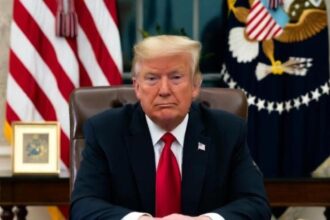
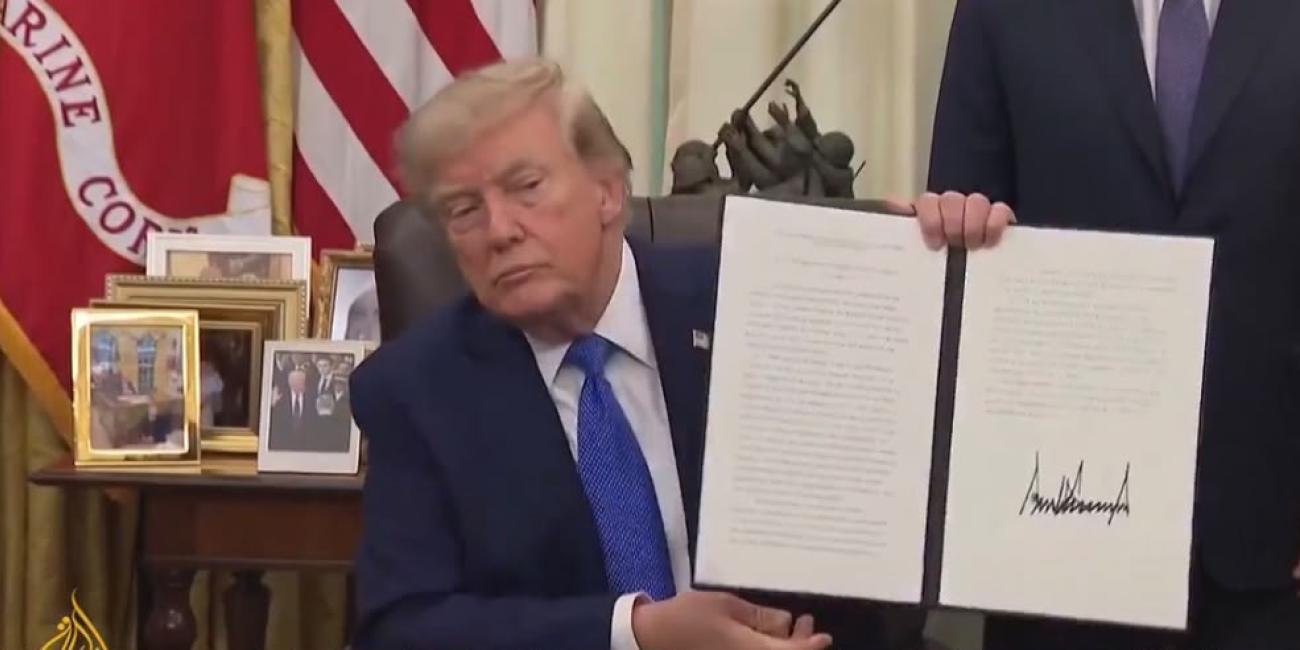
Speaking during the signing ceremony at the White House, Deputy Chief of Staff Stephen Miller defended the policy, saying the administration was acting to prevent what it considers abuse of the immigration system.
“These orders prohibit the use of visas for the fraudulent purpose of obtaining U.S. citizenship for newborns through birth tourism,” Miller said.
The executive orders also seek to restrict citizenship rights for children born in the United States to foreign government employees and individuals designated as “alien enemies.” In addition, the administration has signalled support for proposed legislation that could end automatic citizenship for persons born in certain U.S. territories if Congress approves such measures.
Trump has made limiting birthright citizenship a central pillar of his immigration agenda, arguing that the constitutional guarantee has been exploited by foreign nationals who travel to the United States solely to secure citizenship for their children.
“We had a very unfortunate decision in the Supreme Court concerning birthright,” Trump said after signing the new orders, referring to the Court’s 6-3 ruling against his earlier executive action.
The president’s first attempt, issued in 2025, directed federal agencies not to recognise the citizenship of children born in the United States if neither parent was an American citizen or lawful permanent resident.
Federal courts found that order inconsistent with the Fourteenth Amendment, whose Citizenship Clause has long been interpreted to grant U.S. citizenship to nearly everyone born on American soil, subject only to limited exceptions such as children of foreign diplomats or members of an occupying enemy force.
Legal scholars note that the principle of birthright citizenship has been established for more than a century and was affirmed by the U.S. Supreme Court in the landmark 1898 case United States v. Wong Kim Ark.
Tong argued that the administration’s latest approach does not change the underlying constitutional problem.
“This is not a new constitutional theory,” he said. “It is a repackaged attempt to accomplish through executive power what the Constitution does not permit.”
Civil rights organisations and immigration advocates have also criticised the new directives, warning that they could create uncertainty for families, increase litigation, and undermine longstanding constitutional protections.
Supporters of the administration, however, contend that the government has authority to address perceived abuses of immigration law and to regulate visa issuance in the national interest.
The White House maintains that the new orders target specific categories of foreign nationals rather than abolishing birthright citizenship altogether. Administration officials argue that the measures are designed to prevent fraud and preserve the integrity of U.S. immigration policy.
Constitutional experts expect the new executive orders to face immediate legal challenges in federal courts, with opponents arguing that they again conflict with the Fourteenth Amendment’s guarantee of citizenship to persons born in the United States.
Several Democratic attorneys general, including Tong, have previously joined multi-state lawsuits challenging Trump administration immigration policies, and observers believe a similar coalition could emerge in response to the latest orders.
Tong said Connecticut would continue to defend constitutional protections and the rule of law.
“When elected officials attempt to ignore constitutional limits, states have a responsibility to stand up for the rights guaranteed to every person under our Constitution,” he said.
The renewed dispute over birthright citizenship is expected to become one of the most closely watched legal and political battles of Trump’s second term, with potentially significant implications for immigration policy, constitutional interpretation, and the citizenship status of future generations born in the United States.