Media aide to former Vice President Atiku Abubakar, Paul Ibe has criticised President Bola Ahmed Tinubu over his recent comments on hunger in Nigeria, describing the remarks as “most insensitive” in view of the economic hardship currently faced by many Nigerians.
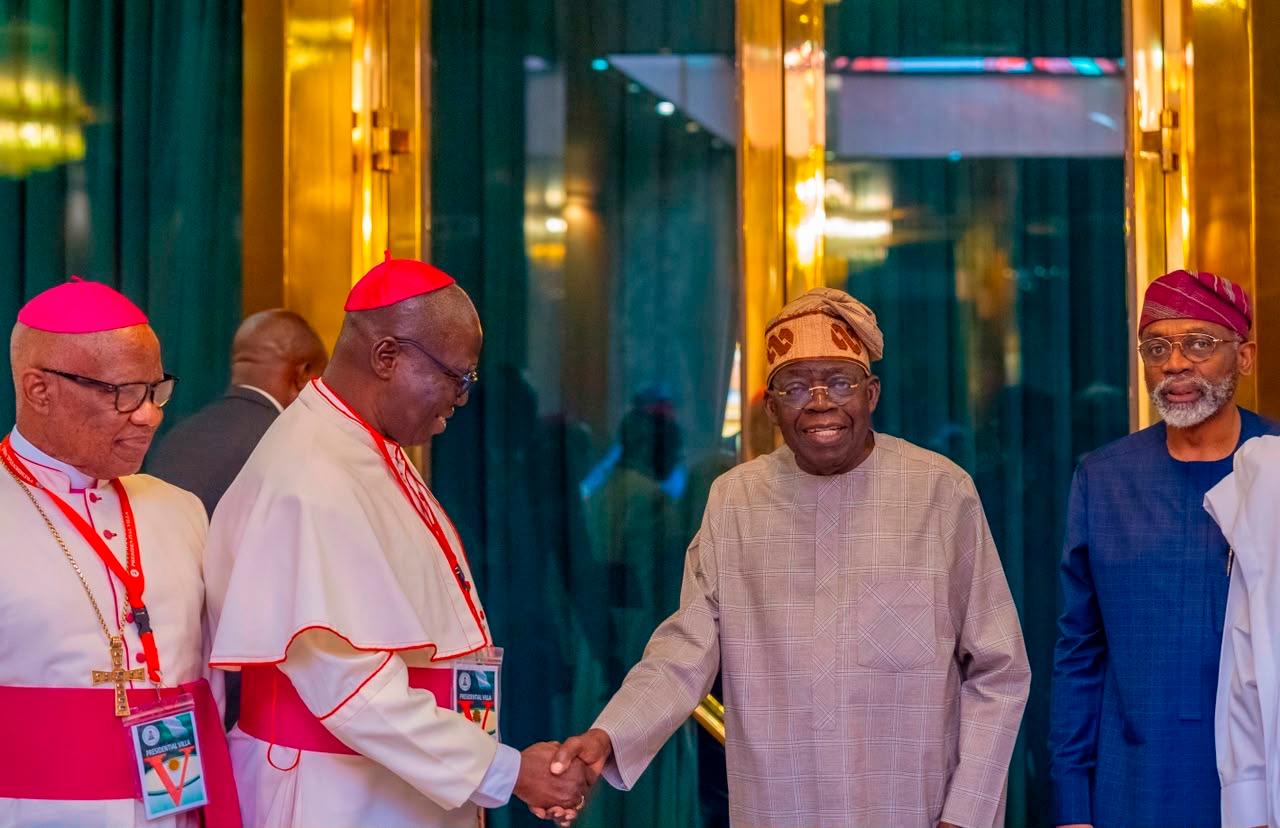
President Tinubu made the remarks during a reception for members of the Catholic Bishops’ Conference of Nigeria (CBCN), led by the Archbishop of Kaduna, Most Rev. Matthew Ndagoso, at the State House in Abuja.
During the meeting, the President stated that hunger existed in Nigeria long before his birth and argued that he could not control the country’s population growth. He also maintained that his administration had stabilised the economy and was implementing measures aimed at improving the quality of life of citizens.
Reacting in a statement posted on Facebook on Thursday, Ibe said the President’s comments failed to acknowledge the severity of the economic difficulties currently confronting Nigerians.
According to him, the issue before Nigerians is not whether hunger existed in the past, but whether the present administration has effectively addressed worsening poverty and food insecurity.
Ibe also repeated an allegation often made by opposition figures concerning uncertainty surrounding Tinubu’s date of birth.
He further dismissed the President’s statement on population growth, describing it as an attempt to avoid responsibility for current economic challenges.
“His assertion that he has no control over population growth is handwringing,” Ibe stated.
The opposition spokesman argued that regardless of the economic situation that existed before Tinubu assumed office in 2023, the policies introduced by the administration had aggravated poverty and hardship.
“Even if Nigerians were hungry before his birth, what Tinubu has enthroned through his ill-conceived trial-and-error policies is a regime of multidimensional hunger and poverty,” he said.
Ibe accused the President of placing greater emphasis on politics than governance and cited figures attributed to the World Bank to support his criticism.
“The President, who has prioritised politics over governance, needs to be reminded that between 2023 and date, approximately 25 million additional Nigerians were sucked into poverty as a result of his poverty of ideas, with the total number rising from 115 million when he took over in 2023 to an estimated 140–141 million by 2025/2026, according to World Bank data,” he wrote.
He also questioned the government’s policy direction on population management, asking what concrete measures had been introduced by the All Progressives Congress administration to address population growth.
“And with reference to population growth, what policy has the Tinubu-led APC administration introduced to stem population growth? All that President Tinubu is doing is quarrelling with his tools,” Ibe added.
The latest criticism is consistent with Atiku Abubakar’s repeated attacks on the Tinubu administration over rising hunger, inflation and poverty since the President took office.
Atiku, who is the presidential candidate of the African Democratic Congress (ADC) for the 2027 election, has consistently argued that the government has failed to provide effective economic leadership capable of addressing the worsening cost-of-living crisis.
He has repeatedly maintained that food insecurity has become widespread across the country and that many Nigerians are struggling to afford basic necessities.
According to Atiku, there is no convincing evidence that the current administration possesses a clear strategy for tackling hunger and poverty.
The exchange between the presidency and the opposition reflects the intensifying political debate over the state of the economy ahead of the 2027 general election. Rising food prices, inflation, unemployment and declining purchasing power have become central issues in national political discourse, with opposition parties increasingly using them to challenge the government’s economic policies.
While the Tinubu administration has defended its reforms as necessary steps to stabilise the economy and achieve long-term growth, critics insist that the immediate impact on ordinary Nigerians has been severe.
As the debate continues, economic hardship is expected to remain a major issue in the political contest leading up to the next general election, with both the ruling party and the opposition seeking to shape public opinion around their respective narratives on governance and economic management.