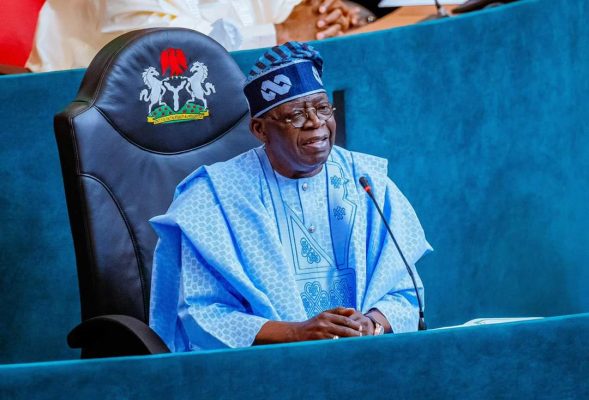
President Bola Ahmed Tinubu has approved a major restructuring and expansion of the Nigerian Army, increasing its operational divisions from eight to 12 as part of an ambitious effort to strengthen the country’s security architecture and improve military response to emerging threats across the federation.
The expansion, which will be accompanied by the recruitment of 28,000 additional military personnel, is expected to enhance the Army’s operational capacity, decentralise command structures, improve border security, and enable faster responses to security challenges ranging from insurgency and banditry to kidnapping, communal conflicts and other forms of criminality.
The Presidency announced the development in a statement issued on Thursday by the Special Adviser to the President on Information and Strategy, Bayo Onanuga, who described the initiative as one of the most significant military reforms undertaken by the current administration.
According to the statement, the expansion reflects President Tinubu’s determination to strengthen Nigeria’s defence capabilities in response to evolving security realities while positioning the Nigerian Army to better address threats across all geopolitical zones.
As part of the approved restructuring, four new divisional headquarters will be established in Makurdi, Benue State; Ilorin, Kwara State; Jalingo, Taraba State; and Benin City, Edo State.
The Presidency explained that the creation of the additional divisions would bring military command structures closer to operational theatres, thereby improving coordination, intelligence gathering, logistics and troop deployment.
Under the new arrangement, the Nigerian Army will operate a 12-division structure strategically distributed across the country.
The 1 Division Headquarters, located in Kaduna, will continue to oversee military operations in Kaduna, Kano, Katsina and Jigawa states.
The 2 Division Headquarters in Ibadan will retain responsibility for Oyo, Osun, Ekiti and Ondo states, while the 3 Division Headquarters in Jos will supervise operations across Plateau, Bauchi and Gombe states.
One of the newly created formations, the 5 Division Headquarters, will be located in Makurdi and will oversee military operations in Benue, Nasarawa and Kogi states. The division is expected to play a crucial role in addressing persistent security challenges affecting the North Central region, including attacks by armed groups, communal conflicts and criminal activities.
The existing 6 Division Headquarters in Port Harcourt will continue to coordinate military activities in Rivers, Akwa Ibom and Cross River states, particularly in safeguarding critical oil infrastructure and combating militancy and oil theft within the Niger Delta.
The 7 Division Headquarters in Maiduguri will remain responsible for operations in Borno and Yobe states, where troops continue to confront Boko Haram and Islamic State West Africa Province (ISWAP) insurgents.
Similarly, the 8 Division Headquarters in Sokoto will continue overseeing military operations in Sokoto, Kebbi and Zamfara states, areas significantly affected by banditry, cattle rustling and cross-border criminal activities.
The newly approved 9 Division Headquarters will be located in Ilorin and will supervise military operations in Kwara and Niger states, while another newly established command, the 10 Division Headquarters in Jalingo, will oversee Taraba and Adamawa states.
The Presidency noted that these new commands are expected to enhance security coordination in regions experiencing increasing security concerns, including farmer-herder conflicts, cross-border crimes and insurgent activities.
In the southern part of the country, the 81 Division Headquarters in Lagos will continue to provide military oversight for Lagos and Ogun states.
The 82 Division Headquarters in Enugu will remain responsible for Enugu, Anambra, Abia, Ebonyi and Imo states, while the newly approved 83 Division Headquarters, to be located in Benin City, will coordinate military operations across Edo, Delta and Bayelsa states.
According to the Presidency, the additional divisions are intended to significantly improve command and control structures by bringing military leadership closer to operational areas and reducing the administrative burden on existing commands.
The government said decentralising operational decision-making would enable commanders to respond more rapidly to emerging threats while improving intelligence sharing and coordination among security agencies.
Beyond strengthening internal security operations, the expansion is also expected to bolster Nigeria’s border security by improving surveillance and military presence in vulnerable areas frequently exploited by criminal elements for arms smuggling, illegal migration and other transnational crimes.
The Presidency disclosed that the implementation of the restructuring programme will be carried out in two carefully planned phases.
The first phase, which includes the establishment of the 5th, 9th and 10th Divisions alongside the reorganisation of existing formations, is scheduled for completion by September 2026.
The second phase will involve the establishment of the 83 Division Headquarters in Benin City as well as additional adjustments to operational formations across the country. That phase is expected to be completed by December 2026.
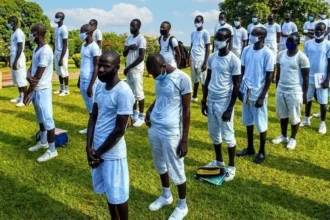
To support the expanded force structure, President Tinubu has approved the recruitment of 28,000 additional military personnel into the Nigerian Army.
The recruitment exercise is expected to increase manpower significantly, allowing the Army to adequately staff the newly created divisions while reinforcing existing formations engaged in counter-insurgency, anti-banditry, border security and internal security operations.
The Presidency stated that the recruitment initiative forms part of a broader investment by the Federal Government in strengthening the country’s armed forces.
According to the statement, the administration has continued to invest heavily in military modernisation through the acquisition of critical operational platforms, advanced equipment and weapons systems, while also improving troop welfare and sustaining operational readiness.
Government officials believe these investments will enhance the professionalism, mobility and effectiveness of the Armed Forces as they confront increasingly complex security threats across the country.
President Tinubu also used the opportunity to commend the Chief of Army Staff, Lieutenant General Waidi Ibrahim Shuaibu, as well as officers and soldiers of the Nigerian Army for their commitment, courage and professionalism in defending the nation’s territorial integrity and combating insecurity.
The President acknowledged the sacrifices made by military personnel in various theatres of operation and assured them of his administration’s continued support.
According to the Presidency, Tinubu reaffirmed his commitment to ensuring that the Armed Forces remain adequately equipped, properly motivated and fully prepared to discharge their constitutional responsibilities.
He stressed that national security remains one of the cardinal priorities of his administration and pledged to continue providing the resources required to strengthen the operational effectiveness of the military.
The expansion of the Nigerian Army to 12 divisions represents one of the most extensive organisational reforms in recent years and underscores the Federal Government’s determination to build a more responsive, better-equipped and strategically positioned military capable of addressing Nigeria’s evolving security challenges.
With the phased implementation set to conclude before the end of 2026, the restructuring is expected to reshape military operations across the country while improving the Army’s ability to respond swiftly and effectively to both conventional and asymmetric security threats.