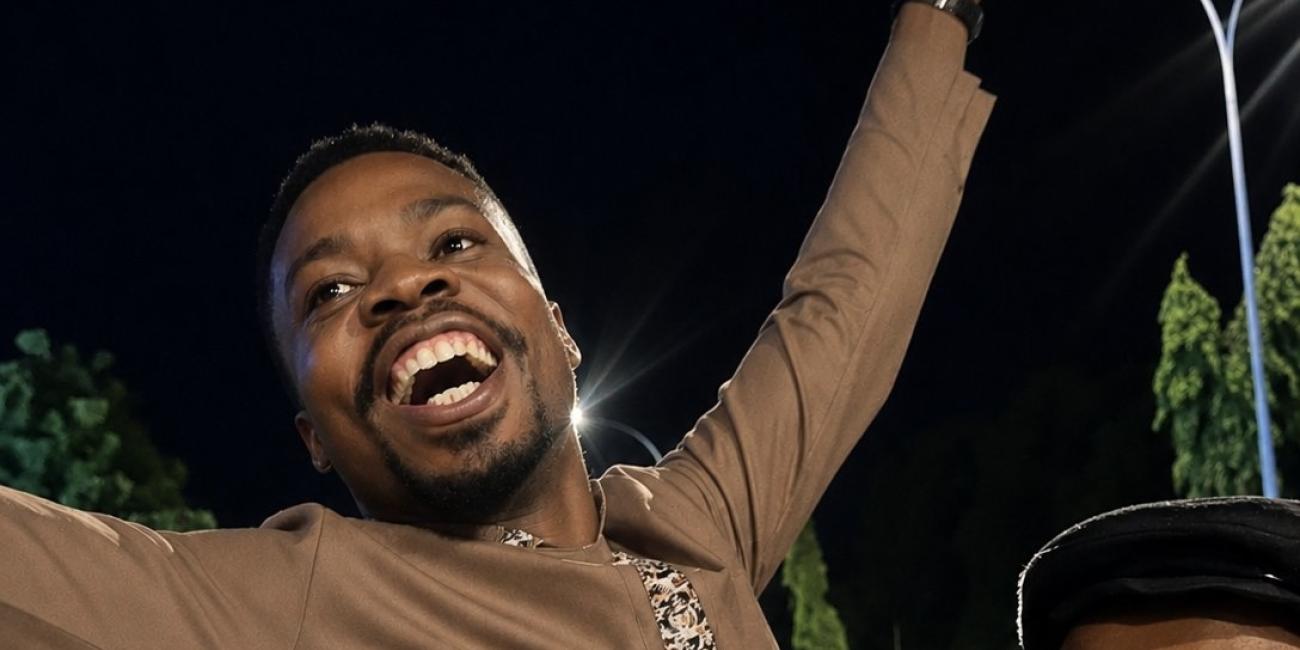
Human rights activist and blogger, Justice Mark Chidiebere, popularly known as Justice Crack, has regained his freedom after spending days in the custody of the Department of State Services (DSS).
The development was announced on Thursday night by prominent human rights activist and former presidential candidate, Omoyele Sowore, in a post shared on X.
Sowore, who had consistently criticised the detention of the activist, described Justice Crack’s incarceration as unjust, unlawful and politically motivated.
“Justice Crack is out now. He is finally free from the unjust detention imposed by the lawless Department of State Services (DSS),” Sowore wrote.
“This victory belongs to all who spoke out, resisted intimidation, and demanded justice,” he added.
The release of the activist followed growing public concern and sustained criticism from civil society groups, human rights advocates and supporters who accused security agencies of suppressing dissent and targeting critics of government institutions.
Earlier reports had indicated that the DSS was allegedly frustrating efforts to perfect the bail conditions granted to Justice Crack by the court.
Sowore had specifically accused the secret police of deliberately delaying the activist’s release by withholding his international passport, which formed part of the conditions required for the completion of his bail process.
The activist was granted bail by the Abuja Division of the Federal High Court on May 18, 2026.
Justice Joyce Abdulmalik, who presided over the matter, admitted Chidiebere to bail in the sum of N5 million with one surety in like sum.
Justice Crack is currently facing prosecution by the DSS over alleged cybercrime-related offences connected to a viral video involving the Nigerian Army.
According to court records, the charges stem from allegations that the activist circulated content capable of inciting disaffection within the military and misleading members of the public.
While ruling on the bail application, Justice Abdulmalik imposed several conditions on the defendant and his surety.
The court directed that the surety must reside within the jurisdiction of the court and must have maintained a fixed residential address for a minimum of four years.
The judge further ordered that the surety provide proof of residence through either a tenancy agreement or a certificate of occupancy to be deposited with the court registry.
In addition, the surety was required to be a federal civil servant not below Grade Level 15 and must provide evidence of at least three months’ salary payment.
The court also directed that the surety submit a letter of authentication from the immediate head of department as well as proof of pensionable employment.
Justice Abdulmalik further ordered the surety to depose to an affidavit of means and submit a recent passport photograph to the court.
As part of the bail conditions, the defendant himself was ordered to deposit his international passport with the court.
The case surrounding Justice Crack attracted widespread attention after allegations emerged that he had been tortured and subjected to degrading treatment while in military custody before being transferred to the DSS.
Family members and supporters of the activist claimed his ordeal began after he openly criticised the military over the alleged extrajudicial killing of a civilian and raised concerns about the welfare conditions of rank-and-file soldiers.
According to relatives, Justice Crack had used his platform to advocate for accountability within the armed forces and highlight the economic difficulties faced by ordinary soldiers.
In one viral video circulated online, a woman identified as a relative of the activist emotionally narrated the conditions under which he was allegedly detained.
She claimed that Justice Crack was chained to a tree and left outdoors for 72 hours under harsh weather conditions because he spoke out against injustice and defended oppressed Nigerians.
The allegations sparked outrage on social media and intensified calls for accountability from security agencies.
Critics questioned why the allegations of torture were not independently investigated before the activist was handed over to the DSS for prosecution.
The relative also alleged that the blogger became a target after exposing what she described as the “brutal murder” of a civilian by soldiers and speaking in defence of “impoverished” military personnel who had allegedly been neglected by the military hierarchy.
“When are we going to finally fight for our voice? We don’t have a voice anymore. Nothing is working well in the country, and it can be anybody tomorrow,” she said in the emotional video.
Amid mounting public criticism, the Nigerian Army later confirmed that Justice Crack had indeed been arrested.
In an official statement, the military accused the activist of attempting to incite soldiers and engaging in acts capable of encouraging subversion against the military high command.
The army maintained that its actions were justified on grounds of national security and military discipline.
According to the military authorities, preliminary investigations revealed that the activist engaged soldiers in discussions that allegedly promoted discontent within the ranks of the armed forces.
“While the matter is being investigated for breach of the Armed Forces’ Social Media Policy and an attempt to misinform the public, preliminary report reveals that the soldiers discussed a wide range of issues with Justice Chidiebere, who seemed to be inciting soldiers to create discontent within the system,” the army stated.
The military also cited alleged conversations relating to subversion as part of the reasons for his arrest.
Army authorities argued that interactions between civilians and military personnel capable of undermining discipline could have serious consequences for national security.
The case has since triggered broader debates about freedom of expression, human rights and the limits of state security powers in Nigeria.
Human rights groups and civil society organisations have continued to raise concerns over what they describe as increasing harassment, intimidation and prosecution of activists, journalists and government critics under cybercrime and national security laws.
Supporters of Justice Crack insist that his activism falls within the constitutional right to freedom of expression and advocacy for accountability in public institutions.
Meanwhile, activists who campaigned for his release have described his freedom as a victory for civic resistance and public pressure against abuse of power.
Although Justice Crack has now regained freedom, legal proceedings against him are expected to continue in court as the DSS pursues the cybercrime charges filed against him.