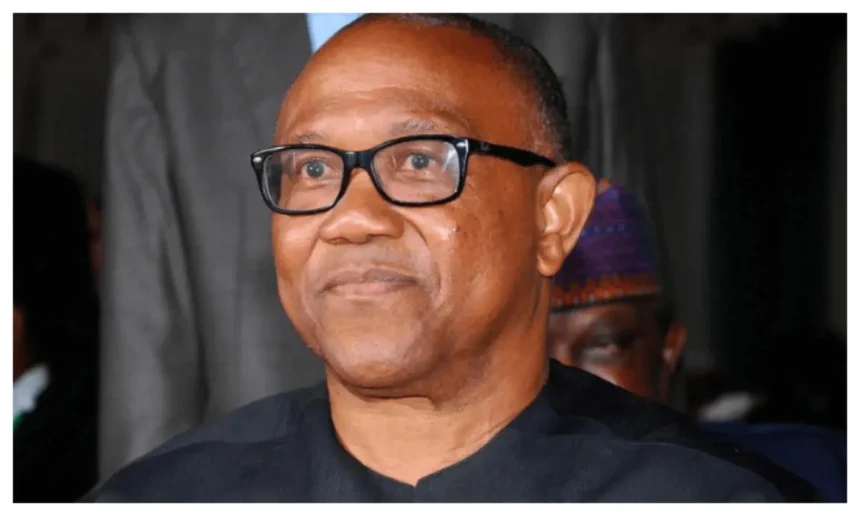
Former presidential candidate Peter Obi has called for immediate wage adjustments and comprehensive economic reforms in Nigeria, warning that the country’s worsening economic conditions are steadily eroding the value of labour and deepening the hardship faced by millions of citizens.
In a statement issued to commemorate International Workers’ Day, Obi paid tribute to Nigerian workers across all sectors, describing them as the foundation upon which the nation’s survival and progress rest. He commended their resilience and dedication, noting that despite severe economic pressures, they continue to sustain families, institutions, and the broader economy.
“Workers remain the backbone of every nation,” Obi stated, emphasizing that Nigerian workers have continued to demonstrate extraordinary commitment even in the face of mounting uncertainty. According to him, their contributions—whether in education, healthcare, agriculture, security, transportation, or industry—are indispensable to national development.
However, he expressed deep concern over what he described as the steady decline in the real value of wages, driven largely by inflation and the rising cost of living. Obi lamented that many Nigerians who work tirelessly every day are no longer able to meet even their most basic needs.
“It is deeply troubling that individuals who wake up daily to teach, heal, build, farm, produce, transport, protect, and serve the nation are still denied fair compensation and the dignity that should accompany their labour,” he said.
The former Anambra State governor highlighted the growing gap between income levels and living expenses, arguing that the current minimum wage has become grossly inadequate under prevailing economic realities. He pointed to the sharp increases in food prices, transportation costs, housing, and essential services as key factors that have significantly diminished the purchasing power of workers.
“In today’s Nigeria, the minimum wage can no longer guarantee even the most modest standard of living,” Obi noted. “The combined effects of inflation, rising food costs, and broader economic challenges have made it increasingly difficult for hardworking Nigerians to sustain themselves and their families.”
He stressed that without urgent intervention, the situation could worsen, leading to further socio-economic instability. Obi argued that a meaningful review of wages must be accompanied by broader structural reforms aimed at stabilizing the economy, boosting productivity, and improving living standards.
Central to his argument was the importance of investing in human capital. Obi maintained that no nation can achieve sustainable development without prioritizing the welfare and productivity of its workforce. He warned that neglecting workers’ well-being ultimately undermines national growth.
“No country can develop beyond the strength and productivity of its workforce,” he said. “When workers suffer, the nation suffers. Conversely, when workers are empowered, the nation prospers.”
Beyond wage concerns, Obi called for a comprehensive rethinking of Nigeria’s economic framework. He advocated a shift from a consumption-driven economy to one anchored on production, innovation, and value creation. According to him, such a transition would not only generate employment but also strengthen the country’s economic resilience.
He urged policymakers to implement reforms that support local industries, encourage entrepreneurship, and create an enabling environment for businesses to thrive. He also emphasized the need for policies that promote price stability and reduce the cost of living.
In addition to economic reforms, Obi underscored the role of workers in shaping the country’s political and governance landscape. He encouraged Nigerians to actively engage in democratic processes and demand accountable leadership.
“Workers must recognize their power and responsibility in shaping governance,” he said. “They owe it to themselves, their children, and future generations to support and demand leadership built on competence, character, capacity, credibility, and compassion.”
He argued that meaningful change in Nigeria would require not only sound economic policies but also a leadership culture rooted in integrity and service. According to him, citizens must remain vigilant and committed to holding leaders accountable.
Obi also highlighted the need for social justice and fairness in the distribution of national resources. He called for policies that reduce inequality and ensure that the benefits of economic growth are shared more equitably among citizens.
“A productive and prosperous nation must be built on justice, fairness, and respect for labour,” he stated. “That is the kind of Nigeria we must collectively strive to build.”
His message comes at a time when many Nigerians are grappling with rising living costs, unemployment, and economic uncertainty. Analysts have noted that inflationary pressures and currency fluctuations have significantly impacted household incomes, making calls for wage adjustments increasingly urgent.
Obi concluded his Workers’ Day message with a renewed appeal for unity and collective action, urging both government and citizens to work together in addressing the country’s challenges. He expressed optimism that with the right policies and leadership, Nigeria can overcome its current difficulties and build a more inclusive and prosperous future.
“As we reflect on the contributions of our workers, we must also commit to creating a system that rewards their efforts and protects their dignity,” he said. “Only then can we truly unlock the full potential of our nation.”
The statement adds to growing national conversations around labour rights, economic reforms, and the urgent need to improve the welfare of Nigerian workers in the face of evolving economic realities.