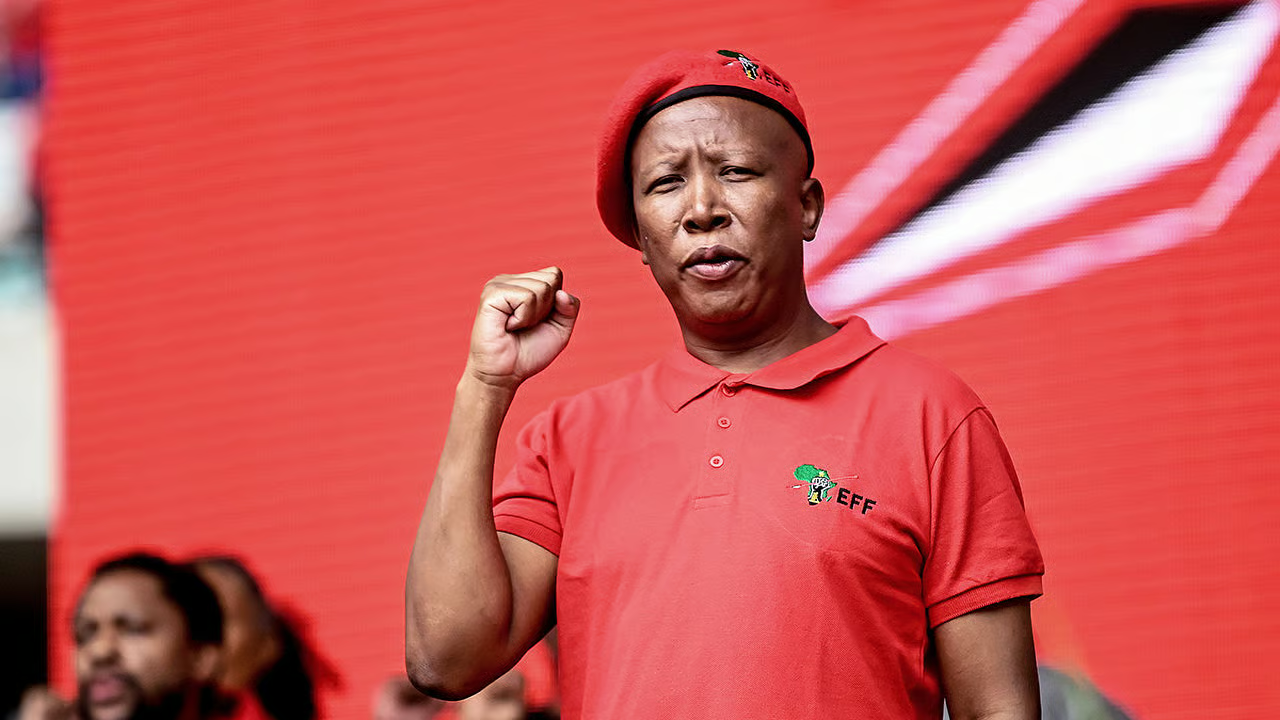
A court in South Africa has sentenced radical opposition figure Julius Malema to five years’ imprisonment for unlawfully discharging a firearm during a political rally, in a ruling that has intensified political tensions in the country.
Malema, the leader of the Economic Freedom Fighters (EFF), was convicted over an incident that occurred in 2018 when he fired what prosecutors described as an assault rifle into the air during a party celebration. The court found that the act constituted a clear violation of South Africa’s firearm control laws.
Delivering the sentence on Thursday, Magistrate Twanet Olivier held that Malema’s actions were deliberate and reckless, noting that public figures bear a heightened responsibility to uphold the law.
“The accused knowingly contravened firearm regulations by discharging a weapon in a public setting,” Olivier ruled, adding that such conduct posed a significant risk to public safety and could not be excused as symbolic or celebratory.
The sentencing drew a large and vocal crowd to the courthouse, with hundreds of EFF supporters dressed in the party’s trademark red regalia gathering outside in a show of solidarity with their leader. The atmosphere remained charged but largely orderly, as party members chanted slogans and denounced what they described as a politically motivated prosecution.
The case has been closely watched across South Africa, not only because of Malema’s prominence as a firebrand political figure but also due to its implications for political accountability and the enforcement of firearms legislation.
Prosecutors argued during the trial that Malema’s conduct set a dangerous precedent, particularly in a country grappling with high levels of gun violence. They maintained that allowing such actions to go unpunished would undermine the rule of law and embolden similar behavior.
Malema’s defence team, however, had urged the court to consider the context of the incident, describing it as part of a celebratory political gathering rather than a criminal act. They also argued that no one was harmed and that the sentence should reflect mitigating factors, including his status as a public representative.
Despite these submissions, the court concluded that a custodial sentence was warranted, emphasizing deterrence and the need to reinforce compliance with firearm regulations.
Political analysts say the ruling could have far-reaching consequences for the EFF, a party known for its confrontational style and strong grassroots mobilisation. Malema, a central figure in South Africa’s opposition politics, has built a reputation as an outspoken critic of economic inequality and government policy.
His imprisonment is likely to galvanise his support base while also raising questions about the party’s leadership structure in his absence.
Outside the courthouse, several EFF members expressed outrage at the judgment, insisting that their leader was being unfairly targeted because of his political stance. Some supporters called for nationwide protests, while party officials indicated that legal options, including a possible appeal, were under consideration.
Legal experts note that the case underscores the judiciary’s willingness to hold even high-profile politicians accountable under the law. It also highlights the strict interpretation of firearm regulations in South Africa, where unauthorised discharge of weapons—regardless of intent—can attract severe penalties.
As the country reacts to the verdict, attention is expected to shift to the next legal steps in the case and the broader political ramifications of Malema’s incarceration.
For now, the ruling marks a significant moment in South Africa’s legal and political landscape, reinforcing the principle that no individual, regardless of status, is above the law.