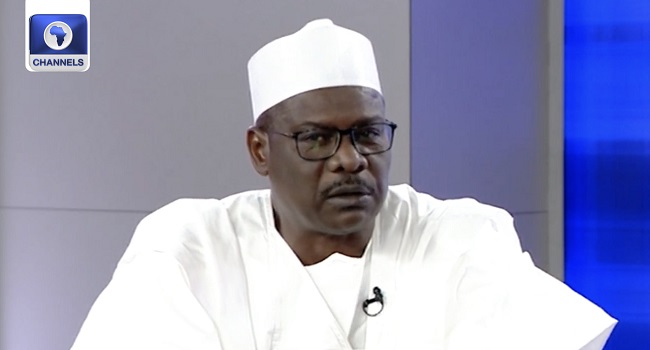
Senator Ali Ndume has expressed confidence that Nigeria can significantly curb its insecurity challenges within six months, provided the Federal Government demonstrates strong political will and implements decisive, well-coordinated measures.
Ndume made this assertion during an interview on Channels Television on Monday, April 14, where he spoke candidly about the country’s prolonged security crisis and what he believes are the necessary steps to address it effectively.
According to the lawmaker, the persistent insecurity across various parts of Nigeria is not due to a lack of capacity but rather a deficit in commitment and execution. He argued that with the right level of seriousness from the leadership, the situation could be brought under control within a relatively short period.
“It is not about complaining,” Ndume said during the interview. “If the President and the Federal Government are serious about this, we can end this thing in six months. All we need is to train our soldiers, equip them, arm them very well, and then motivate them.”
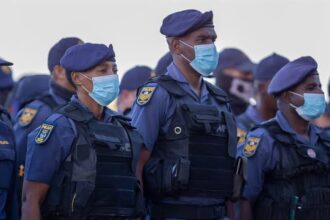
The senator emphasized that the Nigerian military has the foundational structure required to tackle insurgency, banditry, and other forms of violent crime, but requires sustained investment in critical areas. He highlighted training, modern equipment, adequate weaponry, and troop welfare as key components of a comprehensive security strategy.
Ndume also raised concerns over the recurring loss of military personnel, including senior officers, in ongoing operations. He described the trend as alarming and indicative of deeper operational and strategic challenges within the country’s security architecture.
According to him, repeated attacks on security forces not only weaken morale but also point to gaps in intelligence, logistics, and tactical preparedness. He stressed that addressing these weaknesses must be treated as a matter of urgency if the country is to make meaningful progress in restoring peace and stability.
The senator further noted that beyond physical equipment, motivation plays a crucial role in the effectiveness of troops on the battlefield. He called for improved welfare packages, timely payment of allowances, and better support systems for soldiers and their families, arguing that a motivated force is more likely to perform optimally.
Ndume’s remarks come amid ongoing concerns over insecurity in Nigeria, particularly in the North-East, where insurgent groups have continued to launch attacks on both civilian communities and military formations. His home state of Borno has remained one of the epicentres of the crisis, giving his perspective added weight as a representative of the affected region.
While acknowledging the efforts already made by security agencies, Ndume insisted that a more results-driven approach is needed. He urged the Federal Government to move beyond rhetoric and demonstrate tangible commitment through policy implementation and resource allocation.
His comments add to the growing public discourse on how best to address Nigeria’s security challenges, with many stakeholders calling for reforms, increased funding, and improved coordination among security agencies.
As the debate continues, Ndume’s position underscores a broader sentiment that Nigeria possesses the capacity to overcome its security problems, but must harness that potential through decisive leadership and sustained action.