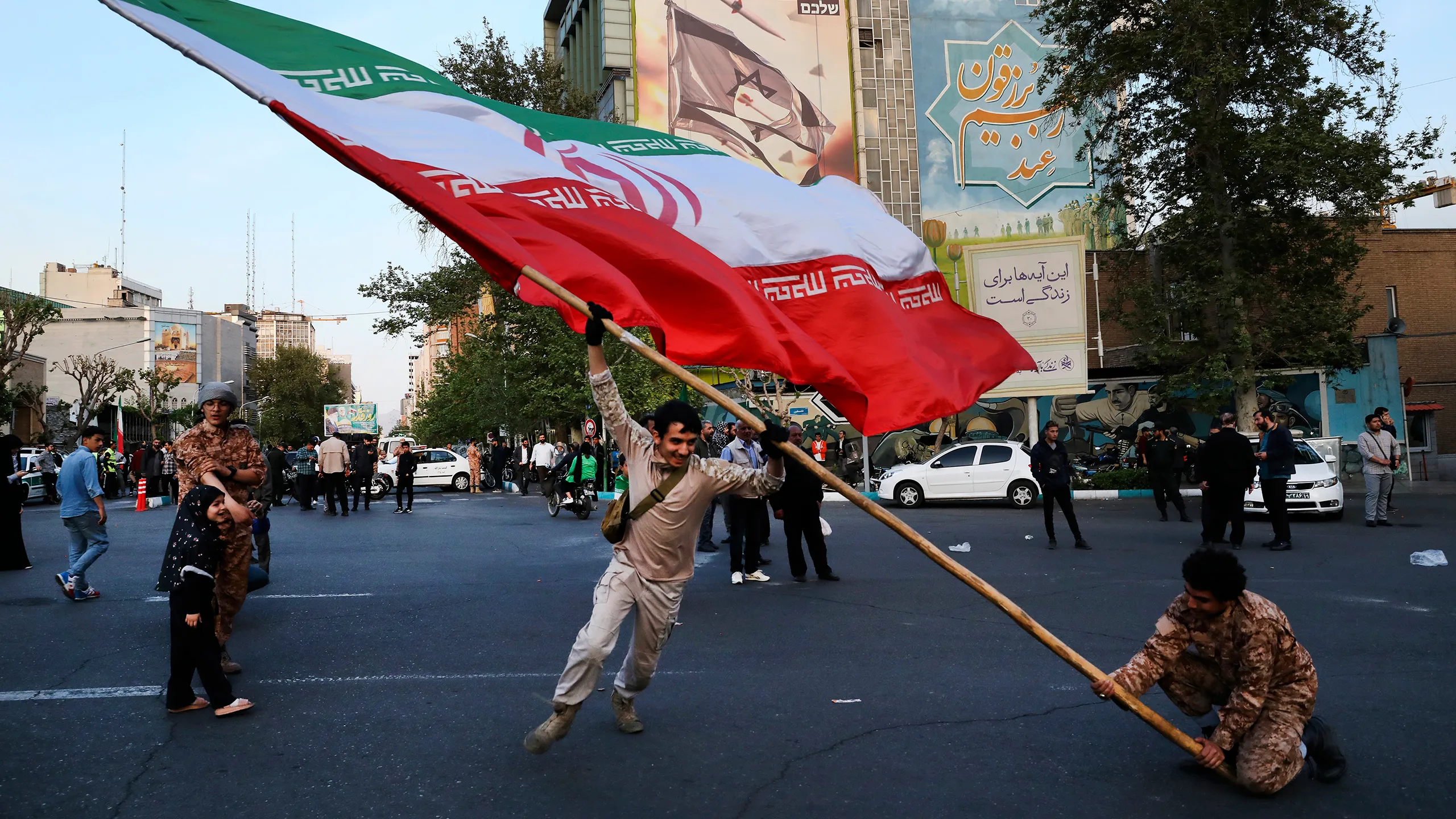
Iranian authorities are facing growing criticism following reports of a new volunteer mobilisation initiative that appears to include children as young as 12 in activities linked to national security and wartime support.
According to media outlets connected to the country’s security apparatus, the programme was recently unveiled in Tehran and is being coordinated by the Basij, a paramilitary wing under the Islamic Revolutionary Guard Corps. The campaign is being promoted under the banner “Homeland Defender Fighters for Iran,” with the rallying slogan “For Iran.”
Reports indicate that the initiative is designed to mobilise civilians for a wide range of roles, including defence-related duties, logistics, and humanitarian support. However, what has sparked the most concern is the reported eligibility criteria, which, according to publications such as Defa Press, allows individuals aged 12 and above to enlist.
Further details emerging from local broadcasts, including footage circulated by Tasnim News Agency and sourced from Islamic Republic of Iran Broadcasting, suggest that volunteers could be assigned to roles such as intelligence patrols, operational monitoring, and checkpoint duties. These responsibilities, observers note, go beyond basic civilian support and edge into areas typically reserved for trained security personnel.
Critics argue that assigning such tasks—particularly to minors—raises serious ethical and legal questions. They warn that involving underage individuals in surveillance or security enforcement blurs the line between civilian participation and active engagement in conflict-related operations.
The development comes at a time of heightened tensions in the Middle East, as the ongoing confrontation involving the United States, Israel, and Iran continues to escalate. The conflict has evolved into a complex and volatile situation, marked by direct military exchanges, missile strikes, cyber operations, and proxy engagements across several countries, including Syria and Iraq, as well as strategic waterways in the Persian Gulf.
Washington has maintained that its actions are aimed at limiting Iran’s military capabilities and curbing its regional influence. On the other hand, Tehran has consistently framed the confrontation as a defensive response to what it describes as coordinated aggression by Western powers and Israel.
As the conflict intensifies, its impact on civilian populations across the region has become more pronounced. Displacement, economic strain, and tighter security measures have become increasingly common, adding to the sense of instability and uncertainty.
Iran’s reliance on mass mobilisation during periods of conflict is not new. The Basij, in particular, played a prominent role during the Iran–Iraq War, when large numbers of civilians—including young people—were recruited for both frontline and support operations. That period left a lasting imprint on Iran’s military and social structure, with the Basij evolving into a key instrument of both national defence and internal security.
In the years since, the group has been actively involved in enforcing state policies and responding to domestic unrest, often acting as an auxiliary force alongside formal security agencies. Its continued relevance reflects the government’s long-standing strategy of integrating civilian participation into national security frameworks.
However, analysts say the current mobilisation drive represents a potentially troubling expansion of that approach, particularly given the inclusion of minors. They caution that while governments may seek to harness public support during times of crisis, the involvement of children in activities linked to conflict raises significant human rights concerns.
International conventions and norms generally prohibit the recruitment or use of children in armed conflict, even in non-combat roles that could expose them to danger. As such, the reported policy has drawn attention from observers who fear it could set a concerning precedent, especially in an already volatile regional environment.
For now, Iranian authorities have not publicly addressed the criticism in detail. But as the situation unfolds, the initiative is likely to remain under close scrutiny, both within the region and internationally, as questions persist over the boundaries between civic mobilisation, national defence, and the protection of vulnerable populations.