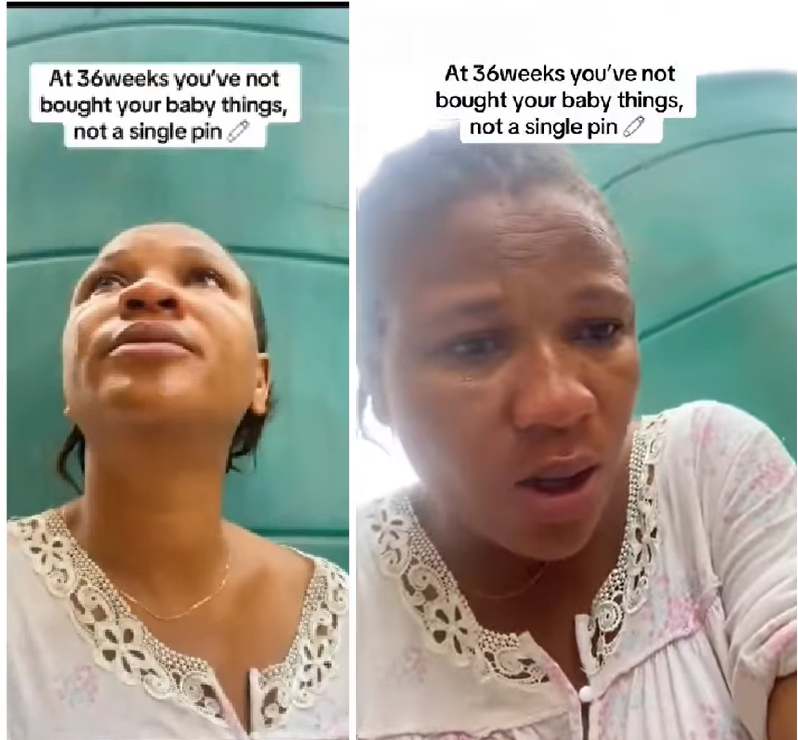
A heavily pregnant Nigerian woman has sparked widespread reactions online after revealing that at 36 weeks into her pregnancy, she has not been able to buy a single item in preparation for her baby’s arrival.
In a tearful video that has since circulated across social media platforms, the expectant mother expressed deep anxiety and frustration over her financial situation, saying she feels unprepared and overwhelmed as her due date approaches.
“I’m 36 weeks pregnant and I haven’t bought anything for my baby,” she said in the emotional clip. “Not clothes, not diapers, not even a hospital bag. I don’t know where to start from.”
Her words have resonated with many Nigerians, especially young mothers and families grappling with the rising cost of living across the country.
At 36 weeks, pregnancy is considered full-term in just a few weeks’ time, meaning labour could begin at any moment. For many expectant parents, this stage is usually marked by final preparations — washing baby clothes, packing hospital bags, purchasing essential supplies, and arranging post-delivery support.
But for this woman, the reality is starkly different.
According to her, persistent financial challenges have made it impossible to make even the most basic preparations. She explained that she had hoped things would improve before her due date, but the situation has remained unchanged.
“I kept hoping that before now, I would have been able to save something or buy at least small things bit by bit. But nothing has worked out,” she said.
Her voice cracked as she spoke about the emotional toll of feeling unready for motherhood, especially at a time that should ordinarily be filled with excitement and anticipation.
The woman’s story comes amid continued economic strain across Nigeria, where inflation has driven up the prices of essential goods, including baby supplies, food, and healthcare services.
Basic newborn essentials — such as baby clothing, diapers, wipes, blankets, toiletries, and hospital fees — now cost significantly more than they did just a few years ago. For families without stable income or strong financial support systems, preparing for a new baby can quickly become overwhelming.
Several social media users who reacted to her video pointed out that the cost of even a modest hospital delivery package can be prohibitive, especially in private facilities. Others highlighted the additional expenses of postnatal care and infant feeding.
For many young couples and single mothers, pregnancy no longer brings only joy — it also brings financial anxiety.
Following the circulation of her video, many Nigerians took to social media to offer words of encouragement, advice, and in some cases, financial assistance.
Some women shared their own experiences of giving birth with little preparation, explaining that community support, family help, and faith helped them through difficult periods.
“You are not alone,” one commenter wrote. “Many of us have been there. God will provide.”
Others urged her to create a small checklist and focus on the most essential items first, rather than trying to purchase everything at once. A few charitable individuals reportedly asked for her contact details in order to send baby items or cash support.
The incident has once again demonstrated the power of social media as both a platform for vulnerability and a channel for collective empathy.
Beyond the viral moment, the woman’s emotional outcry sheds light on a deeper issue — the silent struggles many expectant mothers endure.
Pregnancy can already be physically and emotionally demanding. Hormonal changes, physical discomfort, and anxiety about childbirth are common experiences. When financial stress is added to the mix, the pressure can become overwhelming.
Experts often stress that emotional well-being during pregnancy is crucial, not just for the mother but also for the unborn child. Persistent stress can affect sleep patterns, appetite, and overall health.
For women without adequate support systems — whether from partners, family members, or community networks — the journey can feel isolating.
The viral video has also triggered broader conversations about economic inequality, social safety nets, and the rising cost of raising children in Nigeria.
Some commentators argued that more structured community support systems — such as church groups, women’s associations, and local charities — should step up to assist vulnerable expectant mothers.
Others pointed to the need for improved maternal health policies, subsidised delivery costs, and better welfare programs for low-income families.
While the woman did not delve deeply into the circumstances that led to her situation, her emotional confession struck a chord because it reflects a reality many are quietly facing.
Despite her distress, the expectant mother expressed hope that things would turn around before her baby arrives. She said she remains grateful for the life growing inside her, even though the road has been difficult.
“I just want my baby to come into this world and be okay,” she said.
As her due date draws closer, many who have followed her story are hopeful that the attention generated will translate into tangible support.
Her story serves as a poignant reminder that behind the statistics about inflation and economic hardship are real people — mothers, fathers, and children — navigating life one day at a time.
For now, her simple, heartbreaking confession — “I’m 36 weeks pregnant and I haven’t bought anything for my baby” — continues to echo across social media, prompting compassion, reflection, and, for some, a renewed commitment to lend a helping hand.