The United States is preparing for a significant military reinforcement in the Middle East, with plans to deploy thousands of additional troops to the region. The move signals a continued buildup of American forces at a time when diplomatic prospects with Iran remain unclear and regional tensions are running high.
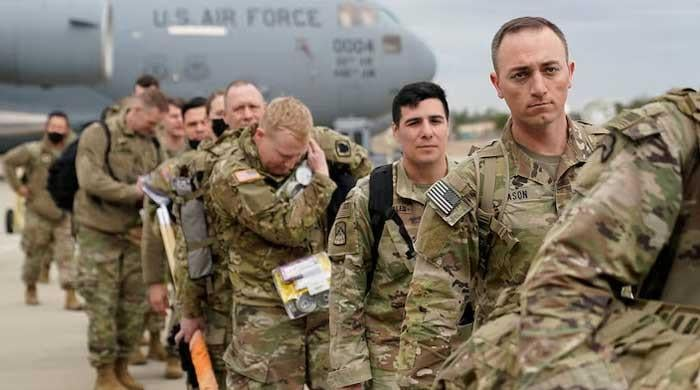
According to reports from Reuters, sources familiar with Pentagon discussions say between 3,000 and 4,000 soldiers from the U.S. Army’s elite 82nd Airborne Division are expected to be sent to the region. The division, headquartered at Fort Bragg in North Carolina, is renowned for its rapid-response capability and is able to mobilize within 18 hours of receiving orders. Its involvement suggests a focus on flexibility and readiness rather than long-term occupation.
Officials have not publicly confirmed the exact destinations for the additional troops or when they will arrive. Likewise, no formal decision has been announced regarding the deployment of U.S. ground forces into Iranian territory. Instead, the reinforcement is described as a precautionary measure designed to strengthen operational readiness and expand options available to military planners.
This latest development builds on an earlier wave of reinforcements. In recent weeks, the U.S. had already sent additional personnel to the region, including Marines and sailors deployed aboard the USS Boxer, an amphibious assault ship capable of supporting expeditionary operations. The vessel carries a Marine Expeditionary Unit and operates alongside supporting warships, adding both air and sea-based capabilities to America’s regional posture.
Even before these reinforcements, the United States maintained a substantial military footprint across the Middle East, with roughly 50,000 troops stationed in various countries. The addition of thousands more personnel marks a clear signal of concern within U.S. defense circles about the evolving security landscape.
The buildup comes amid heightened tensions linked to Iran and its role in ongoing regional conflicts. Military planners are reportedly examining a range of strategic scenarios. Among them is the possibility of securing the Strait of Hormuz — a narrow but vital waterway through which a significant portion of the world’s oil supply passes. Any disruption to traffic in the strait could send shockwaves through global energy markets.
Another scenario reportedly under review involves operations near Iran’s coastline. Discussions have also included the potential targeting of Kharg Island, a major oil export terminal responsible for handling the bulk of Iran’s crude shipments. While no formal decision has been made to carry out such actions, the very consideration of these options underscores the seriousness of current deliberations.
Global markets have already reacted nervously to rising tensions. Oil prices have shown volatility, reflecting fears that any escalation could disrupt supply chains and impact energy security worldwide. The Middle East remains a strategic crossroads for global trade and energy flows, making military developments in the region closely watched by governments and investors alike.
Despite the visible military preparations, signals about diplomacy remain mixed. Statements from U.S. officials have hinted at the possibility of constructive engagement with Tehran, suggesting that channels for dialogue could still be open. However, Iranian authorities have publicly denied that any direct negotiations are taking place.
This divergence in messaging has added to uncertainty. While Washington appears to be keeping diplomatic options on the table, the parallel military buildup suggests that policymakers are preparing for scenarios where talks fail to materialize or tensions escalate further.
The potential use of American ground troops — even in a limited capacity — carries significant political implications at home. Public appetite in the United States for another military entanglement in the Middle East is limited. Years of prolonged conflicts in Iraq and Afghanistan have left many Americans wary of new interventions.
Recent polling indicates that a majority of Americans oppose military strikes on Iran. Concerns range from the financial cost of military operations to the risk of broader regional war and potential casualties. Lawmakers from both major political parties have also expressed caution, emphasizing the need for congressional oversight before any large-scale military action.
For military planners, however, maintaining a strong presence is often viewed as a deterrent strategy. By positioning rapid-response units such as the 82nd Airborne Division closer to potential flashpoints, the United States can respond quickly to emerging threats, protect allies, and safeguard strategic interests.
The situation remains fluid. Much will depend on how events unfold in the coming weeks — whether diplomatic initiatives gain traction or whether tensions continue to rise. For now, the deployment reflects a balancing act: projecting strength and preparedness while leaving space, at least rhetorically, for negotiation.
As global attention remains fixed on the Middle East, the arrival of additional U.S. troops underscores the delicate and uncertain moment. Whether this buildup serves as a deterrent, a precursor to deeper involvement, or simply a precautionary measure will depend on decisions made in Washington and Tehran alike.