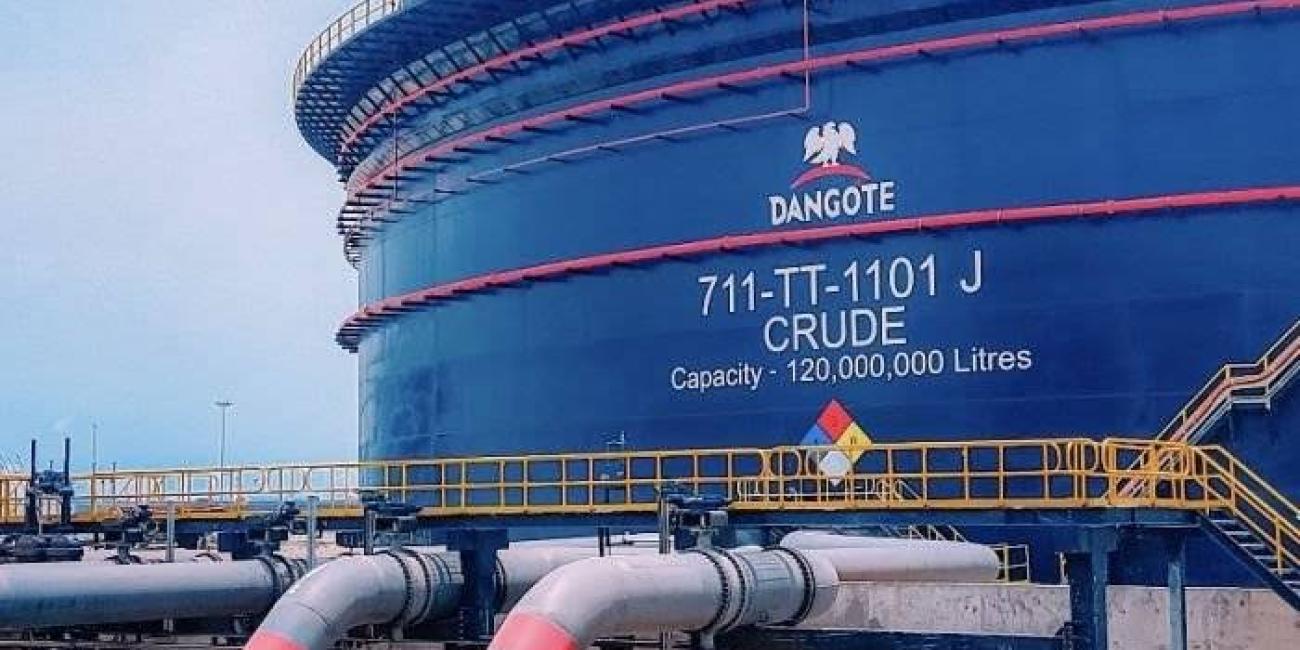
The Dangote Petroleum Refinery in Lagos State has once again raised the ex-depot price of Premium Motor Spirit (PMS), commonly known as petrol, to ₦1,275 per litre, marking the fifth upward adjustment within the month of March alone.
The latest review represents a significant jump from the ₦1,175 per litre rate at which the product was previously sold. It also comes barely hours after an earlier increase to ₦1,245 per litre, highlighting the sustained volatility in Nigeria’s downstream petroleum sector.
In a formal notice issued to marketers and bulk purchasers on Saturday, the refinery informed customers that the newly reviewed price structure takes immediate effect. The company advised recipients to disregard previous pricing communications.
“Dear Valued Customer, kindly note that the prices contained in our previous correspondence are no longer applicable and should be disregarded,” the notice stated.
It further provided updated figures for both gantry and coastal supply channels. According to the refinery, the coastal price of PMS rose from ₦1,512,648 to ₦1,646,748 per metric tonne. Simultaneously, the gantry price increased from ₦1,175 to ₦1,275 per litre.
The refinery emphasized that the revised rates became effective from midnight on March 21, 2026, and would apply to all unloaded gantry and coastal volumes from that time.
“Please note that the revised price will apply to all unloaded gantry and coastal volumes and is effective from 12am on the 21st of March 2026,” the statement added.
However, the company clarified that customers operating under existing credit arrangements would still be accommodated, provided they cover the differential arising from the new pricing structure.
The latest hike continues a pattern of frequent upward reviews throughout March. Industry data indicates that at the beginning of the month, petrol from the refinery was sold at approximately ₦774 per litre. Within less than three weeks, the ex-depot price climbed to ₦1,275 per litre—an increase exceeding 60 per cent.
This sharp rise has raised concerns among stakeholders and consumers, particularly against the backdrop of existing inflationary pressures and a fragile economic environment.
Energy market analysts attribute the persistent price adjustments to a combination of global and domestic factors. Rising international crude oil prices have significantly influenced refined product costs worldwide. Additionally, fluctuations in the foreign exchange market have compounded pricing pressures, especially in a deregulated regime where market forces largely determine retail and ex-depot rates.
An energy analyst who spoke on condition of anonymity explained that the deregulated framework allows for rapid transmission of international price movements to domestic markets.
“In a deregulated environment, prices respond almost immediately to changes in crude oil benchmarks and exchange rate realities. What we are witnessing is a direct reflection of these global and domestic pressures,” the analyst said.
Beyond crude prices and currency volatility, other structural factors have also contributed to the adjustments. Logistics expenses, including transportation and distribution costs, remain significant components of the final ex-depot price. Furthermore, supply-demand imbalances—especially in periods of heightened consumption—can intensify pricing fluctuations.
The refinery’s decision to simultaneously revise both gantry and coastal prices signals a comprehensive recalibration of its pricing template across supply channels. Gantry sales typically involve direct loading into tanker trucks at the refinery, while coastal pricing applies to marine deliveries and bulk distribution via sea routes. Adjustments in both categories suggest a broad-based response to cost pressures.
Market observers warn that the implications of the latest increase could extend beyond depot transactions. Ex-depot prices serve as the baseline for retail pump pricing, meaning filling stations are likely to adjust their pump rates upward to reflect higher acquisition costs.
A petroleum marketer in Lagos confirmed that depot-level hikes invariably cascade to the retail segment.
“Any increase at the depot level will ultimately affect pump prices. Marketers cannot absorb that magnitude of increase without passing it on. Consumers should anticipate further adjustments at filling stations in the coming days,” he said.
If retail prices rise accordingly, the economic ripple effects could be substantial. Transportation costs—both intra-city and inter-state—are typically the first to respond to higher fuel prices. Increased transport fares often trigger subsequent rises in food prices and other consumer goods, as logistics expenses form a key component of supply chains.
For households already grappling with elevated living costs, additional fuel price hikes may further erode purchasing power. Businesses reliant on transportation and energy inputs are also likely to experience increased operational expenses, potentially leading to price adjustments across multiple sectors.
The recurring price revisions underscore the realities of a fully deregulated petroleum market. Since the removal of fuel subsidies, market dynamics—rather than administrative controls—have primarily dictated product pricing. While deregulation aims to promote efficiency, attract investment, and reduce fiscal burdens on government, it also exposes consumers to the full volatility of global energy markets.
As of the time this report was filed, there had been no official reaction from the Federal Government regarding the latest price increase. In previous instances, government officials have reiterated that pricing decisions are determined by market forces under the deregulated framework.
Stakeholders argue that the situation highlights the need for improved domestic refining capacity and stable foreign exchange management to cushion external shocks. Although the Dangote Refinery represents a significant expansion of local refining capability, its pricing structure remains influenced by global crude benchmarks and macroeconomic variables.
Industry experts maintain that until global oil prices stabilize and exchange rate pressures ease, volatility in the downstream sector is likely to persist. They also emphasize the importance of transparency and effective competition among market players to mitigate extreme price swings.
For now, consumers and businesses alike are bracing for further adjustments at filling stations nationwide. With five price increases recorded within a single month, March has underscored the intensity of current market pressures.
As the downstream sector navigates this period of heightened volatility, the broader economic implications—ranging from inflation to cost-of-living concerns—remain central to public discourse. Whether prices stabilize in the coming weeks will depend largely on developments in global crude markets, exchange rate movements, and domestic supply dynamics.