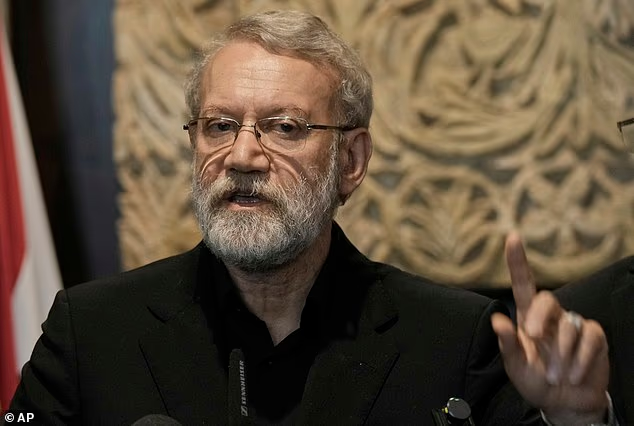
Iran has confirmed the death of one of its most powerful security figures, Ali Larijani, who was reportedly killed in an Israeli airstrike on Tehran overnight. The development marks a dramatic escalation in the ongoing war between Iran and Israel, deepening instability across the region and striking at the core of Iran’s leadership structure.
Larijani, 67, was widely regarded as one of the most influential figures within Iran’s ruling establishment. At the time of his death, he was serving as head of the Supreme National Security Council, the country’s highest decision-making body on national defense and strategic security matters. Following the deaths of other senior leaders in recent months, he had emerged as arguably the most powerful operational authority within the Islamic Republic.
Israeli military officials claimed responsibility for the strike, describing Larijani as a central architect of Iran’s regional military strategy. According to one senior Israeli military official, Larijani had effectively become the key decision-maker within Iran’s security apparatus.
“He was effectively the leader, the one calling the shots,” the official said. “He was the de facto leader of Iran, and we believe him to be eliminated in an Israeli Air Force strike last night. He was the one instructing attacks against multiple states and directing fire across the entire region.”
Iranian authorities later confirmed Larijani’s death but did not immediately provide detailed information about the exact location or circumstances of the strike. State media described him as a “martyr of the Islamic Republic,” praising his service and portraying his death as a result of what they termed Israeli aggression.
Larijani was last seen publicly on Friday during the annual Quds Day march in Tehran. The event, established after the 1979 Islamic Revolution, is a state-sponsored demonstration expressing solidarity with Palestinians and opposition to Israel. Appearing alongside other senior officials, Larijani had dismissed recent Israeli and U.S. military actions as signs of “desperation” and vowed that Iran would not be intimidated.
His killing represents another significant blow to Iran’s top leadership. The conflict has already claimed the life of Iran’s long-serving Supreme Leader, Ali Khamenei, whose death earlier in the war shocked the nation and triggered a rapid and tense leadership transition.
Following Khamenei’s death, his son, Mojtaba Khamenei, was named as the new Supreme Leader. However, Mojtaba has not been seen publicly since the start of the most recent phase of hostilities, fueling speculation about his health and safety. Unconfirmed reports suggest he may have been seriously injured during the strike that killed his father, though Iranian officials have neither confirmed nor denied those claims.
Larijani’s role in the Iranian government extended far beyond ceremonial leadership. He was considered a strategic operator and a hardliner on security matters. Earlier this year, he was widely identified as one of the principal architects of the crackdown on anti-government protests that erupted across Iran. Security forces responded to those demonstrations with force, resulting in numerous casualties and widespread arrests.
His elimination is likely to have both symbolic and operational consequences. Symbolically, it sends a powerful message that Israel is willing to directly target the highest levels of Iranian leadership. Operationally, it could disrupt command structures within Iran’s military and security institutions at a critical time.
The Israeli government has not issued an official statement at the highest political level confirming the operation, but military sources have framed it as a necessary action aimed at neutralizing what they described as a key threat to regional security. Israeli officials have repeatedly accused Iran of orchestrating attacks against Israeli interests and supporting armed groups across the Middle East.
For Iran, Larijani’s death compounds a growing leadership vacuum. The loss of both a Supreme Leader and the head of the Supreme National Security Council within a short span presents significant challenges to governance, military coordination, and public morale.
Analysts say the killing could provoke retaliatory action from Iran or allied groups in the region. Tehran has historically responded forcefully to high-profile assassinations, and tensions are expected to intensify in the coming days.
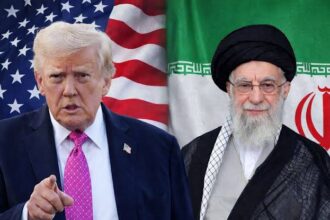
At the same time, there are concerns about the broader geopolitical implications. The United States has been closely watching developments, particularly given earlier statements by former U.S. President Donald Trump, who had been drawn into the rhetoric surrounding the conflict. Larijani had publicly mocked Trump just days before his death, criticizing American involvement in Middle Eastern affairs.
Inside Iran, public reaction has been mixed but tense. State-organized gatherings have begun in major cities, with officials calling for unity and resistance. Meanwhile, social media discussions reflect uncertainty and anxiety over the country’s political future.
International observers warn that the elimination of such a high-ranking figure could shift the trajectory of the war from indirect confrontation to a more direct and dangerous phase. Diplomatic efforts to de-escalate the crisis appear increasingly fragile.
As the region braces for potential retaliation and further strikes, Larijani’s death marks a defining moment in the conflict. Whether it will deter further aggression or ignite a broader war remains uncertain, but it undeniably signals that the conflict has entered a new and perilous chapter.