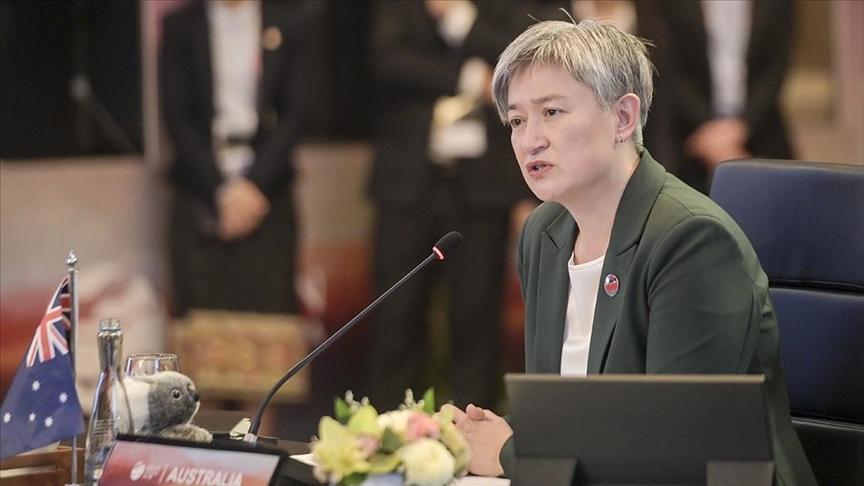
The government of Australia has directed all non-essential diplomatic and government personnel stationed in Israel and the United Arab Emirates to leave their posts as security conditions across the Middle East continue to deteriorate.
The decision was announced by Australia’s Minister for Foreign Affairs, Penny Wong, who said the withdrawal was necessary due to the rapidly worsening security situation in the region. According to Wong, the government took the precautionary step to ensure the safety of Australian officials while still maintaining enough diplomatic presence to support citizens who may require urgent assistance.
Speaking about the development, Wong explained that although non-essential personnel are being evacuated, a core group of essential officials will remain in both Israel and the United Arab Emirates to continue providing consular services and coordinating support for Australians still living or travelling in the region.
The move comes amid rising geopolitical tensions and growing security concerns across the Middle East, where ongoing hostilities and military activities have created an increasingly unpredictable environment for foreign nationals and diplomatic missions.
Officials in Canberra said the decision followed ongoing assessments of the regional security climate, which has become increasingly volatile in recent weeks. Authorities believe the risk to foreign personnel could escalate further if the conflict continues to spread.
Alongside the withdrawal order, the Australian government has also reinforced its travel advisory warning citizens against travelling to Israel and the United Arab Emirates at this time. Officials stressed that the security environment remains highly uncertain and could deteriorate quickly without much warning.
The government urged Australians to take the warnings seriously and reconsider any plans to travel to the region unless absolutely necessary.
In a message posted on the social media platform X, Wong called on Australians currently in the Middle East to leave the region if it is safe for them to do so.
“We urge you to leave the Middle East if you can and if it’s safe to do so,” she wrote in the message. “Don’t wait until it’s too late. It may be the last chance for some time.”
The foreign minister emphasised that travellers should take advantage of existing commercial flights and other available transport options while they remain operational.
Government officials warned that if the security situation worsens further, air travel and other transportation routes could be disrupted, making it much more difficult for people to leave the region.
The evacuation directive reflects growing concerns among international governments about the safety of their citizens and diplomats in the Middle East as tensions escalate.
Diplomatic missions across the region have been closely monitoring developments, and several countries have begun reviewing contingency plans for evacuating personnel if necessary.
Australian authorities said they are working closely with their diplomatic missions and international partners to monitor the situation and provide assistance to citizens abroad.
According to figures released by the government in Canberra, approximately 115,000 Australian nationals are currently located across different countries in the Middle East.
The number includes expatriates, business travellers, tourists, and Australians working in industries such as energy, construction, aviation, and international development.
Officials said they are particularly concerned about Australians in areas where tensions could escalate quickly.
Since the latest wave of hostilities began, thousands of Australians have already chosen to return home. Government figures indicate that about 2,600 citizens have left the region and returned to Australia since the conflict intensified.
Authorities believe that number could rise significantly if the situation continues to deteriorate.
The Department of Foreign Affairs and Trade has been providing guidance to Australians overseas and assisting those who wish to leave affected areas.
Consular teams are also working to ensure that Australians in the region remain informed about changing security conditions and travel arrangements.
For those who remain in the Middle East, officials have urged them to stay alert, follow local authorities’ instructions, and maintain contact with Australian diplomatic missions.
They have also encouraged citizens to register their location with the government’s travel registration system so they can receive real-time updates and assistance if required.
The withdrawal of non-essential staff is a common precautionary step taken by governments when security conditions in a foreign country become unstable.
Such measures are designed to reduce potential risks to diplomats and other government employees while maintaining enough personnel to continue essential diplomatic and consular work.
In this case, Australian officials emphasised that the decision should not be interpreted as a complete closure of diplomatic missions in Israel or the United Arab Emirates.
Instead, the move is intended to ensure that only personnel whose roles are critical to operations remain in the region during this period of heightened uncertainty.
Diplomatic sources said essential staff will continue performing key functions such as assisting Australian citizens, coordinating emergency responses, and maintaining communication with host governments.
Observers say Australia’s decision highlights the growing international concern about the possibility that tensions in the Middle East could widen into a broader regional conflict.
The region has experienced several periods of instability in recent decades, but the current situation has prompted renewed warnings from governments around the world.
Many countries are advising their citizens to reconsider travel plans and to remain vigilant while in the region.
Security analysts note that developments in the Middle East can shift rapidly, particularly when military operations and political tensions are involved.
As a result, governments often take precautionary steps well before the situation reaches a critical point.
Australia’s decision to withdraw non-essential officials reflects that cautious approach.
Officials in Canberra said the government will continue to closely monitor developments and will adjust its response if conditions improve or deteriorate further.
For now, authorities are urging Australians to prioritise their safety and to carefully consider the risks associated with remaining in or travelling to the region.
The coming days will likely determine whether additional measures will be needed as governments worldwide assess the evolving situation and the potential implications for their citizens abroad.