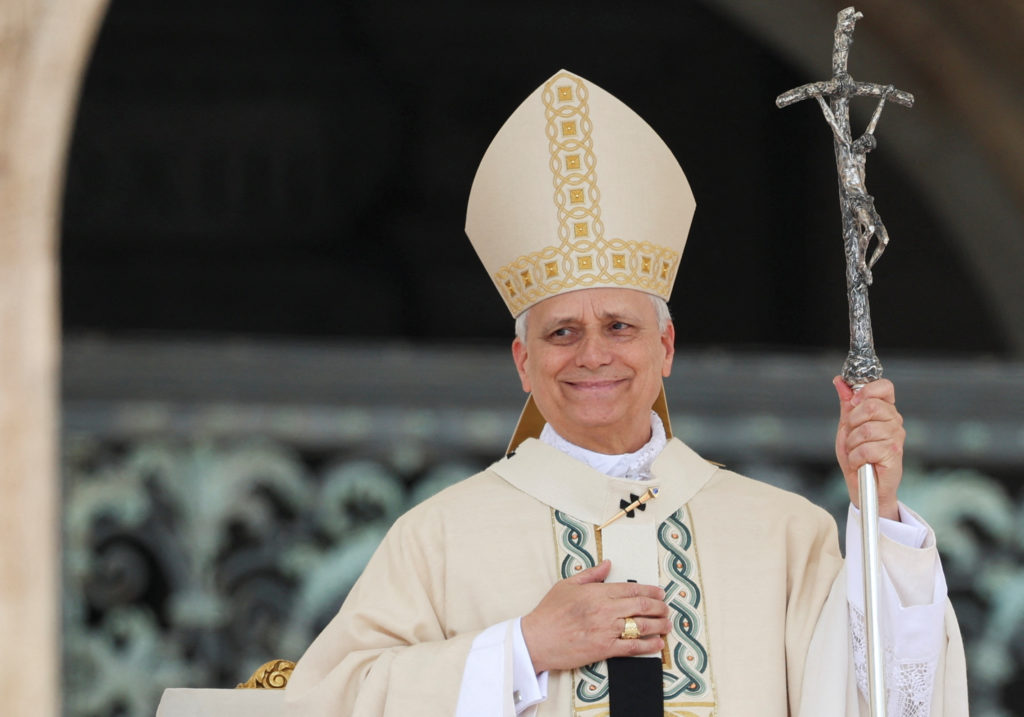
Pope Leo XIV has warned that the ongoing war between Israel and Iran could spiral into a wider regional conflict, urging world leaders to halt the violence and prioritise dialogue before the crisis engulfs more countries across the Middle East.
Speaking during the traditional Angelus prayer in St. Peter’s Square at the Vatican, the pontiff expressed deep concern over the intensifying hostilities that have already drawn in multiple actors and destabilised parts of the region. He said the conflict has created an atmosphere of fear, hatred, and destruction that threatens not only the countries directly involved but also neighbouring states.
The Pope’s warning comes as the war between Israel and Iran continues to escalate following a series of military strikes and retaliatory attacks that have pushed the region closer to a broader confrontation.
In his address to pilgrims and Catholics around the world, Pope Leo said the reports emerging from Iran and across the Middle East were deeply troubling. According to him, the conflict risks spreading beyond its current boundaries if urgent steps are not taken to de-escalate tensions.
He specifically raised concerns about the possibility that other countries in the region could be drawn into the fighting. Among those he mentioned was Lebanon, which has historically been vulnerable to regional spillover from conflicts involving Israel and Iran.
“Alongside the episodes of violence and devastation and the widespread climate of hatred and fear, there is also concern that the conflict may spread and that other countries in the region, including beloved Lebanon, could once again sink into instability,” the Pope said.
Lebanon has long been considered a flashpoint in Middle Eastern conflicts due to the presence of Hezbollah, the powerful Iran-backed armed group that has frequently clashed with Israel in the past. Analysts warn that any escalation involving Hezbollah could significantly widen the conflict and draw additional regional actors into the war.
The pontiff used the occasion to call for an immediate end to hostilities and urged the international community to create space for diplomacy and dialogue.
He appealed for what he described as the “silencing of weapons,” insisting that peace can only be achieved through negotiations rather than military escalation.
“Let us raise our humble prayer that the roar of bombs may cease, that weapons may fall silent, and that space for dialogue may open in which the voices of the peoples can be heard,” he said.
Pope Leo emphasised that wars often create long-lasting humanitarian crises that affect civilians far beyond the battlefield. According to him, the people who suffer most in such conflicts are ordinary families who are forced to live amid destruction, displacement, and fear.
The Pope’s remarks reflect growing concern within the Vatican about the direction of the conflict. In recent days, senior Vatican officials have also spoken out about the dangers posed by the military confrontation between Israel, Iran, and their allies.
Cardinal Pietro Parolin, the Vatican’s Secretary of State and the Holy See’s top diplomat, recently warned that the increasing reliance on military force undermines international law and risks triggering wider wars.
He criticised the concept of “preventive war,” arguing that if countries claim the right to launch attacks to eliminate perceived threats, it could create a dangerous precedent that destabilises global security.
“This erosion of international law is truly worrying,” Parolin said in remarks published by Vatican media. “If states were recognised as having a right to preventive war, the whole world could risk being set ablaze.”
The Vatican has traditionally advocated diplomatic solutions to conflicts and often positions itself as a moral voice urging restraint and dialogue.
The Pope’s appeal comes at a time when the Israel-Iran conflict is entering a dangerous phase marked by expanding military operations.
The war began after coordinated airstrikes targeted Iranian military and infrastructure facilities, triggering retaliatory missile and drone attacks from Iran and allied groups across the region.
Since then, the confrontation has expanded beyond the two countries, raising fears that other states in the Middle East could be drawn into the conflict either directly or through proxy forces.
Military analysts warn that any involvement by groups such as Hezbollah in Lebanon or other Iran-aligned militias could rapidly transform the conflict into a broader regional war.
Such a development could threaten vital energy routes, disrupt global markets, and trigger a humanitarian crisis affecting millions of people.
In his message, Pope Leo emphasised that political and military leaders bear a moral responsibility to prevent the crisis from escalating further.
He urged them to recognise the devastating consequences that wars inflict on civilians and to choose diplomacy over violence.
The pontiff warned that allowing the conflict to continue unchecked could produce “catastrophic consequences” for the region and beyond.
He also encouraged believers around the world to pray for peace and to support efforts aimed at reconciliation and dialogue.
The Pope’s latest statement is part of a series of appeals he has made since tensions between Israel and Iran began escalating.
Since the start of the crisis, the Vatican has repeatedly called on all parties to exercise restraint and to pursue negotiations instead of military confrontation.
Church leaders have also expressed concern about the humanitarian impact of the conflict, particularly on vulnerable populations in areas affected by airstrikes, missile attacks, and displacement.
For the Catholic Church, the Middle East holds deep historical and spiritual significance, as it is the birthplace of Christianity and home to several ancient Christian communities.
As the war continues to unfold, the international community is closely monitoring the situation amid fears that the conflict could destabilise an already fragile region.
Diplomatic efforts by global powers and international organisations are ongoing, but the prospects for an immediate ceasefire remain uncertain.
Against this backdrop, Pope Leo’s warning underscores the urgency of finding a peaceful solution before the crisis spreads further.
For the Vatican, the message remains clear: the path to lasting stability in the Middle East cannot be built through weapons and warfare, but through dialogue, diplomacy, and a renewed commitment to peace.