
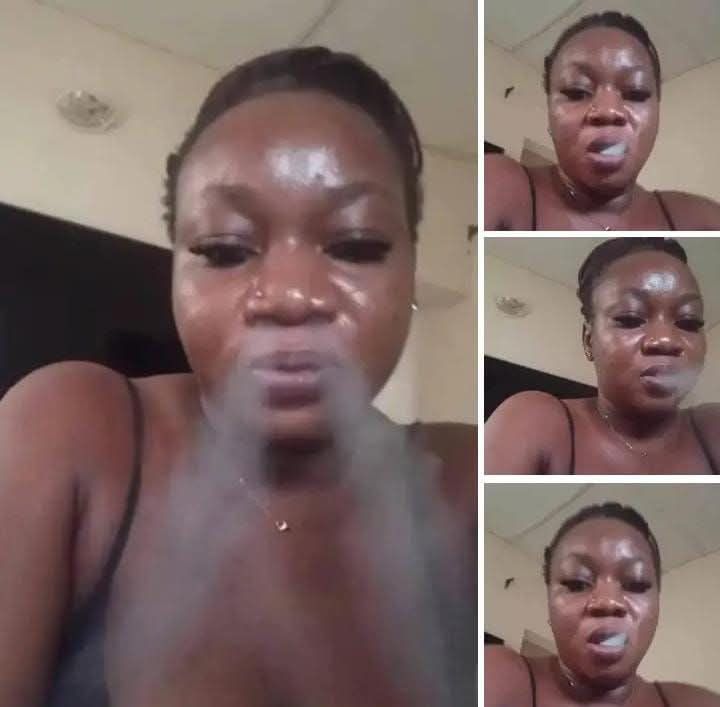
A planned wedding ceremony in Imo State has been called off after the groom reportedly discovered an old Facebook photograph of his fiancée allegedly smoking cannabis, a development that has sparked debate within the community about trust, forgiveness and the growing influence of social media on modern relationships.
According to sources familiar with the situation, the discovery was made just days before the scheduled ceremony. The groom was said to have been browsing through his fiancée’s older social media posts when he came across a photograph that appeared to show her smoking what is locally referred to as “Canadian Loud,” a street term commonly used for a strong strain of cannabis.
The image, believed to have been posted several years ago, reportedly triggered immediate concern on the part of the groom. Those close to the couple said he confronted his fiancée about the photograph, leading to tense discussions between both parties and eventually involving members of their respective families.
Family meetings were reportedly convened in an attempt to resolve the matter and salvage the marriage plans. However, disagreements persisted, and efforts at reconciliation proved unsuccessful before the wedding date. As a result, the ceremony was suspended indefinitely.
Sources indicated that the bride-to-be acknowledged the existence of the photograph but maintained that it reflected a period in her life she had long outgrown. She reportedly pleaded with her fiancé to consider her present character rather than actions from her past, insisting that she had since changed her lifestyle and values.
“She explained that it was something from years ago and not who she is today,” a source said. “She asked him to judge her by the person she has become.”
Despite the explanations, the groom allegedly remained firm in his decision not to proceed. He was said to have expressed discomfort about entering into marriage after making the discovery, citing concerns about transparency and compatibility.
The abrupt cancellation has drawn widespread attention within the community, with reactions divided. Some residents have supported the groom’s decision, arguing that marriage requires full openness and shared moral standards. For them, the resurfacing of such a photograph so close to the wedding raised questions about why it had not been disclosed earlier in the relationship.
Others, however, have criticized what they describe as a harsh response to a past mistake. They argue that individuals should not be permanently judged for previous actions, particularly if they demonstrate growth and transformation over time.
“Everybody has a past,” one resident commented. “What matters is who the person is now and whether they are committed to the marriage.”
The incident highlights the increasing role that social media plays in shaping relationships, especially during courtship and wedding preparations. Relationship counselors say it is becoming more common for old posts, photographs or comments to resurface, sometimes creating tension or mistrust between partners.
According to family and relationship experts, digital footprints can complicate modern relationships in unexpected ways. Content shared years earlier—often casually or without anticipation of future consequences—can resurface at critical moments, prompting difficult conversations about honesty, disclosure and personal evolution.
Counselors note that such situations often test the depth of communication between couples. While some partners view past actions as part of natural youthful experimentation, others may interpret them as red flags, depending on personal values, religious beliefs or cultural expectations.
In many Nigerian communities, marriage is regarded not only as a union between two individuals but also as an alliance between families. As such, issues perceived to touch on character or reputation can quickly escalate beyond the couple to involve relatives and community elders.
In this case, sources say both families attempted mediation. However, with the wedding date approaching and no consensus reached, the decision was ultimately made to call off the event. Vendors and invited guests were reportedly informed of the cancellation shortly before the ceremony was due to take place.
Legal analysts point out that while engagement agreements are largely informal in Nigeria, financial and social implications can follow when weddings are cancelled at the last minute. Deposits paid for venues, catering, attire and other services may not always be refundable, potentially resulting in economic loss.
As of press time, neither family has issued an official public statement addressing the matter. The couple themselves have also remained silent.
The situation has prompted broader public discussion about whether the groom’s decision was justified. Supporters argue that individuals have the right to withdraw from marriage if new information emerges that conflicts with their personal standards or expectations. Critics counter that the essence of partnership includes forgiveness, dialogue and recognition of personal growth.
Ultimately, the question of whether the groom was right or wrong remains subjective, shaped by personal beliefs about trust, morality and second chances. What is clear, however, is that the episode reflects the powerful and sometimes disruptive role of digital history in contemporary relationships.
As social media archives continue to serve as informal records of people’s past lives, couples may increasingly find themselves navigating conversations about identity, change and acceptance long before they walk down the aisle.





One Comment
It’s a hydraheaded issue.