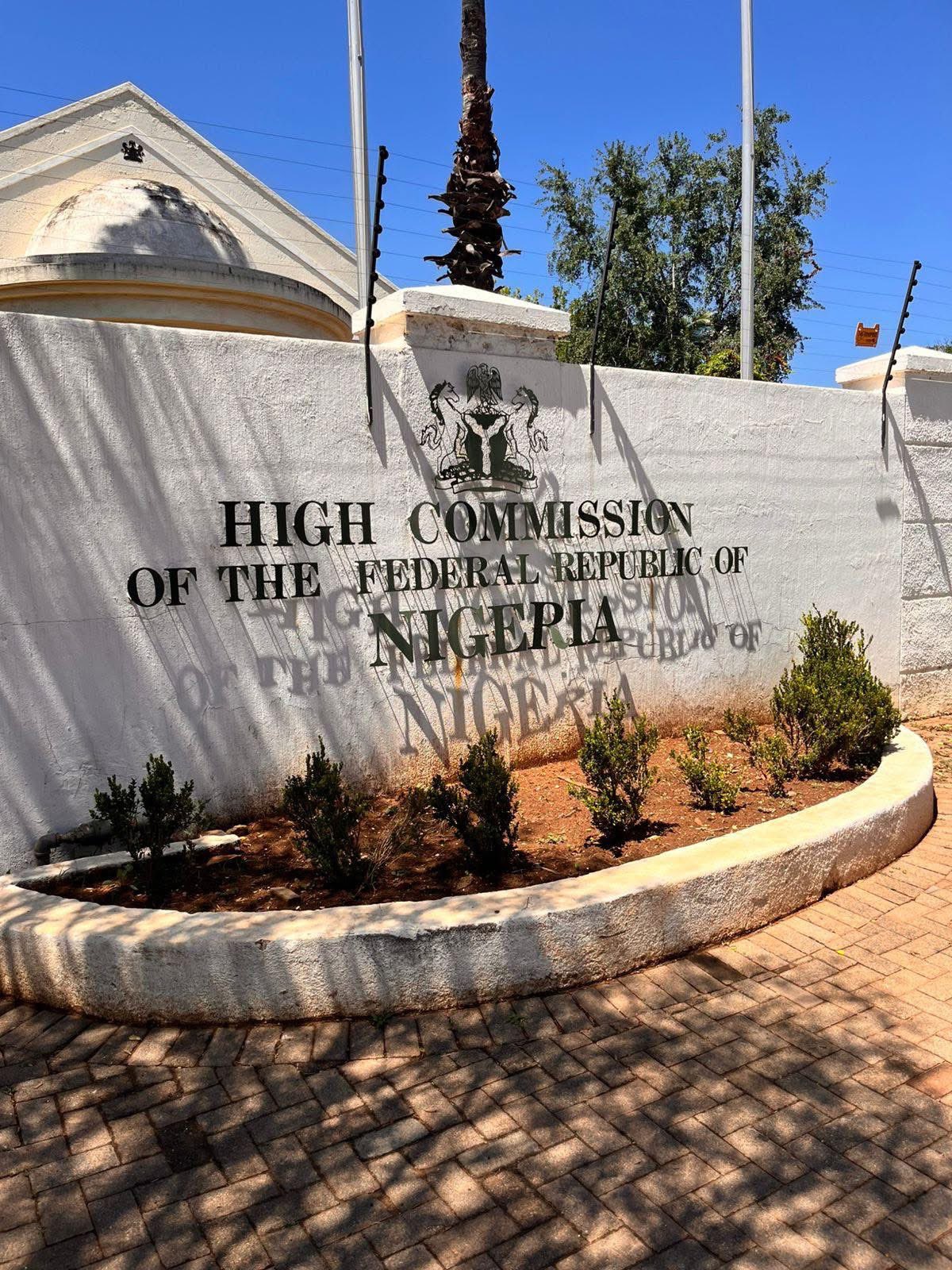
South African authorities have disconnected electricity supply to the High Commission of the Federal Republic of Nigeria in Pretoria over unpaid utility bills, escalating a diplomatic embarrassment and drawing attention to growing concerns about debt compliance by foreign missions in the country.
The development was confirmed by the Mayor of Tshwane, Dr. Nasiphi Moya, who said the City of Tshwane took the action after repeated efforts to recover outstanding payments for municipal services failed. According to the mayor, the Nigerian High Commission owes the city for electricity and other utility services, prompting the enforcement action.
“We’ve disconnected electricity at the High Commission of the Federal Republic of Nigeria,” Dr. Moya said. “They owe the city for utility services.”
The confirmation has triggered public debate in both South Africa and Nigeria, particularly given the sensitive diplomatic implications of cutting essential services to a foreign mission. However, city officials insist that the action was carried out strictly in line with municipal regulations and was not politically motivated.
Officials at the City of Tshwane explained that foreign missions operating within the municipality are subject to local laws governing utilities and municipal services. While diplomatic premises enjoy certain protections under international law, they are still expected to meet their financial obligations for services rendered, including electricity, water, and refuse collection.
According to municipal sources, the Nigerian High Commission had accumulated significant arrears despite several notices and engagement efforts by the city. The electricity disconnection, they said, was a last resort after prolonged non-payment.
The incident has also highlighted a broader challenge faced by the City of Tshwane, which hosts numerous embassies, high commissions, and international organisations. In recent years, the city has complained about mounting debts owed by some diplomatic missions, placing additional strain on municipal finances already under pressure from rising service delivery costs.
Mayor Moya has been vocal about the city’s determination to enforce payment discipline across board, regardless of status. Since assuming office, she has emphasised that Tshwane cannot afford to subsidise non-paying entities while residents and compliant institutions shoulder the financial burden.
“This is about fairness and sustainability,” a city official said. “We cannot continue to provide services for free when others are paying. Diplomatic missions are expected to honour their obligations like everyone else.”
The power cut to the Nigerian High Commission has, however, raised questions about diplomatic protocol and the potential response from Abuja. As of the time of reporting, the Nigerian Ministry of Foreign Affairs had not issued an official statement on the development, nor has the High Commission in Pretoria publicly addressed the alleged debt or the disconnection.
Diplomatic observers note that while such incidents are rare, they are not unprecedented. Similar disputes have occurred in other capitals around the world where host cities have clashed with foreign missions over unpaid utility bills and municipal charges. In many cases, the disputes are eventually resolved through diplomatic channels, with arrears settled and services restored.
The development comes against the backdrop of historically close but sometimes strained relations between Nigeria and South Africa. Both countries are continental heavyweights with strong economic, political, and diplomatic ties, but relations have periodically been tested by issues ranging from xenophobic violence to trade disputes and diplomatic rows.
Analysts warn that while the electricity disconnection is an administrative matter, it could acquire diplomatic overtones if not handled carefully. They advise swift engagement between Nigerian and South African authorities to prevent the issue from escalating unnecessarily.
“This is the kind of situation that requires quiet diplomacy,” said a foreign affairs analyst. “It is embarrassing, but it is also fixable. The priority should be to resolve the debt, restore services, and move on.”
Within Nigeria, the incident has sparked criticism from commentators who see it as symptomatic of deeper governance and administrative lapses. Some have questioned how a diplomatic mission representing Africa’s largest economy could allow utility debts to accumulate to the point of service disconnection.
Others have urged the Federal Government to urgently investigate the matter, ensure outstanding obligations are settled, and prevent a recurrence. They argue that embassies and high commissions are symbols of national pride and should not be exposed to avoidable reputational damage.
For now, the Nigerian High Commission in Pretoria remains without electricity as discussions are expected to continue behind the scenes. Whether the issue is resolved swiftly or turns into a prolonged diplomatic inconvenience may depend on how quickly outstanding payments are addressed and channels of communication reopened.