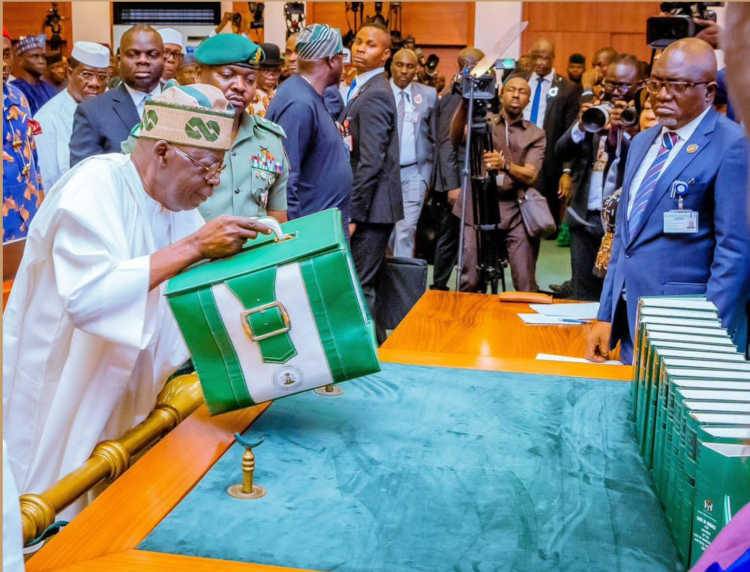
Amid worsening economic hardship, rising inflation, and widespread hunger across Nigeria, fresh controversy has erupted following revelations from the 2026 Federal Budget that ₦17.1 billion has been earmarked for the purchase of vehicles for government officials and agencies.
Details of the budget show that ₦11.25 billion has been allocated specifically for the procurement of vehicles for the Presidency, representing a staggering 135 per cent increase compared to the previous year. In addition, another ₦5.85 billion has been spread across various ministries, departments, and agencies, including a controversial ₦1.5 billion allocation for luxury sports utility vehicles for federal universities.
In total, vehicle related spending in the 2026 budget stands at ₦17.1 billion, a figure that has drawn sharp criticism from economists, civil society groups, and ordinary citizens who argue that the allocation is out of touch with the realities facing millions of Nigerians.
The budgetary provision comes at a time when Nigeria is grappling with persistent inflation, high unemployment, and rising poverty levels. Food prices have surged across the country, pushing basic staples beyond the reach of many households, while wages have largely remained stagnant. At the same time, the 2026 budget projects a deficit of ₦23.85 trillion, to be financed largely through borrowing.
Critics have questioned the rationale for increasing spending on government convoys and official vehicles when the country’s fiscal position remains fragile and social indicators continue to deteriorate.
Further raising concerns is the way the vehicle allocations are presented in the budget. Many of the items are listed under broad and vaguely defined headings such as “fleet upgrades” and “operational needs,” making it difficult to ascertain the exact nature, quantity, and cost of the vehicles to be procured. Transparency advocates warn that such descriptions create room for inflated contracts, waste, and abuse of public funds.
“There is a serious accountability problem when billions of naira are hidden under vague budget lines,” a public finance analyst said. “In an environment of deepening poverty, government spending must be clearly justified and aligned with urgent national priorities.”
The contrast between vehicle spending and allocations to critical social sectors has also drawn attention. According to the budget breakdown, the health sector received ₦2.48 trillion, amounting to just 4.3 per cent of the total budget. This falls significantly short of the 15 per cent benchmark agreed to by African Union member states under the Abuja Declaration, which commits governments to prioritising health spending.
Public health experts have argued that the ₦17.1 billion earmarked for vehicles could have a transformative impact if redirected toward essential services. Estimates suggest that the amount could fund more than 150 fully equipped primary healthcare centres across the country, providing basic medical services to underserved communities where preventable illnesses and deaths remain high due to the absence of functional health facilities.
“Primary healthcare remains the foundation of any effective health system,” a health policy specialist said. “With ₦17.1 billion, you could significantly expand access to care, save lives, and reduce the burden on tertiary hospitals.”
The inclusion of luxury vehicles for federal universities has also been criticised, with many questioning the prioritisation of high end SUVs over pressing needs such as research funding, laboratory equipment, student accommodation, and staff welfare. Several public universities are currently battling decaying infrastructure, frequent strikes, and chronic underfunding.
As the 2026 budget proceeds through scrutiny at the National Assembly, calls are growing for lawmakers to revisit and possibly slash the allocations for vehicle procurement. Civil society organisations are urging the legislature to demand detailed breakdowns of the proposed purchases, conduct forensic audits of procurement plans, and ensure that spending decisions reflect the country’s economic realities.
Some analysts have also proposed a shift toward the use of locally assembled vehicles for government fleets, arguing that such a move could reduce costs, improve transparency, and support Nigeria’s domestic automotive industry. Others have suggested placing a moratorium on non essential vehicle purchases until key social indicators improve.
The controversy has reignited broader debates about fiscal discipline, governance priorities, and the perception of government insensitivity in the face of widespread hardship. For many Nigerians, the idea of billions of naira being spent on convoys while families struggle to afford food and basic healthcare underscores a disconnect between public officials and the lived experiences of citizens.
As lawmakers deliberate on the budget, stakeholders insist that the moment presents an opportunity to reset priorities, cut wasteful spending, and demonstrate a genuine commitment to addressing poverty, healthcare, and economic stability. Whether the concerns raised will translate into meaningful revisions remains to be seen, but the debate has once again placed government spending choices under intense public scrutiny.