The United States has approved a $413.046 million security budget for counter-insurgency and related military operations in Nigeria and other African countries in 2026, as worsening insecurity continues to destabilise large parts of West Africa and the Sahel region.
The allocation, equivalent to about ₦587 billion, is contained in the United States National Defence Authorisation Act (NDAA) for Fiscal Year 2026, a copy of which was obtained on Thursday. The funding falls under Title XLIII of the Act, covering Operation and Maintenance expenditures, and is earmarked for the United States Africa Command (AFRICOM).
The security vote comes amid heightened concern over terrorism, banditry, violent extremism and maritime crime across Africa, particularly in West Africa, where fragile governance structures and porous borders have fuelled cross-border insurgency.
Related posts:
- My visit to the United States and Rome: Taking Nigeria’s situation to God by Peter Obi
- No Christian Genocide in Northern Nigeria, Says African Union Chief
- FOSAD Urges Southeast Governors to Emulate Southwest Security model and Establish a Joint Regional Security Fund
- FOSAD condemns exclusion of South-East & South-South in President Tinubu’s US–Nigeria Security Working Group, demands immediate reconstitution
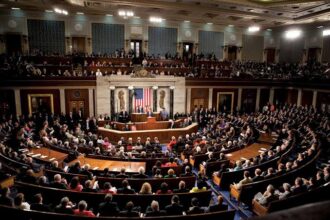
According to the NDAA 2026, AFRICOM requested $413.046 million for its operations in the region, and the full amount was authorised by the US Congress. However, the Act did not provide a country-by-country breakdown of how the funds would be spent, nor did it specify the proportion allocated directly to Nigeria.
The approval coincides with recent US military actions and security engagements in Nigeria. On Christmas Day, US forces under the Donald Trump administration reportedly carried out strikes on terrorist hideouts in Sokoto State, targeting armed groups believed to be operating in the North-West region.
Earlier this week, AFRICOM also delivered a consignment of military equipment to Nigerian security agencies, reinforcing ongoing cooperation between both countries aimed at strengthening counter-terrorism and internal security operations.
The NDAA is a comprehensive annual legislation that outlines the United States’ defence policy priorities and authorises funding for the Department of Defence and related national security programmes. The 2026 version of the Act authorises a total of $901 billion in annual military spending, including a four per cent pay raise for US military personnel.
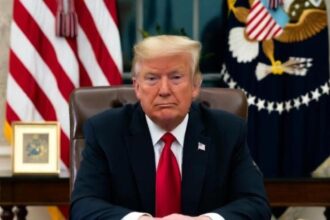
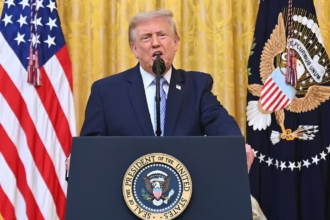
President Donald Trump signed the NDAA 2026 into law on December 18, 2025, marking the 65th consecutive year that a National Defence Authorisation Act has been enacted.
The security funding for AFRICOM comes at a time when Nigeria continues to grapple with multiple security challenges. Insurgency linked to jihadist groups remains active in the North-East, despite years of military operations, while banditry and mass abductions persist in the North-West and parts of the North-Central regions.
In addition, piracy, oil theft and other maritime crimes continue to pose threats in the Gulf of Guinea, a strategic shipping corridor critical to global energy supply and trade.
Beyond Nigeria, insecurity has deepened across the wider West African and Sahel regions. Mali remains under sustained attacks by jihadist groups affiliated with international terror networks, while northern Benin has experienced a spillover of violence from neighbouring Sahelian states. Burkina Faso and Niger have also recorded increased militant activity, further destabilising the region.
Under the operation and maintenance category of the NDAA, other US military commands and activities also received substantial funding. The United States European Command was allocated $385.744 million, while the United States Southern Command received $224.971 million.
US Forces Korea was allotted $77.049 million, while Cyberspace Activities covering cyber operations received $331.467 million. An additional $550.089 million was approved for Cyberspace Activities related specifically to cybersecurity.
Altogether, the subtotal for operating forces under operation and maintenance in the Act stands at $39.999 billion, reflecting the scale of US global military engagement.
Beyond military spending, the NDAA 2026 also introduces significant policy and institutional changes relating to Africa. The Act provides for the establishment of an Assistant Secretary for African Affairs within the US Department of State, signalling a renewed diplomatic focus on the continent.
According to the legislation, the new office will oversee matters relating to sub-Saharan Africa and coordinate the implementation of US foreign policy across the region.
In addition, the Act establishes a Bureau of African Affairs within the State Department. The bureau will be headed by the Assistant Secretary for African Affairs and will be responsible for managing US foreign policy implementation and assistance programmes in sub-Saharan Africa.
“There shall be in the Department of State a Bureau of African Affairs, which shall perform such functions related to implementation of United States foreign policy and assistance to sub-Saharan Africa as the Under Secretary for Political Affairs may prescribe,” the Act states.
It further specifies that the Assistant Secretary for African Affairs shall be the head of the bureau and will be responsible to the Secretary of State, acting through the Under Secretary for Political Affairs, for matters relating to sub-Saharan Africa and other related duties assigned by the Secretary.
The Act also mandates continuous observation and coordination of all matters pertaining to the implementation of US foreign policy in the region.
In a further indication of rising geopolitical competition on the continent, the NDAA requires detailed assessments of Russia’s military strategy, objectives and force posture affecting African countries.
The assessment is expected to include a review of Russia’s overseas military bases, logistics capabilities and infrastructure used to project power in Africa, as well as the implications for US contingency planning.
Specifically, the Act calls for an analysis of how Russia’s military activities could affect the ability of US forces to execute contingency plans under AFRICOM, US Central Command and US European Command.
“The reduction of the risk of executing contingency plans of the Department of Defence, including contingency plans conducted by United States Central Command and United States Africa Command,” is among the objectives outlined in the legislation.
Commenting on the development, a security analyst and Chief Executive Officer of Beacon Consulting, Kabir Adamu, said the funding and policy measures reflected intensifying geopolitical rivalry in Africa, driven largely by economic and strategic interests.
According to Adamu, Africa, particularly West Africa and the Sahel, has become a major arena of competition due to persistent insecurity, weak state control and the presence of critical natural resources.
He noted that Russia and China have significantly expanded their influence on the continent through military cooperation, economic engagement and infrastructure investment, prompting the United States to reassess its approach.
“If you look at the Monroe Doctrine, the traditional US area of influence has been its immediate neighbourhood, particularly South America,” Adamu said. “That partly explains recent US actions against Venezuela and its posture towards Cuba.”
He added that geopolitical rivalry between the US and Russia was now playing out more visibly in Africa.
“In almost all locations where the US has economic interests, Russia and China are already ahead. The same applies to Africa. What the US is now trying to do is to catch up,” he said.
Adamu argued that China’s use of loans, development finance and infrastructure projects has helped it consolidate influence across the continent, while Russia has leveraged security partnerships and military cooperation.
“The challenge for the US is how to come in and catch up, and it is unlikely that Russia and China will remain passive while the US attempts to do so,” he said.
As insecurity continues to spread across West Africa, analysts say the effectiveness of increased foreign military spending will depend largely on governance reforms, regional cooperation and the capacity of African states to address the root causes of conflict.
For Nigeria and its neighbours, the $413 million US security allocation underscores the growing internationalisation of Africa’s security challenges and the strategic importance of the region in global defence and geopolitical calculations.