The African Democratic Congress (ADC) has strongly criticised President Bola Ahmed Tinubu over the recent United States Africa Command (AFRICOM) airstrikes carried out in Sokoto State, describing the development as a troubling sign of Nigeria outsourcing its core security responsibilities. The opposition party has also demanded full disclosure of casualty figures and clearer communication from the Federal Government on the operation, amid growing public debate over sovereignty, accountability, and national security leadership.
The U.S. airstrikes, which reportedly targeted Islamic State linked militants operating in parts of northwestern Nigeria, were carried out on December 25, 2025. American officials described the operation as a coordinated action with Nigerian authorities following intelligence sharing between Washington and Abuja. However, limited official information on the outcome of the strikes, including casualties and the precise role played by Nigerian forces, has triggered widespread controversy.
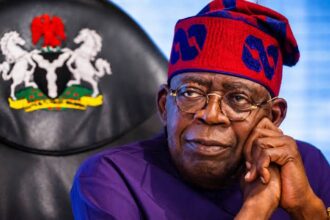
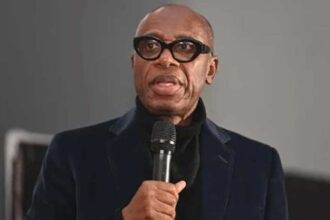
Reacting to the development on Friday, the ADC accused President Tinubu of abdicating his constitutional responsibility as Commander in Chief of the Armed Forces. In a post on X, the party’s spokesperson, Bolaji Abdullahi, questioned what he described as the apparent subordination of Nigeria’s security leadership to a foreign power.
Related posts:
- ADC demands explanation from Tinubu over sudden sack of Service Chiefs
- APC slams PDP Chairman Turaki over call for Trump’s intervention, describes remarks as reckless and unpatriotic
- FOSAD condemns exclusion of South-East & South-South in President Tinubu’s US–Nigeria Security Working Group, demands immediate reconstitution
- Abia govt denies Governor Otti’s defection to APC, describes report as false and mischievous
“President Bola Tinubu has outsourced his most important constitutional responsibility, effectively taking a back seat in a vehicle that he is constitutionally assigned to drive,” Abdullahi wrote.
He further criticised the optics surrounding the President’s public response to the operation, particularly reports that Tinubu referenced the strikes in a Christmas Day message while tagging a foreign leader.
“When the President of Nigeria appears compelled to report himself to another head of state, even tagging a foreign President in a Christmas Day message, Nigerians are entitled to ask who is truly in charge of our country?” Abdullahi added.
The remarks reflect growing unease among sections of the political class and civil society over how information about the airstrikes emerged. Initial details of the operation were first made public by U.S. officials, with Nigerian authorities confirming the strikes only afterwards. Critics argue that such a communication sequence undermines public confidence and raises questions about Nigeria’s control over its own security narrative.
In its official position, the ADC acknowledged the severe security challenges facing the country, particularly the persistent threat posed by insurgent and terrorist groups across several regions. The party said it recognises the urgency of decisive action to protect lives and restore peace.
“The African Democratic Congress recognises the serious security challenges confronting Nigeria and affirms that the protection of Nigerian lives and the defeat of terrorism must remain a central national priority,” the party said in a statement. “We therefore support all lawful and effective measures aimed at saving lives and restoring security.”
Despite this acknowledgement, the ADC maintained that the involvement of foreign military forces on Nigerian soil remains a deeply sensitive issue that must be handled with utmost caution. The party reiterated its long standing opposition to the physical operation of foreign troops within the country, warning against actions that could compromise Nigeria’s sovereignty.
“Nevertheless, the ADC reiterates its long standing opposition to the physical operation of foreign military forces on Nigerian soil,” the statement continued. “We must not allow our desperation today to compromise the sovereignty of our country in whatever form or guise.”
The party described the AFRICOM airstrikes as an extreme and desperate measure, stressing that such actions must not become a substitute for a comprehensive, Nigeria led security strategy.
“It is in this context that we accept the U.S. Africa Command airstrikes on terrorist locations in Sokoto State only as a desperate measure that must not be allowed to substitute for a Nigeria led action against its domestic security challenges,” the ADC said.
Beyond concerns about sovereignty, the opposition party also demanded transparency regarding the human cost of the operation. It called on the Federal Government to publish a detailed casualty report, including information on whether civilians were affected and the extent of damage caused by the strikes.
Political analysts say this demand reflects a broader public concern, particularly in communities that have previously experienced military operations with unintended civilian consequences. In the absence of verified information, speculation and mistrust have continued to grow, especially on social media.
The ADC argued that Nigerians deserve timely and accurate information about security operations carried out within the country, whether by domestic forces or in collaboration with foreign partners. According to the party, effective communication is essential not only for accountability but also for maintaining public trust in government institutions.
Observers note that the controversy surrounding the Sokoto airstrikes echoes earlier debates about foreign military involvement in Nigeria’s counterterrorism efforts. In past years, reports of foreign forces operating covertly or providing logistical support have often sparked similar concerns, particularly when the Nigerian government appeared slow to brief citizens.
Supporters of the Tinubu administration, however, have defended the collaboration with the United States, arguing that intelligence sharing and targeted strikes can help weaken terrorist networks and save lives. They contend that modern counterterrorism efforts increasingly rely on international cooperation and advanced surveillance capabilities that Nigeria alone may not fully possess.
Nevertheless, critics like the ADC insist that such cooperation must be firmly anchored in Nigerian leadership and transparency. They warn that over reliance on foreign military power could weaken domestic capacity, erode public confidence, and create the perception that Nigeria is unable to secure its own territory.
The party also raised broader questions about civil military relations and constitutional order, noting that the President bears ultimate responsibility for national defence. According to the ADC, any perception that this responsibility has been delegated or diluted risks undermining the authority of the state.
As debates continue, the Federal Government has yet to release comprehensive details on the Sokoto operation, including casualty figures and the extent of Nigerian forces’ involvement. Security officials have maintained that the strikes were carried out in coordination with Nigerian authorities and were aimed strictly at terrorist targets.
For residents of affected areas, however, clarity remains elusive. Community leaders and human rights groups have called for independent verification and engagement with local populations to address fears and prevent misinformation.
The ADC concluded its intervention by urging the Tinubu administration to urgently strengthen Nigeria’s internal security architecture, invest in intelligence and military capacity, and restore public confidence through openness and accountability.
As Nigeria grapples with persistent insecurity, the Sokoto airstrikes have become more than a military event. They have evolved into a defining political issue, raising fundamental questions about sovereignty, leadership, and the balance between international cooperation and national responsibility.