The Nasarawa State Police Command has confirmed the death of 11 residents following a fresh outbreak of violence between two communities in Udege Development Area of Nasarawa Local Government Area.
The incident, which has left families in mourning and properties in ruins, occurred in the early hours of Friday when hostilities broke out between Akyawa and Udege Kasa—two neighbouring communities with a history of tension.
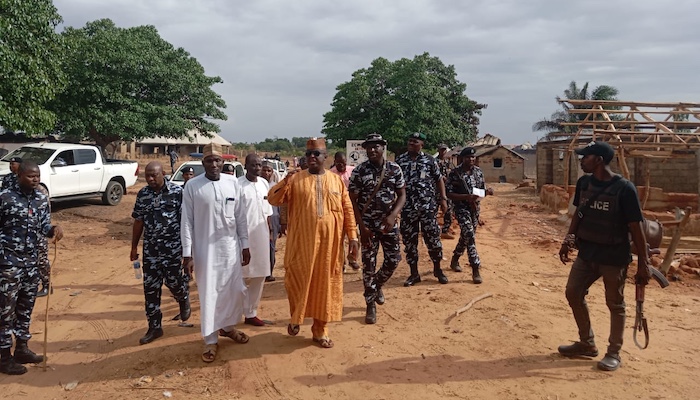
In a statement issued in Lafia, the state capital, the Police Public Relations Officer, Ramhan Nansel, said the deadly clash prompted an immediate response from the Commissioner of Police, Shetima Jauro Mohammed, who visited the affected areas to assess the situation and help restore calm.
According to the police, the Commissioner expressed deep sorrow over the tragic loss of lives and the destruction that accompanied the violence. During his visit on April 3, 2026, Mohammed met with community members, sympathised with bereaved families, and assured residents that the perpetrators would be brought to justice.
The police account suggests that the violence may have been triggered by a reprisal attack. Authorities believe that suspected hoodlums launched the assault in response to the earlier killing of two individuals believed to be from their community.
“In the course of the attack, 11 persons were killed,” Nansel stated, adding that the violence also resulted in widespread destruction of property. Approximately 50 houses were reportedly burnt in Akyawa, while two homes were destroyed in Udege Kasa, leaving many residents displaced and vulnerable.
In response to the killings, the Commissioner of Police has ordered an intensive manhunt for those responsible. Tactical units and investigative teams have been deployed with instructions to identify, apprehend, and prosecute all individuals linked to the attack.
Security presence in the area has also been significantly reinforced. The police, working in collaboration with the military and the Nigeria Security and Civil Defence Corps, have increased patrols and stationed personnel in strategic locations to prevent further violence and reassure residents.
Nansel noted that these measures are part of a broader effort to restore lasting peace and prevent a breakdown of law and order in the affected communities.
As part of the intervention, a stakeholders’ meeting was convened during the Commissioner’s visit. Community leaders, local authorities, and security officials participated in discussions aimed at de-escalating tensions and promoting dialogue.
At the meeting, residents were urged to remain calm, avoid taking the law into their own hands, and cooperate with security agencies by providing credible information that could aid ongoing investigations.
“The Command reassures members of the public that normalcy has been restored,” the statement said, adding that proactive steps are being taken to prevent a recurrence of the violence.
However, beyond the official account, there are growing concerns and alternative narratives emerging from residents and local sources. Some community members have alleged that the attack may not have been solely a communal clash but rather an invasion by suspected armed groups, believed to be Fulani militias or bandits.
According to these accounts, heavily armed assailants reportedly stormed Akyawa and Udege Kasa late Thursday night, unleashing violence that extended into the early hours of Friday. These claims have yet to be officially confirmed by security authorities but have heightened fears among residents.
Local sources suggest that the latest incident may be linked to a pattern of attacks in the area. Just days earlier, a nearby community, Sabon Gida (also known as Gidan Ada Ogiri), reportedly came under similar assault, resulting in the destruction of homes, farm produce, and other valuable property.
Residents say the recurrence of such attacks within a short period has created a climate of fear and uncertainty. Many now worry that more communities could be targeted, with little warning.
Some locals have also expressed frustration over what they perceive as inadequate preventive measures. According to them, suspicious movements by unknown individuals had been noticed in surrounding areas prior to the attack, but no decisive action was taken to avert the crisis.
“It is becoming unbearable,” one resident said. “They abduct people at will and now attack entire communities. People are living in fear and many are fleeing their homes just to stay safe.”
The impact of the violence extends beyond the immediate loss of lives and property. The affected communities, once known for their mining activities and vibrant local economy, have in recent years struggled under the weight of recurring insecurity.
Frequent attacks have disrupted economic activities, forced residents to abandon farms and businesses, and eroded confidence in the safety of the area.
With the farming season just beginning, many residents now face the difficult choice of returning to their fields or prioritizing their safety. The fear of renewed attacks has already begun to affect agricultural activities, raising concerns about food production and livelihoods in the region.
Community leaders and residents are therefore calling on the Nasarawa State Government to take urgent and decisive action to address the security challenges. They are demanding stronger protection, improved intelligence gathering, and a more proactive approach to preventing attacks.
For now, security agencies insist that the situation is under control, with normalcy gradually returning to the affected areas. Yet, for many residents, the scars of the violence remain fresh, and the fear of what may come next continues to linger.
As investigations continue and security operations intensify, the hope among residents is that the cycle of violence can finally be broken, allowing communities like Akyawa and Udege Kasa to rebuild and return to a sense of normal life.