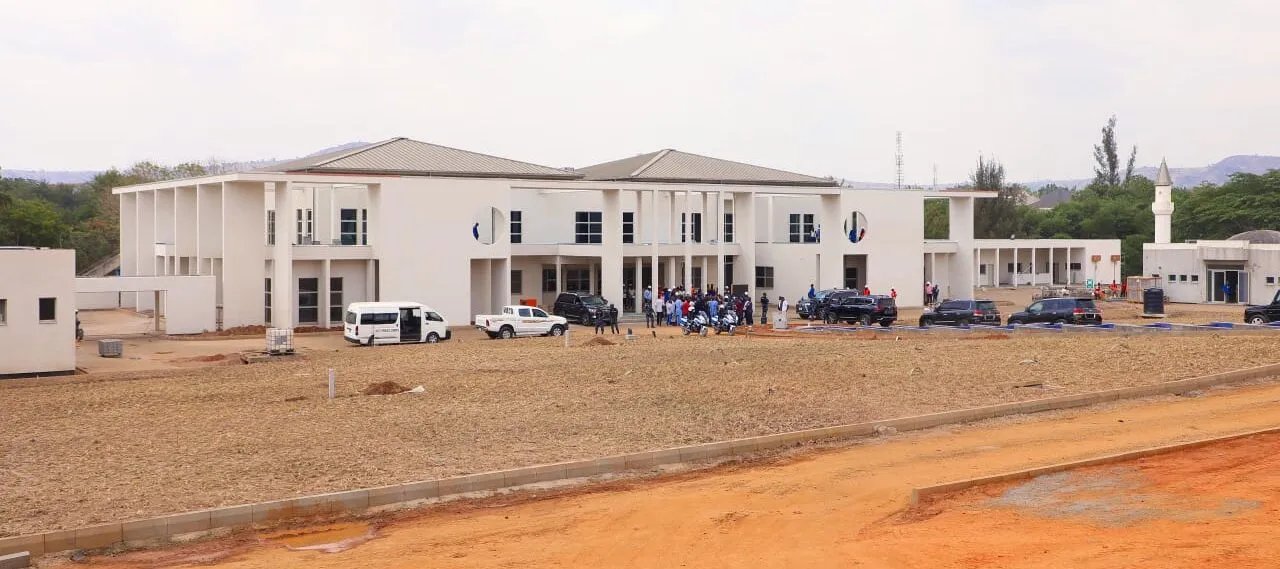
The Minister of the Federal Capital Territory, Nyesom Wike, has embarked on the construction of new residential quarters for judges serving in the nation’s capital as part of ongoing efforts to strengthen the judicial system and improve the welfare of judicial officers.
The housing project, which is being executed under the administration of the Federal Capital Territory Administration (FCTA), is designed to provide modern and secure accommodation for judges working within the courts in Abuja. Officials say the initiative reflects the government’s commitment to improving the working conditions of members of the judiciary and supporting the effective administration of justice.
According to officials familiar with the project, the new houses will be equipped with modern facilities and built within a secure residential environment to ensure that judges can perform their duties without fear or undue external pressure. The development is also expected to address longstanding concerns over the quality and availability of official accommodation for judicial officers in the capital.
During an inspection of the project site, Minister Wike said the initiative was necessary to guarantee the independence and dignity of the judiciary, which he described as a critical pillar of Nigeria’s democracy. He explained that providing decent housing for judges is not merely a welfare issue but an important step in strengthening the integrity of the justice system.
“The judiciary is one of the most important arms of government, and we must ensure that those who dispense justice are given the environment that allows them to perform their duties effectively,” Wike said.
He added that the project forms part of broader infrastructural reforms currently being implemented in the Federal Capital Territory under his leadership. Since assuming office as minister, Wike has prioritised the rehabilitation of public facilities, road construction, and improvements in government institutions across Abuja.
The new housing estate for judges is expected to include multiple residential units designed to meet the needs of judges serving in different courts, including the Federal High Court, the High Court of the Federal Capital Territory, and the Court of Appeal Nigeria divisions located in the capital.
Officials involved in the project say the estate will feature modern infrastructure such as reliable electricity supply, water systems, internal roads, and enhanced security installations. The aim, they noted, is to create a comfortable and safe environment that allows judges to focus on their judicial responsibilities without the burden of housing challenges.
Legal experts and members of the judiciary have welcomed the initiative, describing it as a positive step toward improving the welfare of judges and strengthening the justice system.
In Nigeria, concerns have often been raised about the conditions under which many judicial officers work, including issues related to accommodation, security, and operational resources. Observers argue that addressing these challenges is essential to maintaining public confidence in the judiciary.
Analysts also note that providing adequate housing for judges helps reduce potential vulnerabilities that could arise from financial or personal pressures, thereby reinforcing judicial independence.
Beyond improving welfare, the project is also expected to contribute to the overall development of Abuja as a modern capital city with well-organised government institutions and residential infrastructure.
Minister Wike has repeatedly stated that his administration is determined to transform the Federal Capital Territory into a model city that reflects Nigeria’s aspirations for development and good governance.
Since his appointment as FCT Minister, Wike has launched several infrastructure projects, including road construction and rehabilitation works across key districts of Abuja. He has also focused on improving public facilities and restoring abandoned government projects that had remained incomplete for years.
Officials say the construction of new homes for judges aligns with the broader goal of strengthening key democratic institutions in Nigeria.
The judiciary plays a central role in interpreting laws, resolving disputes, and safeguarding citizens’ rights. As such, ensuring that judicial officers are adequately supported is widely seen as essential for the effective functioning of the justice system.
Legal practitioners believe the new housing project could set a precedent for other states and institutions across Nigeria to prioritise the welfare of judicial officers.
They argue that improving the working conditions of judges will ultimately enhance the quality and efficiency of justice delivery across the country.
For many observers, the initiative by the FCT Administration demonstrates a recognition that infrastructure development must extend beyond roads and buildings to include investments in the institutions that sustain democracy.
As construction progresses, stakeholders in the legal sector will be watching closely to see how the project contributes to improving the operational environment of the judiciary in the Federal Capital Territory.
When completed, the new housing estate is expected to provide a more secure, comfortable, and dignified living environment for judges serving in Abuja, further reinforcing the role of the judiciary as a vital pillar of Nigeria’s democratic system.
Watch video: