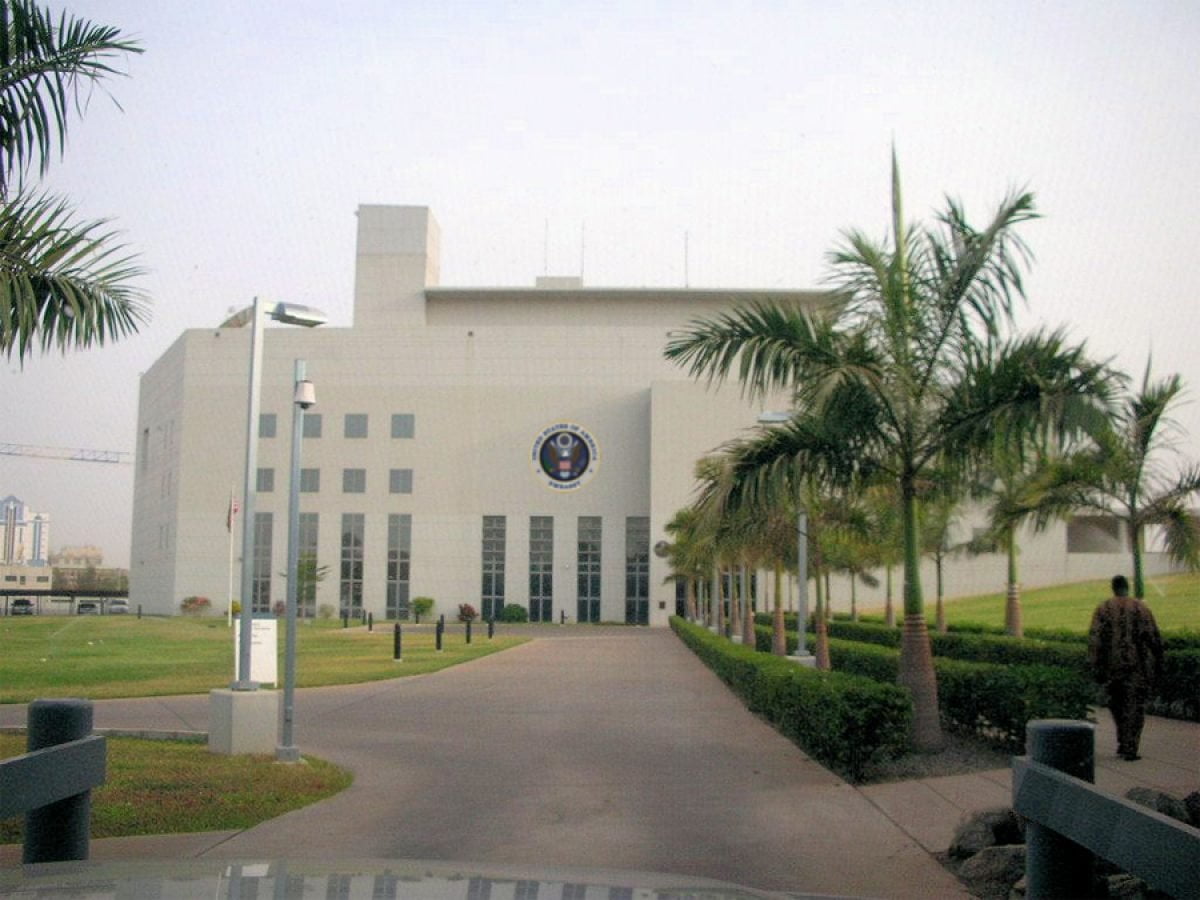
The United States Department of State has authorised the departure of non-essential personnel and their families from the U.S. Embassy in Abuja, citing what it described as a worsening security environment across Nigeria.
In a travel advisory released on Wednesday, April 8, 2026, the department warned American citizens to reconsider travel to Nigeria due to a combination of escalating threats, including crime, terrorism, kidnapping, and civil unrest. The move signals heightened concern within the U.S. government about the safety of its personnel and citizens in the country.
According to the advisory, the overall travel classification for Nigeria has been placed at “Level 3: Reconsider Travel,” indicating significant risks that require careful consideration before visiting. However, the situation is considered even more severe in certain parts of the country, with multiple states designated under the stricter “Level 4: Do Not Travel” category.
The department explained that the decision to allow non-emergency embassy staff and their dependents to leave Abuja was taken in response to the deteriorating security situation, which it said continues to evolve unpredictably.
“On April 8, 2026, the Department of State authorised non-emergency U.S. government employees and their family members to depart U.S. Embassy Abuja due to the worsening security conditions,” the advisory stated.
The warning further emphasised that security challenges in Nigeria are multifaceted, ranging from organised criminal activity to insurgency and communal violence. It cautioned that such risks are not confined to specific regions but are present, to varying degrees, across the country.
The updated advisory expanded the list of states considered too dangerous for travel, adding Plateau State, Jigawa State, Kwara State, Niger State, and Taraba State to the “Do Not Travel” category. This brings the total number of high-risk states to 23, reflecting what the department described as an increasingly unstable security landscape.
In northern Nigeria, several states were highlighted as particularly dangerous due to ongoing threats from terrorism, banditry, and kidnapping. These include Borno State, Yobe State, parts of Adamawa State, as well as Kogi, Kwara, Niger, Plateau, Taraba, and Jigawa states.
The advisory noted that these areas continue to experience frequent attacks by armed groups, as well as widespread criminal activities such as roadside banditry and abductions for ransom. It also warned that security operations conducted by Nigerian forces to counter these threats may occur without prior notice, potentially placing civilians at additional risk.
Further concerns were raised about states including Bauchi State, Gombe State, Kaduna State, Kano State, Katsina State, Sokoto State, and Zamfara State, where a mix of civil unrest, violent crime, and kidnappings has created an unpredictable and volatile environment.
“The security situation in these states is unstable and uncertain,” the department stated. “There is widespread violence between communities, alongside armed criminal activities, including kidnapping and banditry.”
In southern and southeastern Nigeria, the advisory also identified several states as high-risk areas, urging U.S. citizens to avoid travel to Abia State, Anambra State, Bayelsa State, Delta State, Enugu State, Imo State, and Rivers State, with the exception of Port Harcourt.
The department cited persistent criminal activity, including armed robbery, gang violence, and kidnapping, as major concerns in these regions. It also pointed to the risk of violent protests and civil disturbances, which can escalate quickly and without warning.
“Crime is widespread in southern Nigeria,” the advisory noted. “There is a high risk of kidnapping, violent protests, and the presence of armed gangs.”
Beyond regional risks, the State Department highlighted broader national threats affecting the country as a whole. It warned that violent crimes such as armed robbery, carjacking, and kidnapping for ransom are prevalent across Nigeria, often targeting both locals and foreigners.
Particularly concerning is the perception that American citizens are wealthy, making them attractive targets for criminal groups. The advisory cautioned that U.S. nationals are frequently singled out in kidnapping incidents, which have become a lucrative enterprise for organised criminal networks.
The threat of terrorism also remains a significant concern. The department noted that terrorist attacks can occur with little or no warning and may target a wide range of locations, including markets, shopping centres, hotels, places of worship, and large public gatherings.
These attacks, it said, are often designed to maximise casualties and create widespread fear, further complicating the already fragile security environment.
In addition to security risks, the advisory raised concerns about the quality and availability of healthcare services in Nigeria. It described medical facilities as limited and inconsistent, noting that many do not meet the standards commonly found in the United States or Europe.
This limitation, the department warned, could pose serious challenges for travellers in the event of illness or injury, particularly in emergency situations where immediate and advanced medical care is required.
Despite these concerns, the State Department did not impose a complete travel ban. Instead, it provided guidance for U.S. citizens who may still choose to travel to Nigeria, urging them to take precautionary measures to enhance their safety.
Among its recommendations, the department advised travellers to enrol in the Smart Traveler Enrollment Program (STEP), a service that allows U.S. citizens abroad to receive real-time security updates and enables the embassy to contact them in case of emergencies.
It also urged travellers to remain vigilant at all times, avoid large gatherings and demonstrations, and develop personal security plans. This includes establishing “proof of life” protocols—pre-arranged methods of verifying one’s safety in the event of a kidnapping or other crisis.
Furthermore, the advisory encouraged Americans to stay informed about local developments, monitor credible news sources, and maintain regular communication with family members and relevant authorities.
The decision to authorise the departure of embassy personnel underscores the seriousness with which the U.S. government views the current situation. While diplomatic missions often operate in challenging environments, such measures are typically reserved for periods of heightened risk.
As Nigeria continues to grapple with complex security challenges, the advisory highlights growing international concern about the country’s stability and the safety of both residents and visitors.
For now, the message from Washington is clear: while travel to Nigeria is not entirely prohibited, it carries significant risks that must be carefully weighed, particularly in regions where insecurity remains acute and unpredictable.