United States President Donald Trump has issued a stark warning regarding Iran’s impending leadership transition, suggesting that whoever becomes the country’s next supreme leader could face serious challenges maintaining power without approval from Washington. His remarks come at a time of heightened regional tensions, as Iran prepares to name a successor to the late Ayatollah Ali Khamenei, who was killed during recent U.S.-Israeli military strikes that have intensified conflict across the Middle East.
The crisis has entered a new phase following Khamenei’s death, which occurred nine days earlier during coordinated air strikes carried out by U.S. and Israeli forces. The attacks not only eliminated one of the most influential figures in Iranian politics but also pushed the already volatile region closer to a broader war involving multiple actors.
In response to the sudden leadership vacuum, Iran’s Assembly of Experts — the powerful clerical body responsible for selecting the country’s supreme leader — convened in a private session to determine Khamenei’s successor. According to members familiar with the proceedings, the assembly reached a decision during the confidential meeting, though the identity of the chosen candidate has not yet been made public.
Clerics who participated in the discussions confirmed that an announcement would be made soon. However, speculation within Iranian political circles and among international observers has already begun to focus on possible candidates.
One name frequently mentioned is Mojtaba Khamenei, the 56-year-old son of the late supreme leader. Mojtaba has long been viewed as a significant figure behind the scenes in Iran’s political and religious establishment. His close relationship with senior members of Iran’s Islamic Revolutionary Guard Corps (IRGC), the powerful military force tasked with protecting the Islamic Republic’s ideological foundations, has further strengthened his influence within conservative factions of the government.
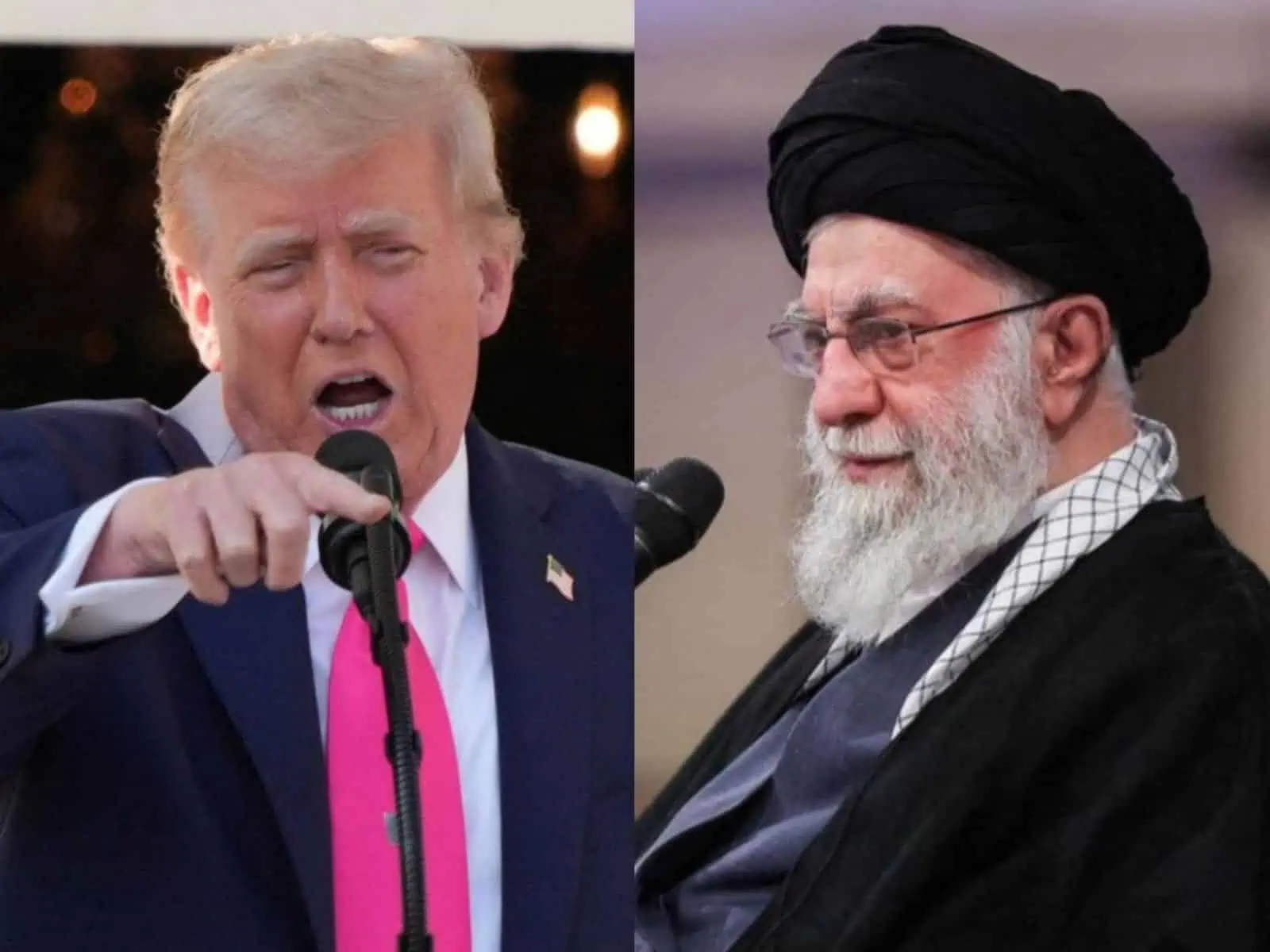
Despite this speculation, President Trump has strongly rejected the possibility of Mojtaba Khamenei assuming the country’s highest leadership position. During an interview with ABC News, Trump described the cleric as an unacceptable choice and dismissed him as a “lightweight” who lacks the authority and capability to lead Iran during a time of crisis.
Trump went even further by suggesting that Iran’s next leader would ultimately need approval from the United States in order to remain in power. According to him, Washington’s influence in the region is significant enough to determine whether the new leadership can survive politically.
“He’s going to have to get approval from us,” Trump said in the interview while referring to the future supreme leader of Iran. “If he doesn’t get approval from us, he’s not going to last long.”
The remarks immediately triggered strong reactions from Iranian officials, who rejected the idea that any foreign government could influence the country’s internal leadership decisions.
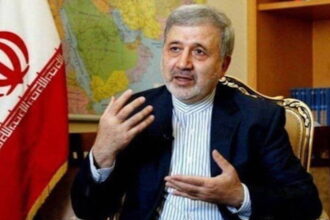
Iran’s Foreign Minister, Abbas Araghchi, firmly responded to Trump’s comments, stating that the selection of a new supreme leader is strictly an internal matter that falls under the authority of Iran’s constitutional institutions. Speaking during an interview on NBC’s Meet the Press, Araghchi emphasised that Tehran would not allow any external power to interfere in its domestic affairs.
He also criticised the United States for its role in the escalating regional conflict and called on President Trump to apologise to people across the Middle East for what he described as the destabilising consequences of the recent military actions.
“The leadership of our country will be decided by our own institutions and people,” Araghchi said. “No foreign government has any right to dictate who leads Iran.”
The ongoing conflict has also prompted warnings from Israel. Israeli military officials indicated that any successor to Khamenei could become a potential target if hostilities between the two countries continue to escalate. The statement underscored the growing intensity of the confrontation, which now involves sustained air strikes, missile launches, and drone attacks across several locations in the region.
Overnight military operations highlighted the expanding scope of the war. Israeli forces launched new strikes targeting strategic fuel storage facilities in and around the Iranian capital, Tehran. At the same time, another attack reportedly struck a hotel in central Beirut that Israeli intelligence believed was hosting suspected Iranian military commanders.
The strikes around Tehran were particularly significant because they targeted key energy infrastructure. According to a senior executive at Iran’s state oil company, Israeli warplanes hit five oil-related facilities in the vicinity of the capital. The attacks resulted in the deaths of at least four people and triggered massive fires that produced thick plumes of smoke visible across large parts of the city.
Authorities confirmed that the attacks temporarily disrupted fuel distribution in Tehran. The city’s governor reported that some supply operations had been halted while emergency teams worked to contain the fires and secure damaged facilities.
Residents of Tehran described dramatic scenes as the fires continued burning for hours. A dense haze spread across the city of roughly 10 million people, prompting health warnings from local authorities.
Officials cautioned that fumes released from the burning fuel tanks could pose serious health risks and advised residents to remain indoors as much as possible. Many citizens reported a strong smell of burning fuel lingering throughout several neighbourhoods.
One resident said the fires had been burning for more than 12 hours, filling the air with smoke and making it difficult to breathe. The hazardous conditions forced many people to stay inside their homes as emergency services attempted to bring the situation under control.
Meanwhile, Iran’s military leadership has signalled that the country is prepared for a prolonged confrontation. As the conflict entered its ninth day, Iran’s Revolutionary Guards announced that the country possesses sufficient supplies of missiles and drones to continue launching attacks across the region for as long as six months if necessary.
The statement appeared to be a direct message to Israel and its allies that Iran is capable of sustaining a long-term military response despite the loss of its supreme leader and ongoing air strikes.
The conflict has already produced retaliatory attacks. Several explosions were heard over Tel Aviv after Israeli defence systems detected a new wave of Iranian missiles heading toward the city. Emergency services later confirmed that at least six people were injured in central Israel during the strikes.
As tensions continue to mount, President Trump has not ruled out the possibility of deploying U.S. ground forces in Iran, although he suggested that such a step may not be necessary. The president insisted that the war is nearing a decisive outcome, despite ongoing missile launches and drone attacks from Iranian forces.
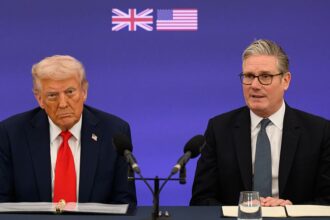
Diplomatic activity has also intensified behind the scenes. Trump held a phone call on Sunday with British Prime Minister Keir Starmer to discuss military coordination and broader security cooperation. Britain has already allowed the United States to use several of its regional military bases, describing the arrangement as part of collective self-defence efforts aimed at maintaining stability in the Middle East.
At the same time, Iranian military officials have hinted that the conflict could escalate further. A spokesman for the Iranian armed forces stated that the country has so far deployed only its first- and second-generation missile systems in its retaliatory strikes.
He warned, however, that Iran possesses more advanced long-range weapons that could be introduced into the conflict if the fighting continues in the coming days.
With the region already on edge, the upcoming announcement of Iran’s next supreme leader is expected to play a critical role in shaping the country’s political direction and determining how the conflict unfolds in the weeks ahead. Observers say the choice could influence not only Iran’s domestic stability but also the broader balance of power in the Middle East.