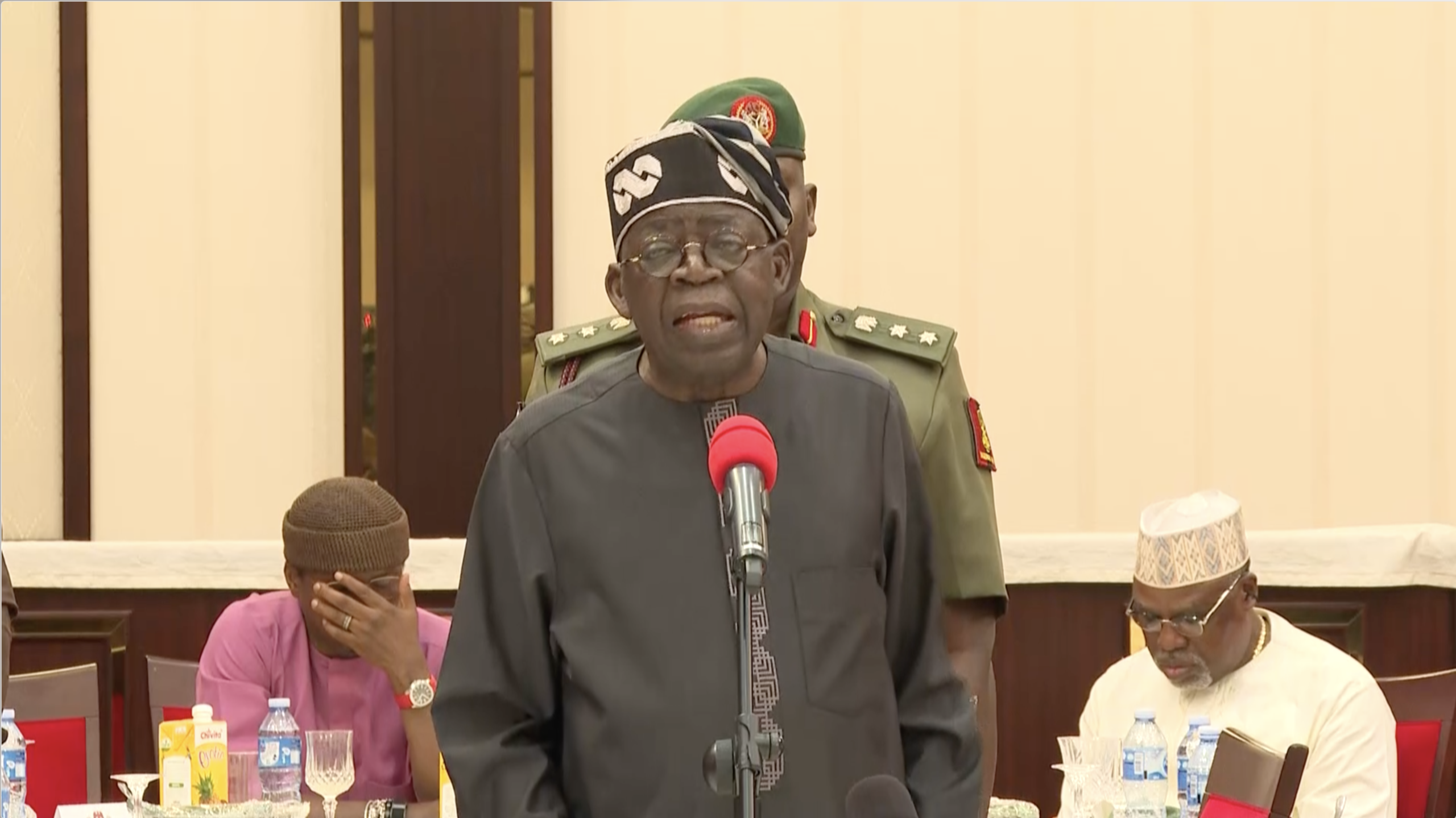
The Senior Special Assistant to the President on Community Engagement (North-West), Abdulillahi Yakassai, has revealed that Nigeria’s worsening insecurity is taking a personal toll on President Bola Ahmed Tinubu, saying the country’s leader is deeply troubled by the situation and is losing sleep over it.
Yakassai made the remarks during an appearance on The Morning Brief on Channels Television, where he spoke candidly about the scale of the security challenges facing the country and the government’s efforts to address them.
“Even the president is having sleepless nights,” Yakassai said. “Every week you see him having a security council meeting in the Presidential Villa to see how to address this insecurity.”
His comments paint a picture of a presidency under pressure, grappling with complex and evolving threats that continue to test Nigeria’s security architecture. Over the past decade, the country has battled insurgency in the North-East, banditry in the North-West, communal clashes in parts of the Middle Belt, and kidnapping-for-ransom across multiple regions.
Yakassai acknowledged that while there have been improvements in certain hotspots, the overall security landscape remains fluid and unpredictable. According to him, gains recorded in some areas are being offset by the emergence of new threats elsewhere.
“The security situation in some parts of the country has really been subdued,” he noted. “But there are some elements of new tactics coming up… very unfortunate.”
One of the major concerns, he explained, is the shift in strategy by criminal and insurgent groups. Rather than operating in predictable patterns, many have adopted guerrilla-style tactics — striking quickly, blending into communities, and moving across state lines with little warning.
“It’s very hard to tackle,” Yakassai said. “You wouldn’t know where they come from.”
This evolving approach has made intelligence gathering and rapid response more challenging for security agencies. Unlike conventional confrontations, guerrilla tactics rely on surprise and mobility, making it difficult to anticipate attacks or track perpetrators effectively.
Yakassai also suggested that insecurity may not be driven solely by criminal motives. He hinted that some actors could be deliberately fuelling instability for political reasons.
“There are some elements that are against this government that are instigating this kind of insecurity situation just to give the new government a bad name,” he alleged.
While he did not provide specific details or name individuals or groups, the statement reflects a broader narrative within sections of the government that political opponents may be exploiting or amplifying insecurity to undermine public confidence.
Despite the challenges, Yakassai pointed to areas where he believes progress has been made. He cited previously high-risk corridors such as the Abuja–Kaduna highway, once notorious for kidnappings and bandit attacks, as examples of improvement.
“Some places where we know there was massive insecurity… have really subsided,” he said.
Zamfara State, which has long struggled with banditry and rural attacks, was also mentioned as a location where security efforts have yielded positive results. However, Yakassai acknowledged that as pressure mounts in one region, criminal networks often relocate to less fortified areas.
According to him, Niger State and Kwara State have recently experienced increased activity from criminal elements who appear to be shifting operations.
Security analysts have long observed this pattern: when military offensives intensify in one zone, armed groups disperse and regroup elsewhere. This displacement effect creates the impression of progress in some regions while new flashpoints emerge in others.
Yakassai stressed that the administration remains committed to restoring lasting peace and stability across the country. He admitted that much work remains to be done but expressed optimism that sustained efforts would gradually reduce the threat level.
“We know a lot needs to be done,” he said. “And I believe with time… it will continue to come down till we get to eliminate the insecurity situation.”
For many Nigerians, insecurity is not an abstract policy issue but a daily reality affecting livelihoods, travel, farming, and education. Rural communities in particular have borne the brunt of attacks, with farmers displaced from their lands and families forced to flee their homes.
The presidency’s weekly security council meetings, as highlighted by Yakassai, signal ongoing high-level engagement with the crisis. These meetings typically bring together military chiefs, intelligence heads, and senior government officials to review developments and refine strategies.
However, public patience remains thin. Citizens continue to demand visible improvements, swift responses to attacks, and accountability for security lapses.
Yakassai’s remarks attempt to reassure Nigerians that the president is personally invested in resolving the crisis and is not detached from the hardships faced by citizens. Whether that reassurance translates into measurable progress on the ground will likely shape public perception of the administration in the months ahead.
For now, the message from the presidency is clear: the fight against insecurity is ongoing, the challenges are complex, and while progress has been made in some areas, the road to lasting peace remains a demanding one.