By Olasunkanmi Olajide & Raymond Osemene
The Executive Director of the Nigerian Stored Products Research Institute (NSPRI), Prof. Lateef Sanni, has stressed the critical role of creativity and innovation in addressing complex national challenges, particularly in agriculture, health, and technology.
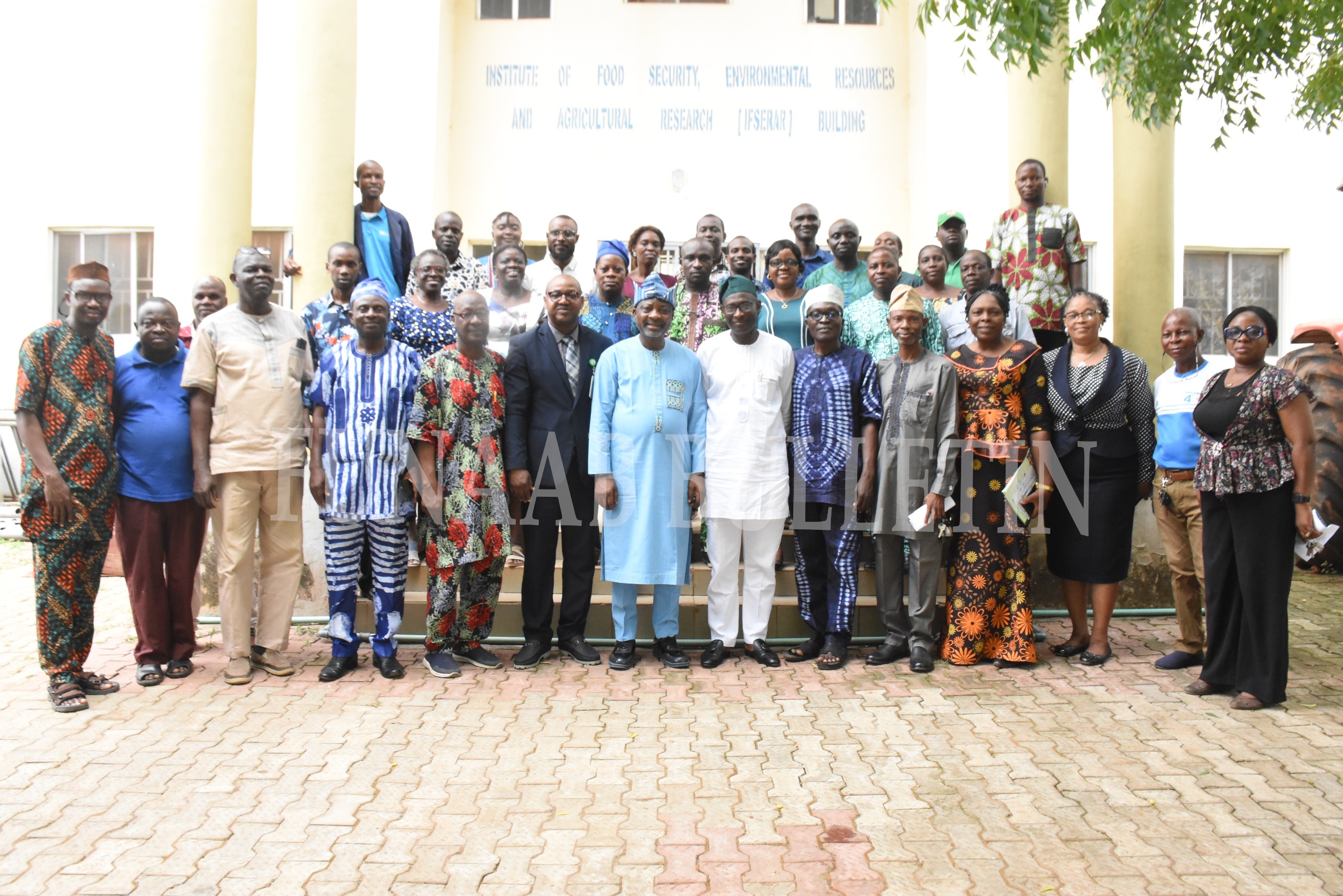
Prof. Sanni made this known while delivering the first keynote lecture titled “World Class Research Institute – Innovation & Collaboration Focus” at a Strategic Retreat organised by the Institute of Food Security, Environmental Resources and Agricultural Research (IFSERAR), Federal University of Agriculture, Abeokuta (FUNAAB), on April 2, 2026.
The Retreat, held at the IFSERAR Livestock Laboratory, brought together Academic staff, researchers, and key stakeholders. It featured two keynote lectures aimed at strengthening institutional research impact and enhancing global competitiveness. The programme was designed to advance research capacity, innovation, collaboration, and technology commercialisation within the Institute and the wider University Community.
He further highlighted the interconnectedness of sectors, noting that advancements in agriculture have direct implications for public health. Citing examples such as crop improvement, animal breeding, and biofortification initiatives like yellow cassava, he stressed their contributions to improved nutrition outcomes.
Drawing comparisons with leading global institutions such as the Chinese Academy of Sciences and the Massachusetts Institute of Technology (MIT), Prof. Sanni, a recipient of the prestigious Honorary Doctor of Science Degree from the Greenwich University, United Kingdom, identified three key pillars for building world-class research institutions: high-quality human capital, well-equipped innovation laboratories, and strong international collaborations. He also identified inadequate patenting and commercialisation of research outputs as a major gap in Nigeria’s academic landscape, urging scholars to prioritise translating research findings into marketable solutions.
While declaring the Retreat open, the Vice-Chancellor, Prof. Babatunde Kehinde, who was represented by the Deputy Vice-Chancellor (Development), Prof. Olawale Dairo, described the initiative as timely and strategic. He noted that the retreat aligns with the University’s core mandate, stressing the need for research to transcend theoretical contributions and address pressing national and global challenges. He restated Management’s commitment to supporting research initiatives and encouraged scholars to intensify efforts in attracting both local and international grants.
The second keynote lecture, titled “Understanding the National Agricultural Research System (NARS) of Nigeria,” and Mandate, Organisation, Resources and Programmes of IFSERAR, was delivered by a former Director of IFSERAR, Prof. Olusegun Osinowo. He emphasised the importance of multidisciplinary approaches and cross-sectoral partnerships in advancing research and development.
According to him, meaningful progress can only be achieved through collaboration among government, academia, and industry. He stressed the need for partnerships at international, national, institutional, and industrial levels to facilitate knowledge exchange, capacity building, and increased research impact.
Prof. Osinowo, who is also the Chief Executive Officer of Sophie Academy, expressed concern over the limited awareness of available academic resources among researchers and students, calling for improved access and sensitisation. Reflecting on past successes, he noted that industry partnerships previously supported young researchers through sponsorships, but such initiatives have declined over time.
He also restated the importance of accountability and feedback mechanisms in sustaining effective collaborations, noting that clearly defined objectives and transparent frameworks are essential for long-term success. He encouraged institutions to explore global opportunities, including international fellowships and innovation hubs, as avenues for strengthening research capacity, enhancing visibility, and attracting funding.
In his concluding remarks, Prof. Osinowo urged universities to prioritise sustainable partnership models, invest in innovation, and actively engage stakeholders across sectors, noting that such efforts were critical to achieving research excellence and global relevance.
Earlier in his Welcome Address, the Director of IFSERAR, Prof. Kazeem Bello, described the Retreat as a significant milestone in the Institute’s 16-year journey towards attaining world-class status. He explained that the initiative reflects a collective resolve to strengthen research capacity and reposition the Institute for greater global relevance.
Prof. Bello highlighted that sustained institutional support has led to improved infrastructure, enhanced staff morale, and renewed commitment to research and development. He added that these efforts have yielded tangible outcomes, including the successful hosting of the Institute’s maiden international conference on Climate Smart Agriculture, revitalisation of cocoa and oil palm projects, and notable improvements in crop production initiatives.