
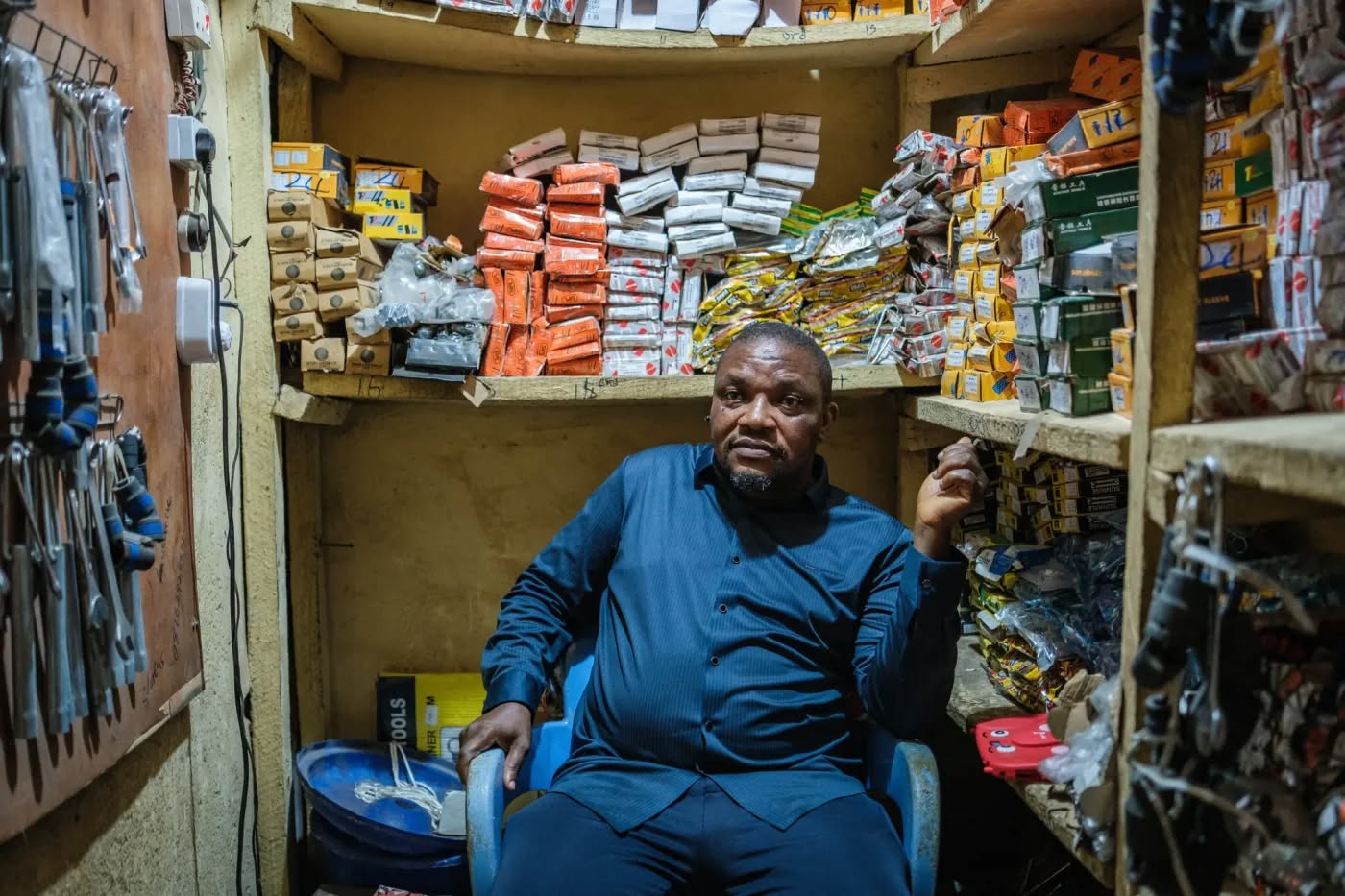
A new investigation by The New York Times has revealed troubling details about the intelligence used by the United States government to justify the Christmas Day 2025 airstrikes carried out in Sokoto State, Nigeria, raising serious concerns about the credibility, verification process, and sources of the information relied upon.
According to the investigation, a significant portion of the intelligence that informed the U.S. decision to conduct the airstrikes originated from an unlikely and controversial source: an Onitsha-based screwdriver trader and self-styled non-governmental organisation operator, Mr. Emeka Umeagbalasi. The report suggests that the intelligence provided by Umeagbalasi was neither independently verified nor subjected to rigorous scrutiny before being incorporated into operational assessments that ultimately led to the strikes.
The Christmas Day airstrikes, which were presented by U.S. officials as part of counterterrorism operations, had sparked immediate controversy in Nigeria, with reports of civilian casualties, destruction of property, and widespread outrage across affected communities. At the time, U.S. authorities maintained that the operation was based on credible intelligence pointing to the presence of armed groups posing security threats.
Related posts:
- Peter Obi Pays NECO Fees for 148 Anambra Inmates, Donates ₦15m to Nursing College in Onitsha
- FG Transfers Nnamdi Kanu to Sokoto Prison After Life Imprisonment Verdict, Sparks Outrage and Fresh Legal Battle
- PDP Criticises Federal Government Over Communication Gap on U.S. Airstrikes in Nigeria
- ADC Slams Tinubu Over U.S. Airstrikes, Demands Transparency and Casualty Report
However, the New York Times investigation challenges that narrative, indicating that the intelligence pipeline was deeply flawed and relied heavily on uncorroborated claims supplied by individuals without recognised standing in intelligence gathering or formal security analysis.
The report describes Umeagbalasi as a local trader in Onitsha who also runs an NGO that has frequently issued alarmist reports on security issues. Despite lacking formal intelligence credentials, access to classified information, or institutional backing from recognised international security bodies, his claims reportedly found their way into intelligence briefings reviewed by U.S. officials.
According to the investigation, Umeagbalasi’s submissions were treated as credible without sufficient cross-checking with Nigerian security agencies, independent analysts, or on-the-ground verification mechanisms. This, the report says, represents a breakdown in standard intelligence validation procedures, particularly given the gravity of military action based on such information.
The New York Times noted that several U.S. officials involved in reviewing the intelligence privately expressed doubts about its reliability but said institutional pressures and the urgency to demonstrate decisive counterterrorism action contributed to the intelligence being accepted largely at face value.
Analysts quoted in the report warned that reliance on unverified local informants, especially those with potential personal, financial, or political motivations, significantly increases the risk of flawed targeting, civilian harm, and strategic miscalculations.
In Sokoto, the aftermath of the Christmas Day strikes has continued to reverberate. Residents of affected communities reported loss of lives, injuries, and destruction of homes, while local leaders insisted that those targeted were not members of any terrorist group. The Nigerian government initially sought clarification from U.S. authorities, while civil society organisations demanded an independent investigation into the incident.
The New York Times investigation further revealed that Umeagbalasi had previously submitted reports to multiple international bodies and foreign missions, often alleging mass atrocities and imminent threats. While some of his claims drew attention, others were reportedly disputed by local actors and security experts familiar with the regions in question.
Despite these red flags, the investigation found no evidence that U.S. intelligence agencies conducted robust background checks on the source or systematically evaluated the consistency and accuracy of his claims against other intelligence streams.
Security experts interviewed by the newspaper described the episode as emblematic of a broader problem in foreign counterterrorism operations, where remote intelligence gathering, overreliance on open-source or activist reports, and limited cultural or local context can distort threat perceptions.
“This is how intelligence failures happen,” one former U.S. intelligence officer told the New York Times. “When decision-makers are far removed from the ground and desperate for information, the threshold for verification can dangerously slip.”
The investigation also raised questions about the role of U.S. Africa Command (AFRICOM) and its coordination with Nigerian authorities. While AFRICOM has previously stated that its operations are conducted in partnership with host nations, the report suggests that Nigerian agencies were not fully consulted on the specific intelligence that justified the Sokoto strikes.
In Nigeria, the revelations have reignited public debate about foreign military involvement in the country’s security challenges. Critics argue that outsourcing intelligence assessments to questionable sources undermines national sovereignty and exposes civilians to unnecessary risk.
Human rights groups have called for full disclosure of the intelligence used to justify the airstrikes, compensation for victims, and reforms to prevent similar incidents in the future. They argue that accountability is essential not only for justice but also for restoring trust between affected communities and security actors.
Meanwhile, legal experts note that the use of unverified intelligence could expose the U.S. government to international legal challenges, particularly if civilian harm is established and the intelligence basis for the strikes is proven to be fundamentally flawed.
The New York Times investigation concludes by warning that the Sokoto incident could have long-term consequences for U.S.–Nigeria relations, counterterrorism cooperation, and America’s credibility in Africa. It stresses that effective security partnerships must be grounded in credible intelligence, mutual trust, and respect for civilian lives.
As calls for investigations grow louder on both sides of the Atlantic, the revelations have cast a long shadow over the Christmas Day airstrikes, transforming what was presented as a counterterrorism success into a cautionary tale about the dangers of acting on unverified information.
For many Nigerians, the report has reinforced long-standing concerns that powerful foreign governments can make life-and-death decisions affecting local communities based on fragile and questionable intelligence. For the U.S., it serves as a stark reminder that intelligence failures carry profound human, political, and moral costs.



One Comment
Having elected a moslem as NY mayor for the first time, expect more junk journalism!
It’s only the gullible that will think twice about this fabrication.
The US government should be worried that this type of reports emanates from one of her cities.
This is very pretty!