The Lagos State Government has defended its recent demolition of structures in Makoko and other waterfront communities, insisting that the exercise was undertaken to safeguard lives, protect critical infrastructure, and advance long-term urban development goals in Nigeria’s commercial capital.
Government officials articulated this position during Ask Lagos, a weekly interactive discussion held on X (formerly Twitter) to engage residents on governance and policy issues. Participants at the session included the Commissioner for Information and Strategy, Mr Gbenga Omotoso, and the Special Adviser to the Governor on e-GIS and Urban Development, Mr Olajide Abiodun Babatunde, who both addressed concerns raised by citizens, activists, and civil society groups.
The demolitions, which have drawn sharp criticism locally and internationally, have been described by opponents as anti poor, heavy handed, and unnecessary. However, state officials maintained that the exercise was driven primarily by security, environmental, and safety considerations, and forms part of broader efforts to make Lagos a safer, more orderly, and sustainable megacity.
Related posts:
- Lagos government defends Trade Fair Demolition, insists exercise is technical, not tribal
- Katsina Government Defends Planned Release of 70 Suspected Bandits Amid Public Outcry Over Peace Deal
- NLC Leads Nationwide Protests Over Rising Insecurity, Demands Urgent Government Action
- 25 students kidnapped from Government Girls Comprehensive Secondary School in Kebbi: A tragedy rooted in neglect and government failure
Responding to claims that the government was targeting vulnerable populations, Omotoso rejected allegations of class bias, arguing that no responsible government could allow people to reside in locations that pose severe and foreseeable risks to life and property.
“No responsible government anywhere in the world can allow people to live directly under high tension power lines or block critical waterways,” Omotoso said. “These actions are not punitive. They are preventive. They are taken to protect lives, avert disasters, and secure the future of Lagos.”
He explained that many of the demolished structures were illegally erected beneath high tension electricity cables and along waterways that are vital for drainage, flood control, and navigation. According to him, such developments not only endanger residents but also increase the likelihood of catastrophic incidents, including electrocution, fires, and flooding.
Addressing allegations that affected residents were not given adequate notice, Omotoso said the government had engaged the communities for several years before resorting to demolition. He noted that existing planning and safety laws require buildings to be sited at least 250 metres away from high tension power lines, a regulation that was routinely ignored in the affected areas.
“The government has been engaging these communities for over five years,” he said. “The law is clear that buildings must be at least 250 metres away from power lines, yet many structures were built directly under them. No government can accept that. Imagine a power line snapping and falling into the lagoon. The disaster would be unimaginable.”
Omotoso disclosed that, at various points, some residents had appealed to the government to reduce the required setback from 100 metres to 50 metres, requests which he said underscored their awareness of the risks involved.
Speaking from an urban planning and technological perspective, Babatunde said the demolitions were part of a long term urban regeneration and resilience strategy designed to reposition Lagos as an investment friendly and climate resilient city. He stressed that the actions were guided by established master plans, environmental standards, and global best practices, rather than arbitrary decisions.
Babatunde cited previous relocation and resettlement efforts by the state, including the relocation of residents from Oko Baba to purpose built housing estates equipped with modern amenities.
“Hundreds of housing units have been provided by the state to ensure that people are not left without options,” he said. “Urban development must be planned. It must be safe. It must be sustainable. That is the guiding principle behind these actions.”
He urged residents, developers, and community leaders to comply with planning regulations to avoid future conflicts with the authorities. According to him, urban growth without adherence to rules would only perpetuate cycles of displacement and risk.
“Urban development is about building for the future,” Babatunde said. “If we ignore regulations today, we create bigger problems tomorrow.”
During the discussion, participants raised concerns about alleged casualties, the use of force by security personnel, lack of compensation, unclear relocation timelines, and the psychological and economic toll of the demolitions on affected families.
Responding to these concerns, Omotoso said the government understood the pain and distress caused by the exercise but cautioned against the spread of unverified information.
“We understand the pain this causes, but speculation and misinformation only deepen divisions,” he said. “We should focus on facts and work together towards collaborative solutions.”
Babatunde added that digital tools such as the state’s e-GIS platform allow residents and developers to verify zoning, land use, and setback requirements before building. He said wider use of such tools could help prevent disputes and enforcement actions in the future.
Despite the government’s explanations, resistance to the demolitions remains strong. Several non governmental organisations and community groups have described the exercise as “class cleansing” and accused the state of using safety regulations as a pretext to dispossess low income residents and free up waterfront land for private real estate development.
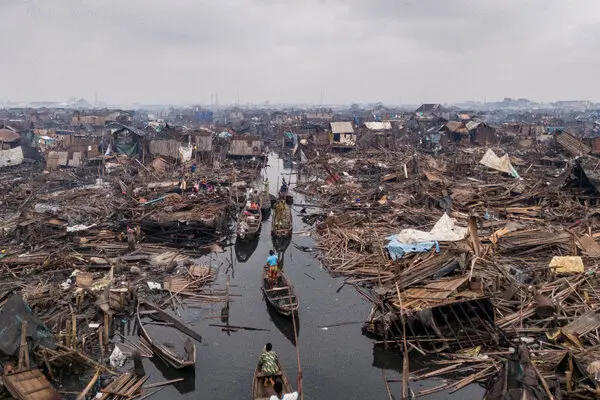
Makoko, a historic waterfront settlement believed to be home to over 100,000 people, has been among the worst affected. Since December 2025, more than 3,000 homes are reported to have been demolished, displacing over 10,000 residents and disrupting livelihoods dependent on fishing, trading, and informal services.
Residents allege that the operations involved armed security personnel, the use of tear gas, and bulldozers, resulting in deaths, injuries, and the destruction of schools, clinics, and places of worship. They also claim that they were not provided with adequate alternatives or compensation.
The Lagos State Government has continued to insist that inaction would have been more dangerous, warning that allowing illegal settlements to persist in high risk zones could lead to disasters far more devastating than displacement.
As the debate continues, the demolitions have reignited broader conversations about urbanisation, housing rights, and inequality in Lagos, a city grappling with rapid population growth, limited land, and the challenge of balancing development with social justice.