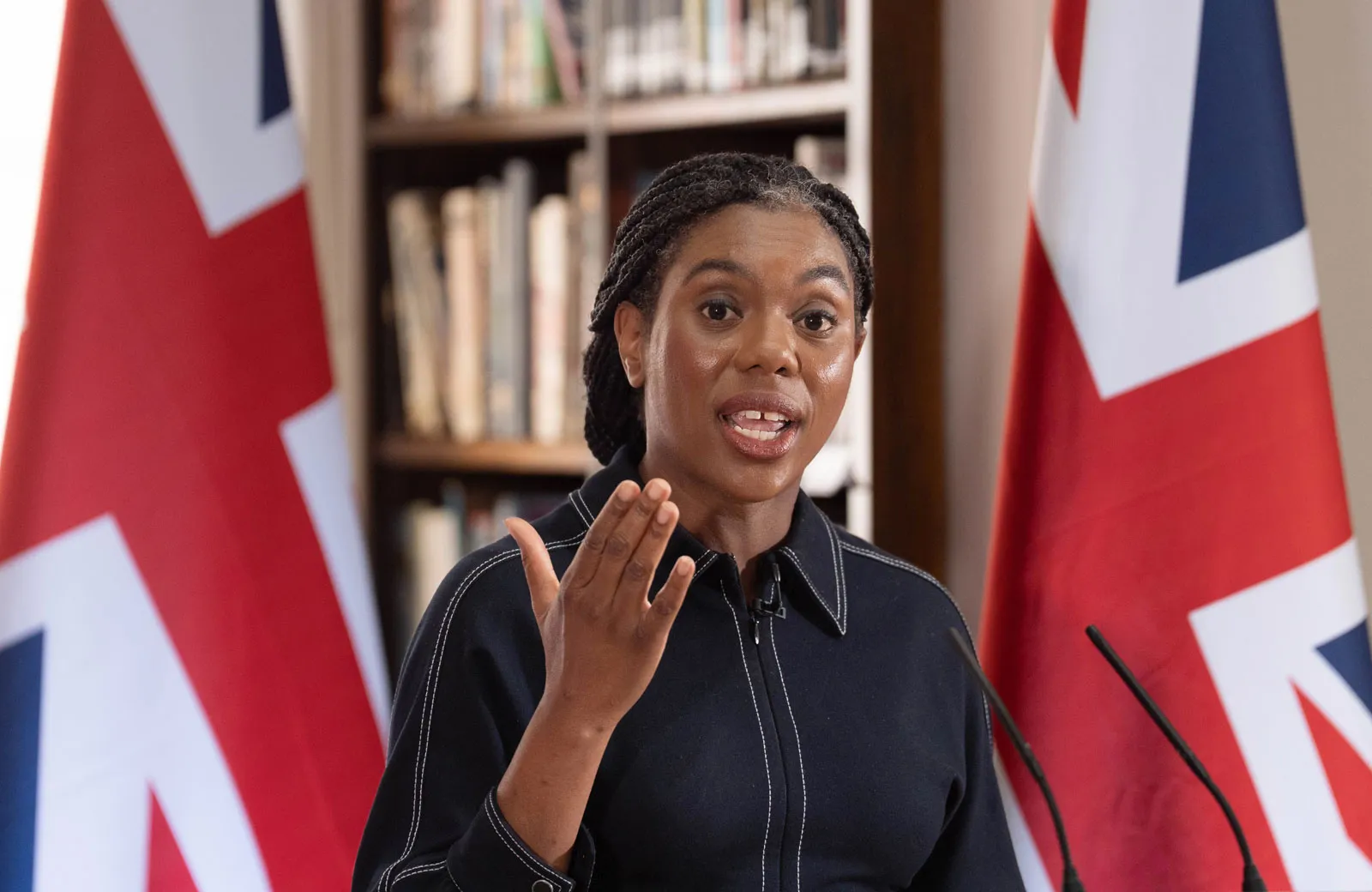
British politician of Nigerian descent, Kemi Badenoch, has recorded a notable surge in personal popularity, emerging as the most well-regarded political party leader in the United Kingdom, according to a recent opinion poll reported by the Daily Mail.
The survey, conducted by More in Common, provides fresh insight into the evolving perceptions of political leadership across the UK. It shows that Badenoch, who currently leads the Conservative Party, has significantly improved her public standing in recent months, even as her party continues to navigate broader electoral challenges.
Born in London and raised partly in Nigeria, Badenoch’s background has often been highlighted as part of her unique political identity. Her rise within British politics has been closely watched, particularly as she represents a blend of multicultural experience and strong ideological positioning within the Conservative movement.
According to the findings of the poll, Badenoch now holds a net approval rating of minus nine. While still in negative territory, the figure represents a substantial improvement from the minus 32 rating she recorded prior to her party’s conference in October of the previous year. This upward trajectory suggests that her recent political engagements and increased visibility are resonating with a wider segment of the public.
In comparison with other prominent political figures, Badenoch currently ranks ahead of Nigel Farage, who posted a net approval rating of minus 16, and Ed Davey, who came in slightly higher at minus 11. These figures place her at the top of the list among major party leaders, reflecting a relative advantage in public perception despite the generally low approval ratings across the political spectrum.
At the other end of the scale, Keir Starmer, leader of the Labour Party, recorded the lowest rating among those surveyed, with a net approval score of minus 42. He trailed behind other political figures, including Zack Polanski, who registered a rating of minus 16. The data highlights a broader trend of voter dissatisfaction with political leadership in general, even as individual figures like Badenoch begin to distinguish themselves.
Analysts suggest that Badenoch’s improving ratings may be tied to her increasing prominence in national discourse. Over recent months, she has taken more visible positions on key issues, contributing to her growing recognition among voters. Her communication style—often described as direct, assertive, and unambiguous—appears to have played a role in shaping public perception.
Speaking on the findings, Luke Tryl noted a marked shift in how Badenoch is perceived by the public. He explained that, not long ago, many voters were unfamiliar with her, with some focus groups unable to identify her at all. However, that situation has changed significantly.
“Whereas last summer we’d run whole focus groups where no one would know who Kemi was, she is often now brought up spontaneously,” Tryl said in remarks reported by The Sunday Times. He added that even individuals who are unlikely to support the Conservative Party at the ballot box have expressed a degree of admiration for her.
“Some of those who would never vote Tory say they admire her conviction and straightforwardness,” he noted, suggesting that her appeal may extend beyond traditional party lines.
Despite these gains in personal popularity, the poll underscores a key challenge for Badenoch: translating individual approval into broader electoral support for her party. The Conservative Party has not yet experienced a corresponding increase in overall voter backing, indicating a disconnect between perceptions of leadership and attitudes toward the party itself.
This gap is not uncommon in political landscapes where party brands carry historical baggage or where broader policy concerns overshadow leadership qualities. For Badenoch, the task ahead will likely involve consolidating her personal appeal while addressing the structural and strategic issues facing the Conservative Party.
Her rise also comes at a time when political engagement in the UK is undergoing subtle shifts. Voters appear increasingly open to evaluating leaders on individual merit rather than strictly along party lines. This dynamic creates both opportunities and challenges for politicians seeking to redefine their parties’ fortunes.
For Badenoch, her Nigerian heritage and international upbringing continue to shape her narrative as a global-minded leader. While this background has at times been a point of discussion in public discourse, it also contributes to her distinct profile in a political environment that is gradually becoming more diverse.
As the UK approaches future electoral cycles, the significance of leadership perception is likely to grow. Polls such as this provide a snapshot of current sentiment, but they also hint at the potential trajectories of political figures who are gaining momentum.
In Badenoch’s case, her improved standing suggests that she is successfully carving out a space for herself as a prominent and influential voice within British politics. However, whether this momentum can be sustained—and more importantly, whether it can translate into tangible political gains for her party—remains an open question.
For now, the data presents a clear narrative: while public trust in political leaders remains fragile, Badenoch is emerging as a figure who is gradually earning attention, recognition, and a measure of respect in an otherwise challenging political climate.