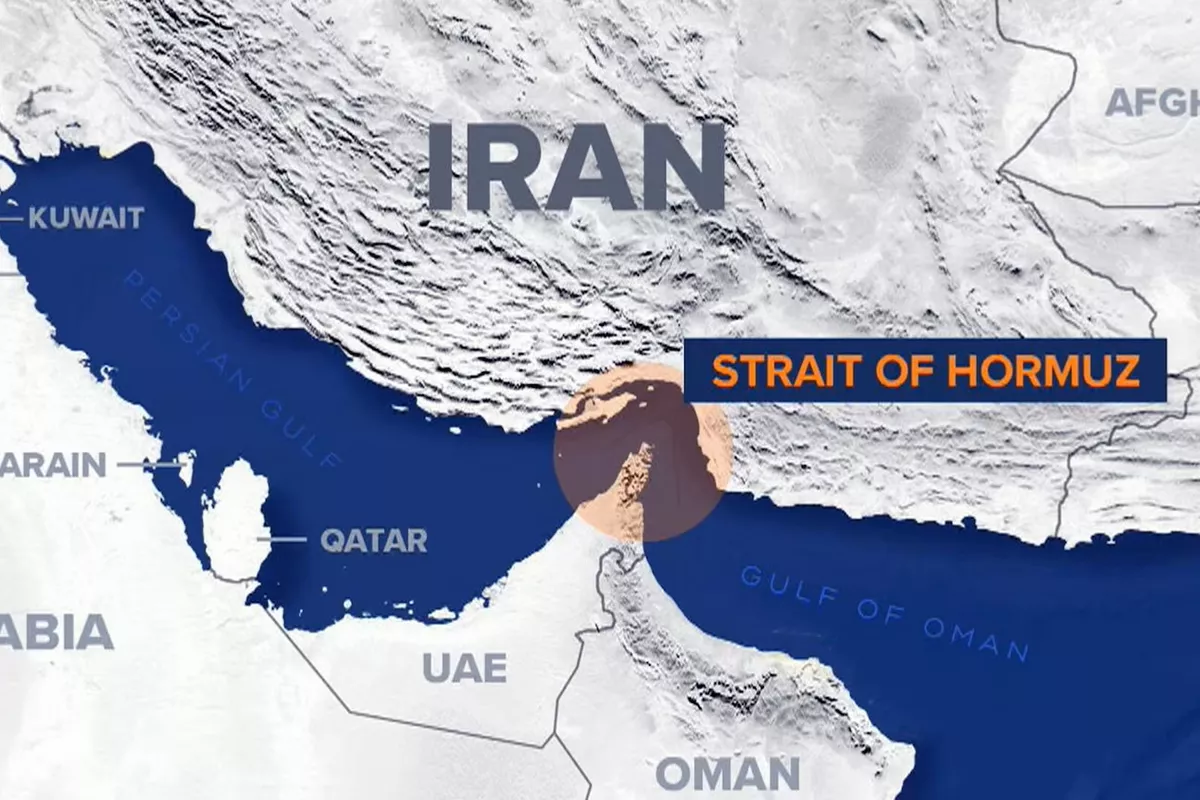
Tensions remain high in the Persian Gulf as Iran issued a stark warning on Wednesday, April 8, threatening to destroy any foreign vessel attempting to pass through the strategically vital Strait of Hormuz without prior authorization from its military authorities.
The warning, reportedly delivered by an Iranian official linked to the country’s naval command, underscores the fragile and uncertain nature of the recently announced ceasefire between Iran and the United States. The audio message, which was shared with the Wall Street Journal by a crew member aboard a commercial vessel, conveyed an unequivocal directive: ships must obtain clearance from the Iranian Sepah Navy before attempting to transit the waterway.
According to the recording, any vessel that fails to comply with this requirement risks being targeted and destroyed. The statement represents one of the most direct and explicit threats issued by Iran in the wake of the ceasefire agreement and has raised fresh concerns about maritime safety and the stability of global energy supply routes.
The development comes just hours after U.S. President Donald Trump announced that Iran had agreed to the “complete, immediate, and safe opening” of the Strait of Hormuz as part of a temporary ceasefire arrangement. The agreement, which is expected to last for two weeks, was presented as a significant step toward de-escalating hostilities between the two countries following weeks of military confrontation.
The Strait of Hormuz holds immense geopolitical and economic significance, serving as a critical chokepoint through which more than 20 percent of the world’s seaborne oil passes each year. Any disruption to traffic in this narrow passage has immediate and far-reaching consequences for global energy markets, often triggering sharp increases in fuel prices and heightened economic uncertainty.
In recent weeks, the waterway has been effectively closed due to escalating conflict between Iran and a coalition led by the United States and Israel. Tehran had responded to joint military strikes by deploying missiles and drones in and around the strait, targeting shipping lanes and creating conditions that made navigation extremely hazardous.
These actions were widely interpreted as a strategic effort by Iran to exert pressure on the global economy and signal its capacity to disrupt international oil supply chains. The resulting instability caused a surge in global fuel prices, prompting urgent calls for de-escalation from governments and industry stakeholders worldwide.
The ceasefire agreement announced by Trump was intended, in part, to address these concerns by ensuring the reopening of the strait and restoring normal maritime operations. However, Iran’s latest warning suggests that any reopening may be conditional and tightly controlled, rather than fully unrestricted as initially indicated.
A senior Iranian official involved in the ongoing negotiations provided further insight into Tehran’s position, indicating that the strait could be reopened in a limited capacity within days. According to the official, any such reopening would remain under strict Iranian supervision, with all vessels required to coordinate their movements with the country’s military authorities.
The official emphasized that the reopening would depend on progress in broader diplomatic discussions aimed at establishing a framework for long-term peace. If such an understanding is reached, Iran may allow controlled passage through the strait, but with conditions that ensure it retains oversight and authority over maritime traffic.
This approach reflects Iran’s broader strategy of maintaining leverage in negotiations while signaling a willingness to engage in dialogue. At the same time, the official cautioned that the ceasefire remains fragile and could collapse if tensions escalate again.
While expressing a preference for a lasting peace, the official made it clear that Iran is prepared to resume hostilities if it perceives any threat or provocation from the United States. This dual messaging—combining openness to negotiation with readiness for conflict—highlights the delicate balance currently shaping the situation.
From the U.S. perspective, officials have sought to reassure the international community that the Strait of Hormuz remains open and that commercial activity will continue uninterrupted. Speaking at a press briefing on Wednesday, U.S. Secretary of War Pete Hegseth stated that the terms of the ceasefire clearly guarantee access to the waterway.
According to Hegseth, both U.S. and Iranian forces are maintaining a presence in the region, monitoring compliance with the agreement. He stressed that despite the heightened military activity, there is a shared understanding that commercial shipping must proceed.
“What has been agreed is that the strait is open,” he said, adding that ongoing surveillance by both sides is intended to ensure that the terms of the ceasefire are upheld. He expressed confidence that trade and energy flows would continue, even as military forces remain on alert.
Hegseth also indicated that U.S. forces would maintain a sustained presence in the Middle East for the foreseeable future, serving as a deterrent against potential violations of the agreement. This continued deployment reflects Washington’s cautious approach, as it seeks to balance diplomatic engagement with strategic vigilance.
Despite these assurances, the situation on the ground—or rather, at sea—remains uncertain. Iran’s insistence on prior authorization for vessel passage introduces a layer of complexity that could disrupt shipping schedules and increase operational risks for maritime operators.
Shipping companies and energy traders are now faced with the challenge of navigating an environment where official declarations of openness are accompanied by explicit warnings of military enforcement. The requirement for coordination with Iranian forces may lead to delays, additional costs, and heightened insurance premiums for vessels transiting the region.
Moreover, the lack of clarity regarding the exact procedures for obtaining permission raises concerns about potential misunderstandings or miscalculations that could escalate into conflict. In such a volatile setting, even minor incidents could have disproportionate consequences.
The broader implications of the standoff extend beyond the immediate region. As one of the world’s most critical energy corridors, the Strait of Hormuz plays a central role in global economic stability. Any prolonged disruption could have ripple effects across international markets, affecting everything from fuel prices to industrial production.
In this context, the success or failure of the current ceasefire will have significant implications not only for regional security but also for the global economy. While the agreement offers a temporary reprieve, its durability remains uncertain, particularly in light of conflicting signals from the parties involved.
As diplomatic efforts continue, the international community will be closely watching developments in the coming days. The potential reopening of the strait, even in a limited form, could provide some relief to markets and reduce immediate tensions. However, lasting stability will depend on the ability of all parties to move beyond short-term arrangements and commit to a comprehensive and sustainable resolution.
For now, the Strait of Hormuz remains both a symbol of geopolitical tension and a focal point of global concern—its waters reflecting not only the movement of oil tankers but also the fragile state of international peace and security.