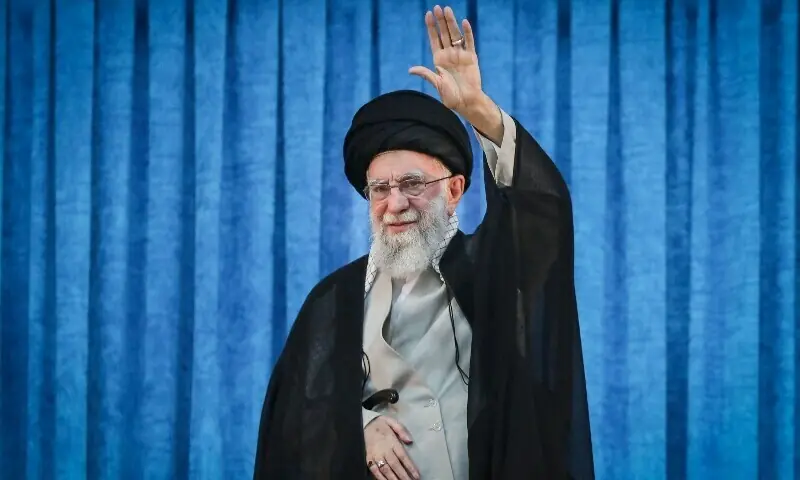
Iranian state media confirmed on Sunday that Supreme Leader Ali Khamenei has been killed following coordinated airstrikes carried out by the United States and Israel, marking one of the most consequential developments in the Islamic Republic’s history since the 1979 revolution.
The announcement, delivered during a solemn broadcast on Iranian state television, stated that the 86-year-old leader was killed at his office during the joint Israeli-American operation that began in the early hours of Saturday. The government immediately declared a 40-day national mourning period and announced a week-long public holiday to honor the cleric who had ruled Iran for nearly four decades.
The confirmation followed hours of confusion and contradictory reporting. Earlier in the day, Iran’s semi-official Tasnim and Mehr news agencies had rejected foreign claims that Khamenei had been killed, insisting that he remained firmly in control and directing national defense efforts. However, that narrative shifted dramatically when state television formally acknowledged his death, with a visibly emotional news anchor confirming the loss to viewers nationwide.
U.S. President Donald Trump had previously announced Khamenei’s death on his Truth Social platform, asserting that American intelligence systems, operating in close coordination with Israel, had successfully tracked and targeted the Iranian leader.
“He was unable to avoid our Intelligence and Highly Sophisticated Tracking Systems,” Trump wrote. “Working closely with Israel, there was not a thing he, or the other leaders that have been killed along with him, could do.”
Trump characterized the killing as a decisive turning point for Iran and suggested it could pave the way for political transformation inside the country. He described the moment as a historic opportunity for Iranians to reclaim control of their nation and urged members of the Islamic Revolutionary Guard Corps (IRGC) and law enforcement agencies to align peacefully with what he termed “Iranian Patriots.”
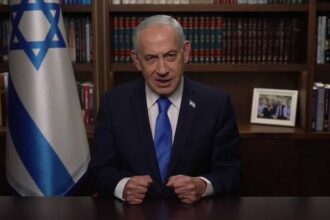
Israeli Prime Minister Benjamin Netanyahu had earlier hinted that Khamenei might not have survived the strikes, telling reporters there were “growing signs” of his death. Reuters also cited an unnamed senior Israeli official claiming that Khamenei’s body had been located, though Iranian authorities withheld confirmation until the televised announcement.
Khamenei had served as Iran’s Supreme Leader since 1989, when he succeeded Ruhollah Khomeini, the architect of the Islamic Revolution that overthrew the Western-backed Shah. Over nearly 37 years in power, Khamenei consolidated sweeping authority across Iran’s political and military institutions.
As Supreme Leader, he exercised ultimate control over the executive, legislative, and judicial branches of government. He served as commander-in-chief of the armed forces, oversaw the powerful IRGC, and maintained decisive influence over national security, foreign policy, and nuclear strategy. His office functioned as the apex of both political and spiritual authority within the Islamic Republic.
His death now initiates a constitutional process that has long existed in theory but has never been activated under active wartime conditions. According to Iran’s constitution, the Assembly of Experts—an elected clerical body—holds responsibility for appointing a new Supreme Leader. However, the unprecedented circumstances surrounding Khamenei’s assassination during ongoing hostilities introduce substantial uncertainty into the succession process.
In Tehran and other major cities, scenes of shock and grief unfolded as citizens absorbed the news. State media broadcast images of black banners, public prayers, and mourning ceremonies. Security forces increased their presence across key government sites and strategic infrastructure, reflecting concerns about potential instability.
Authorities had reportedly developed contingency plans in the event of Khamenei’s assassination amid conflict with the United States or Israel. However, the real-time execution of such plans during an active military confrontation presents profound logistical and political challenges.
Barbara Slavin, a distinguished fellow at the Stimson Center in Washington, suggested that Iran is unlikely to be entirely unprepared. Speaking to Al Jazeera, she indicated that a provisional leadership council may already have been operating behind the scenes to ensure continuity of governance.
“There will probably be a council set up to run the country,” she noted, adding that such a body could already be functioning in practice.
The assassination of a sitting Supreme Leader represents a dramatic escalation in the conflict between Iran and its adversaries. It risks provoking intensified retaliation from Iranian forces and allied groups across the Middle East. The IRGC, which wields substantial military and economic power, is expected to play a pivotal role in determining Iran’s immediate response.
The development also raises broader geopolitical questions. Iran’s nuclear program, regional proxy networks, and strategic alliances now face an uncertain trajectory. While Washington and Tel Aviv have framed the strike as a necessary defensive action, critics warn that it could trigger a prolonged and destabilizing conflict.
Markets reacted swiftly to the news, with oil prices spiking amid fears of disruption to energy supplies in the Persian Gulf. International airlines suspended flights over parts of the region, and several governments issued travel advisories for their citizens.
For many Iranians, Khamenei’s death marks the end of a defining chapter in the nation’s post-revolutionary history. He presided over periods of war, sanctions, economic strain, domestic unrest, and shifting international alignments. Supporters viewed him as a guardian of revolutionary ideals; critics saw him as the embodiment of authoritarian control.
Whether his death leads to reform, hardline consolidation, or deeper instability remains uncertain. Much will depend on how the succession process unfolds, how the security establishment responds, and whether internal factions compete or coalesce in the coming days.
What is clear is that Iran now stands at a historic crossroads. The loss of its Supreme Leader during active military conflict has thrust the country into uncharted territory, with consequences that will reverberate across the Middle East and beyond.