Minneapolis has been thrust into renewed national and international attention following a fatal shooting involving agents of the United States Immigration and Customs Enforcement (ICE), an incident that has triggered widespread protests, heightened community tension, and fresh scrutiny of federal immigration enforcement practices in American cities.
The shooting occurred during an early morning operation in a residential neighborhood of south Minneapolis, when ICE agents were reportedly attempting to apprehend a man believed to be in the country without proper documentation. According to preliminary accounts released by federal authorities, the situation escalated rapidly, culminating in the use of lethal force by an ICE officer. The individual, whose identity had not been officially released as of press time pending notification of family members, was pronounced dead at the scene.
ICE officials said the agents involved were executing a lawful enforcement action when they encountered what they described as a “threatening situation.” In a brief statement, the agency noted that the officer discharged a firearm “in response to an imminent risk to agent safety.” The statement added that the incident is now under investigation by the Department of Homeland Security’s Office of Inspector General, alongside local and federal law enforcement partners.
Related posts:
- Trump Sparks New Controversy After Calling Female Reporter “Stupid” During Heated Exchange on Washington D.C. Shooting
- FBI arrests Damilola Bamigboye for kidnapping immigration officer to avoid deportation
- Police to commence enforcement of motor vehicle tinted glass law from October 2nd
- Akwa Ibom Lawmakers Reject Motion to Ban Dog Meat Consumption Amid Public Health Concerns and Cultural Debate
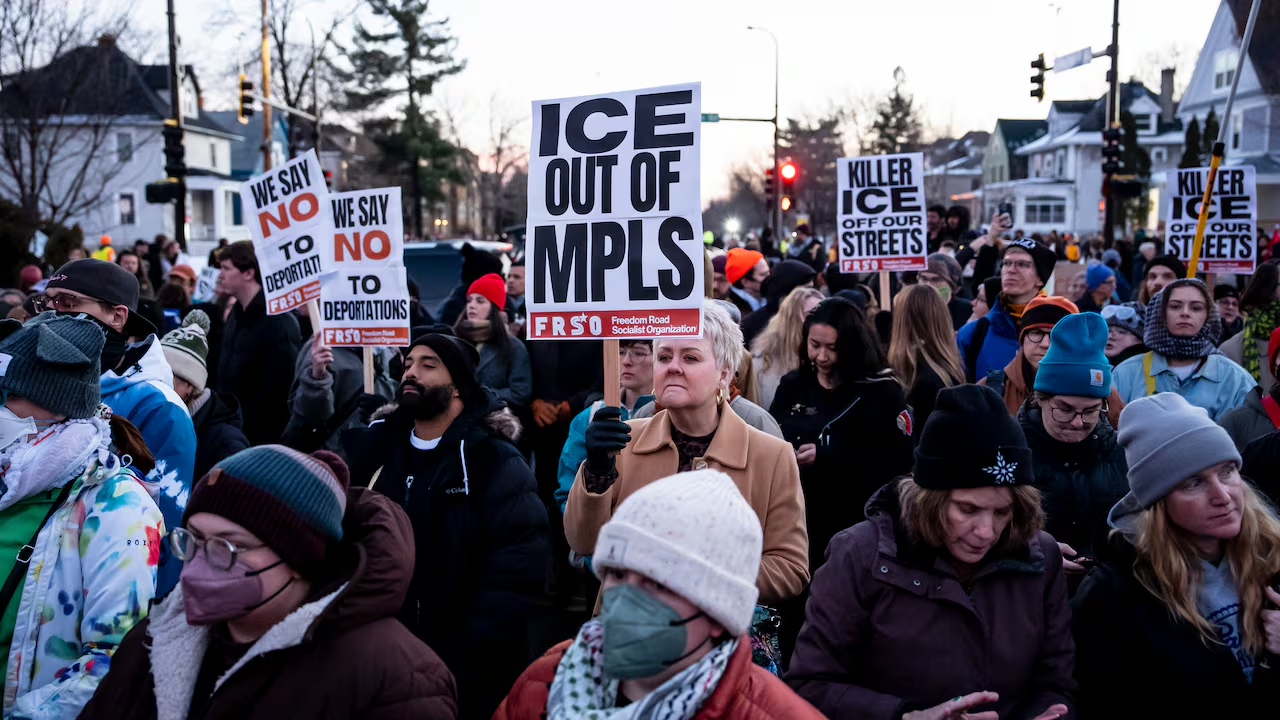
However, the official narrative has done little to calm public outrage. Within hours of the shooting, residents gathered near the site, demanding transparency, accountability, and an independent investigation. By evening, the protests had swelled, with hundreds of demonstrators marching through downtown Minneapolis, carrying placards reading “No Justice, No Peace,” “Abolish ICE,” and “Immigrants Are Not Criminals.”
Community leaders and immigrant rights organizations condemned the killing, describing it as part of a broader pattern of aggressive and militarized immigration enforcement that disproportionately impacts vulnerable communities. Many questioned why ICE agents were operating in residential neighborhoods and why lethal force was deemed necessary.
“This is not an isolated incident. It is the result of years of policies that treat immigrants as threats rather than human beings,” said Maria Hernandez, an organizer with the Minnesota Immigrant Rights Action Coalition. “People are being hunted in their homes and neighborhoods. That is not public safety.”
The Minneapolis Police Department confirmed that it was not involved in the operation, reiterating the city’s long-standing policy limiting cooperation with federal immigration enforcement. City officials were quick to distance local law enforcement from the incident, stressing that ICE operates independently and does not require municipal approval to carry out federal duties.
Mayor Jacob Frey expressed condolences to the family of the deceased and called for calm, while also acknowledging the deep anger within the community. “Any loss of life is tragic, and when it occurs at the hands of government agents, it demands full accountability,” the mayor said in a statement. “The people of Minneapolis deserve clear answers about what happened and why.”
Minnesota Governor Tim Walz also weighed in, urging federal authorities to conduct a transparent and thorough investigation. While stopping short of directly criticizing ICE, the governor emphasized the need to rebuild trust between law enforcement agencies and communities. “When fear replaces trust, everyone is less safe,” he said.
The protests in Minneapolis have largely been peaceful, though police deployed crowd-control measures in some areas after nightfall. Officers in riot gear were seen forming lines near federal buildings as demonstrators chanted slogans and blocked traffic on major roads. There were no immediate reports of serious injuries or mass arrests, but authorities said the situation remains fluid.
The fatal shooting has reignited national debate over the role and conduct of ICE, an agency that has been at the center of controversy for years. Critics argue that ICE’s tactics are overly aggressive and lack sufficient oversight, particularly during operations in so-called “sanctuary cities” like Minneapolis. Supporters of the agency, however, maintain that ICE agents face dangerous conditions and must be allowed to defend themselves while enforcing federal law.
Civil liberties groups have demanded the release of body camera footage, if available, as well as the names of the agents involved. They are also calling for Congress to hold hearings on the incident and broader ICE enforcement practices.
“This case underscores the urgent need for reform,” said David Cole, a constitutional law scholar and former civil liberties advocate. “When federal agents operate with lethal force in civilian neighborhoods, there must be the highest level of scrutiny and accountability.”
The shooting also carries political implications, particularly in an election cycle where immigration remains a polarizing issue. Progressive lawmakers have seized on the incident to renew calls for defunding or dismantling ICE, while conservative voices argue that the protests undermine the rule of law and embolden criminal activity.
Former Minneapolis City Council member and longtime activist Jeremiah Ellison described the shooting as “a breaking point” for many residents. “People are tired of seeing lives lost with little explanation and no consequences,” he said during a rally. “This is about dignity, safety, and the right to live without fear.”
For many immigrants in Minneapolis, the incident has intensified existing anxieties. Advocacy groups report that some families are now afraid to leave their homes, send their children to school, or seek medical care, fearing encounters with federal agents.
Faith leaders have joined the calls for restraint and dialogue, organizing vigils and prayer gatherings across the city. At one such vigil held near the site of the shooting, candles were lit as speakers urged compassion and justice. “We must not allow violence to define us,” said Reverend Thomas Nguyen. “But neither can we remain silent in the face of injustice.”
As investigations proceed, all eyes remain on federal authorities to provide clarity on the circumstances that led to the fatal shooting. For Minneapolis, a city still shaped by the legacy of past police killings and racial justice protests, the incident has reopened old wounds and raised new questions about the balance between law enforcement, immigration policy, and human rights.
Whether the protests will subside or grow into a broader national movement remains to be seen. What is clear, however, is that the fatal shooting involving ICE agents has struck a nerve, not only in Minneapolis but across the country, forcing a renewed reckoning with the human cost of immigration enforcement in the United States.