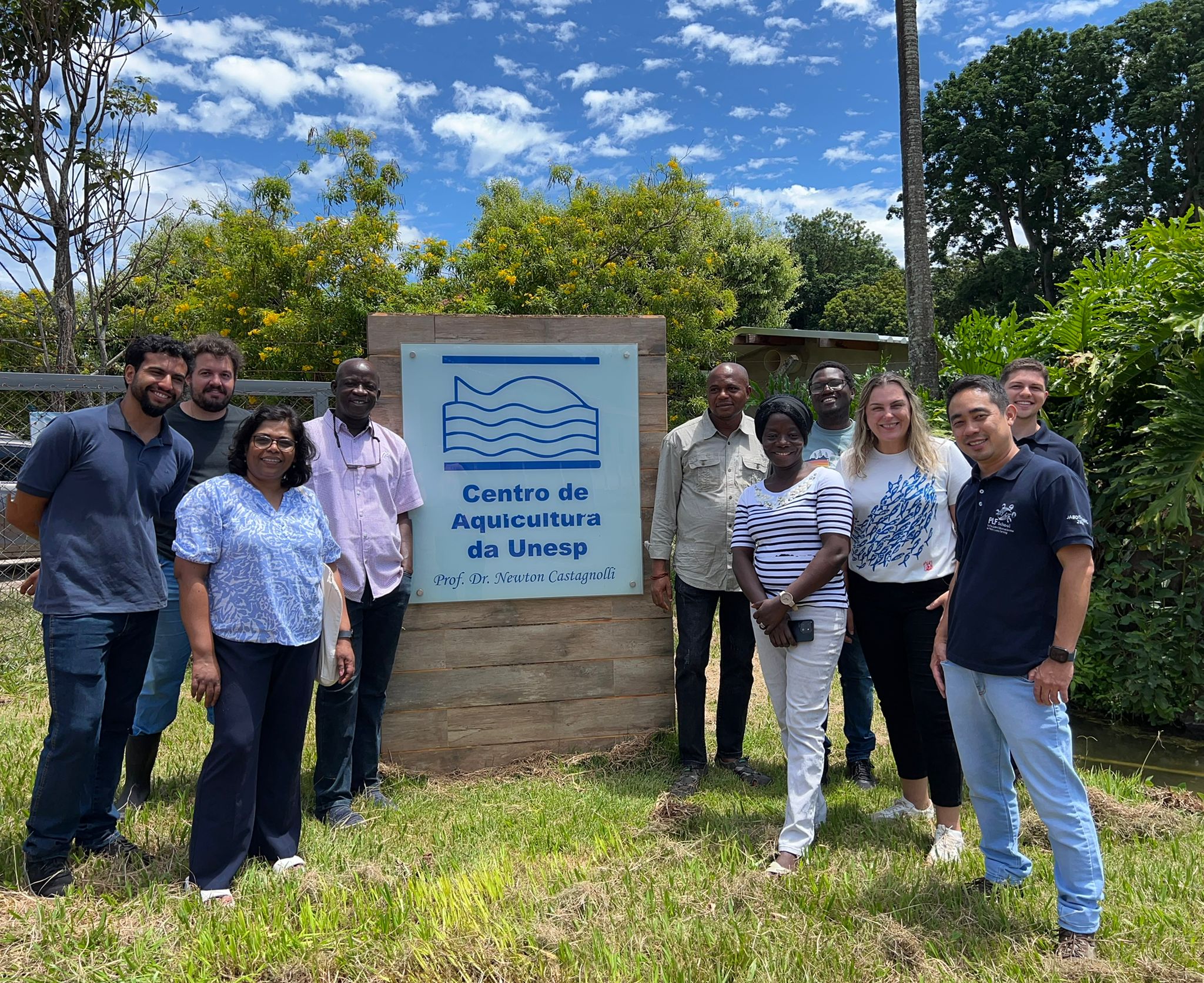
Researchers from the Federal University of Agriculture, Abeokuta (FUNAAB) are advancing international collaboration in climate-smart aquaculture through a high-level research and capacity-building visit to the Centre of Aquaculture at São Paulo State University (UNESP), Brazil.
The academic exchange, involving Dr. Mathew Wheto, Dr. Ikililu Abdulraheem and Dr. Oluwaseun Ojelade, is being conducted under the UK–Brazil–Africa Climate-Smart Agriculture Innovation Programme. The initiative seeks to deepen scientific cooperation and promote structured knowledge exchange among leading institutions across Nigeria, Brazil and the United Kingdom in response to mounting climate pressures on agriculture and food systems.
During their visit, the FUNAAB scholars undertook an extensive tour of UNESP’s aquaculture facilities, widely regarded as among the most advanced in Latin America. The delegation engaged directly with research teams across specialised units, including fish reproduction laboratories, aquatic animal health and welfare centres, nutrition and feed development laboratories, and limnology systems dedicated to water quality management and ecosystem monitoring.
The interactions provided the Nigerian researchers with hands-on exposure to integrated aquaculture production systems designed to optimise sustainability, enhance animal welfare and improve productivity under changing climatic conditions. Emphasis was placed on adaptive breeding strategies, disease surveillance frameworks, feed efficiency innovations and environmentally responsive water management practices
Climate variability continues to pose significant challenges to aquaculture systems globally, particularly in tropical regions where temperature fluctuations, erratic rainfall and water quality deterioration can directly affect fish growth, survival rates and overall farm output. For Nigeria, where aquaculture plays a vital role in food security and rural livelihoods, these pressures are increasingly pronounced.
The FUNAAB delegation’s engagement with UNESP researchers focused on practical solutions that align with climate-smart agriculture principles. These include selective breeding for resilience traits, early detection and management of emerging fish diseases, sustainable feed formulation using locally available ingredients, and integrated water resource management to mitigate environmental stress.
The exposure to UNESP’s research methodologies is expected to inform the development of context-specific adaptive strategies for Nigeria’s aquaculture sector. By integrating scientific innovation with local production realities, FUNAAB aims to strengthen the resilience and long-term sustainability of fish farming systems across the country.
The Brazil visit forms part of a broader collaborative project coordinated through Harper Adams University in the United Kingdom. The project, titled “Building Collaborative Research Partnerships in Fish Breeding, Health and Welfare Management to Enhance Sustainability, Productivity and Resilience of Aquaculture Production in Nigeria,” is structured to foster cross-continental research linkages and institutional capacity building.
Through this partnership, participating institutions are pooling expertise in genetics, veterinary science, nutrition, aquatic ecology and production management to address systemic bottlenecks in aquaculture value chains. The overarching objective is to strengthen scientific foundations for sustainable intensification of fish production while safeguarding environmental integrity.
For FUNAAB, the collaboration represents a strategic opportunity to align its aquaculture research agenda with global best practices. It also reinforces the university’s commitment to applied science that directly supports Nigeria’s agricultural transformation and food security goals.
Beyond laboratory engagement, the visit facilitated technical dialogues on postgraduate training, joint supervision of research students and the establishment of long-term institutional exchange frameworks. Such academic mobility and mentorship arrangements are seen as critical to building a new generation of researchers equipped to tackle climate-related challenges in aquatic food systems.
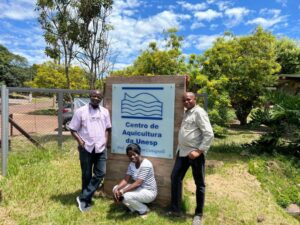
The FUNAAB scholars also explored opportunities for joint grant applications, collaborative publications and shared data platforms to enhance research visibility and impact. By embedding Nigerian researchers within international networks, the programme aims to accelerate technology transfer and innovation uptake within Africa’s aquaculture sector.
Importantly, lessons drawn from Brazil’s experience in scaling aquaculture within diverse ecological zones are considered highly relevant to Nigeria’s varied agro-ecological landscapes. Brazil’s integrated production models, which combine scientific rigour with commercial viability, offer insights into balancing productivity growth with environmental stewardship.
Aquaculture is widely recognised as one of the fastest-growing food production sectors globally, contributing significantly to protein supply and nutritional security. However, climate change threatens to disrupt aquatic ecosystems and production cycles, necessitating robust scientific responses.
By deepening partnerships with institutions such as UNESP and Harper Adams University, FUNAAB is positioning itself at the forefront of climate-smart aquaculture research in Africa. The collaboration underscores the interconnected nature of food systems and the need for transnational cooperation in addressing shared environmental challenges.
The visit also reflects FUNAAB’s expanding international profile and its strategic focus on global engagement. As climate change intensifies, the importance of cross-border scientific alliances is expected to grow, particularly in sectors directly linked to food security and rural development.
For the Nigerian delegation, the Brazil mission represents more than a study tour; it marks a deliberate step toward strengthening research capacity, enhancing institutional partnerships and translating global knowledge into locally relevant solutions.
With aquaculture playing an increasingly central role in Africa’s food systems, such collaborative efforts are poised to contribute significantly to building resilient, sustainable and climate-responsive production models capable of meeting the nutritional demands of a rapidly growing population.