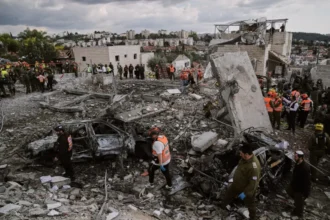
The number of people killed in coordinated strikes by the United States and Israel across Iran has risen to at least 555, according to new figures released by the Iranian Red Crescent, as emergency teams race to respond to one of the deadliest escalations in the country’s recent history.
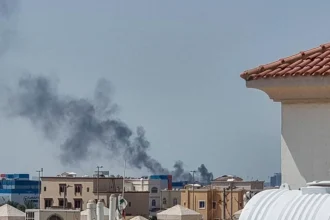
In a statement cited by The Telegraph, the humanitarian body disclosed that bombardments have affected a broad swath of the country, with attacks reported in 131 cities nationwide. Rescue and medical teams remain deployed across multiple provinces, conducting continuous relief operations amid widespread destruction.
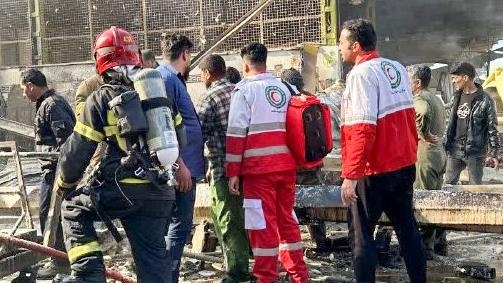
“Following enemy attacks in recent days, so far 131 cities have been involved in the incident,” the Red Crescent said. “Five hundred and fifty-five compatriots were martyred, and rescue, relief, transfer, and medical services operations are being carried out continuously.”
The organisation further revealed that more than 100,000 rescue and relief workers have been placed on full alert to support emergency response efforts. Personnel are engaged in evacuating survivors, clearing debris, transporting the wounded to hospitals, and distributing humanitarian supplies to affected communities.
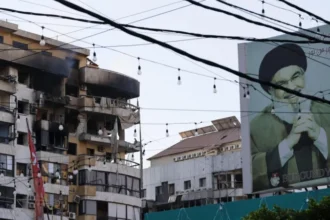
The rising casualty toll highlights the geographic scope and intensity of the strikes, which have impacted urban centres and other strategic locations across the country. While detailed assessments of infrastructure damage are still ongoing, authorities suggest that both public facilities and surrounding civilian areas have been affected.
The humanitarian crisis is unfolding against a backdrop of deep political upheaval in Tehran following the killing of Iran’s Supreme Leader, Ayatollah Ali Khamenei, in joint U.S.-Israeli attacks earlier in the conflict. His death marked a dramatic turning point, triggering a rapid transition of power within the Islamic Republic’s leadership structure.
In response, a temporary leadership council was constituted to steer the country during the transition period. The council convened its second meeting late Sunday, where President Masoud Pezeshkian reaffirmed the government’s commitment to sustaining the ideological and political direction set by the late leader.
In a recorded video message released after the meeting, Pezeshkian declared that the interim body had formally commenced its duties and would remain resolute in continuing what he described as the path of the “late imam and the dear martyred leader.”
“The temporary leadership council started its work today and by God’s grace and power will continue the path of the late imam and the dear martyred leader and the path of all truth-seekers in the world,” he stated.
The president also issued a stern warning to Washington and Tel Aviv, asserting that the assassination of the Islamic Republic’s supreme authority would not weaken the nation’s resolve.
“America and the Israeli regime should know that martyring the supreme leader of the Islamic Revolution will bring them nothing but humiliation,” he said, in direct reference to the governments of the United States and Israel.
Pezeshkian called on citizens to demonstrate unity during what he described as a period of national mourning and resistance. He urged Iranians to show solidarity in public spaces, including mosques and streets, to counter what he termed external aggression.
“Our dear nation is mourning this great martyr today, and all of us, with our presence on the scene and in the field, in mosques and streets, must thwart the enemies’ sinister plans with empathy and hand in hand,” he said.
He further emphasised that Iran’s armed forces remained prepared for continued confrontation, stating that the military stood ready to respond decisively to any additional attacks.
As rescue teams continue to work around the clock in the affected regions, concerns are mounting about the long-term humanitarian impact of the strikes. With more than 555 confirmed fatalities and potentially hundreds more injured, pressure is growing on emergency services and healthcare facilities already stretched by the scale of the crisis.
The situation remains volatile, with fears of further escalation that could compound civilian suffering and destabilise the broader region. For now, Iranian authorities are focused on managing the immediate humanitarian fallout while projecting political continuity and military readiness in the face of mounting international tensions.