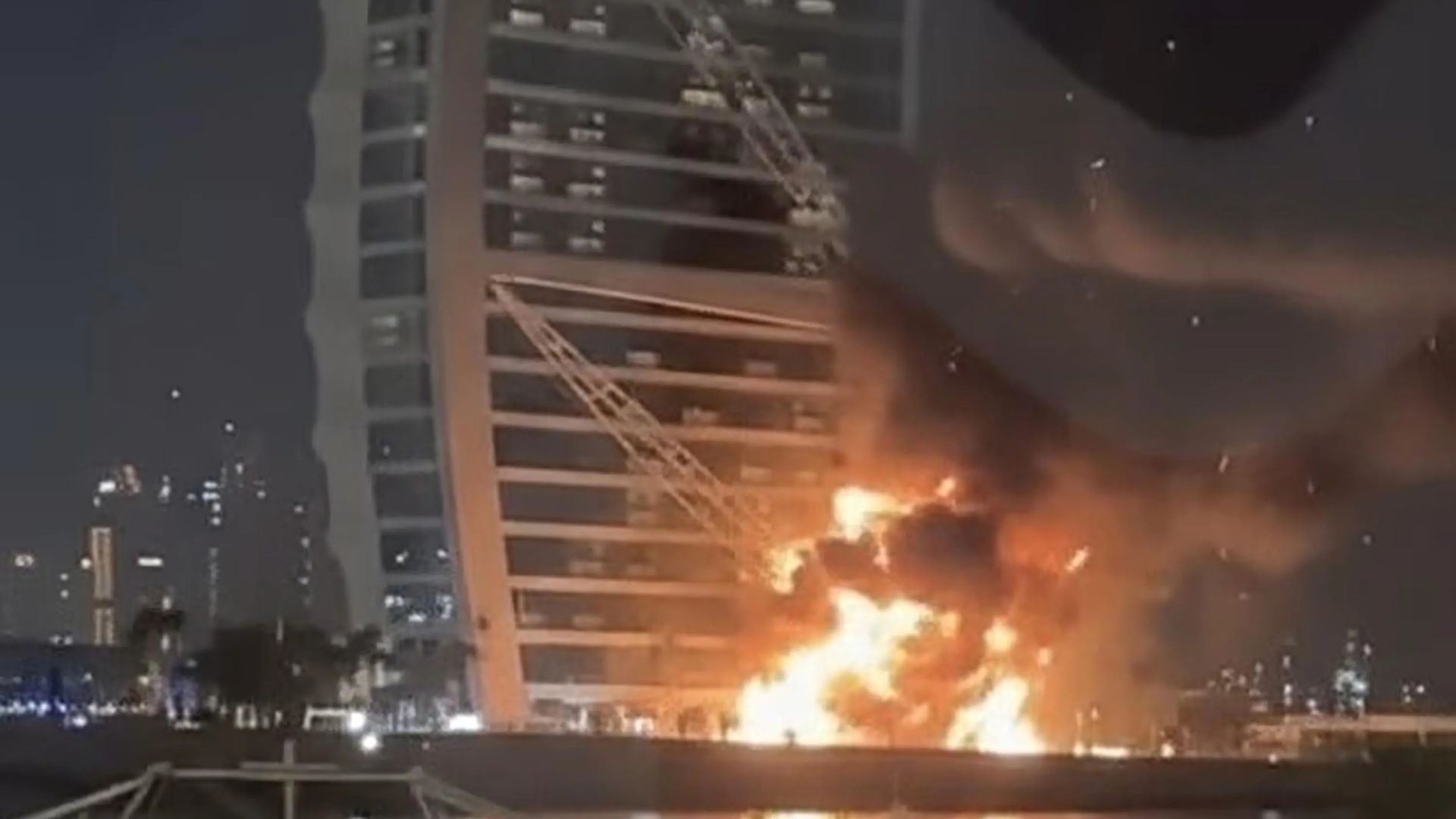
Dubai’s most recognisable landmark, the sail-shaped Burj Al Arab, has been struck in what officials suspect was a suicide drone attack, injuring multiple people and intensifying fears of a broader regional conflagration.
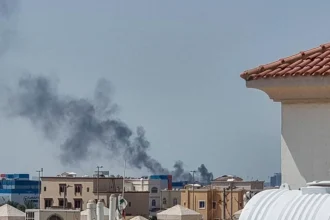
Thick black smoke was seen rising from the luxury hotel on Saturday evening, with dramatic footage circulating online showing flames at the base of the five-star property as emergency crews converged on the scene. Firefighters battled the blaze amid a heavy deployment of police and civil defence units. Authorities later confirmed that the fire had been contained and brought under control.
The incident marks a significant escalation in hostilities spilling into civilian and symbolic targets within the United Arab Emirates, as Iran expands retaliatory operations following joint US-Israeli military strikes earlier in the day.
The strike on the Burj Al Arab occurred only hours after another high-profile property, Fairmont The Palm, was engulfed in flames in the Palm Jumeirah district. Four people were injured in that incident after what appeared to be an Iranian-made Shahed drone crashed into the building. Some reports, however, suggested the damage may have resulted from falling missile debris intercepted by air defence systems.
A Dubai government spokesperson confirmed that an incident had occurred in the Palm Jumeirah area, resulting in four injuries. All affected individuals were transported to hospital for treatment, and emergency teams successfully extinguished the blaze.
Witnesses described hearing a loud explosion before smoke began spreading across the skyline. Video shared widely online appeared to show an aerial object descending rapidly toward the Burj Al Arab moments before impact, though authorities have not yet formally identified the weapon system involved.
The UAE government stated that it had intercepted a wave of Iranian drones and missiles targeting the country. The barrage followed Tehran’s declaration that it would respond forcefully to coordinated operations by the United States and Israel aimed at degrading Iranian military infrastructure.
Explosions were also reported at or near US military facilities in Bahrain, Kuwait, and Qatar. Smoke was observed rising near the headquarters of the US Navy’s Fifth Fleet in Bahrain. In Abu Dhabi, one fatality was reported after Emirati forces intercepted incoming missiles, with debris believed to have caused the death.
Regional air defence systems have been operating at heightened readiness, intercepting projectiles over major urban centres. However, falling fragments from intercepted missiles have created secondary hazards in densely populated areas.
The UAE is one of the world’s premier tourism and transit destinations, and the attacks have left thousands of visitors shaken. British tourist Will Bailey described awakening to what he called scenes reminiscent of “World War Three.” In a video posted to social media, he said missiles had reportedly landed in Abu Dhabi, approximately an hour’s drive from Dubai.
Airspace closures across parts of the Gulf have further compounded disruption. Tourists were seen running for cover in Dubai as missile interceptions lit up the night sky. Hotels across the emirate instructed guests to remain indoors while emergency protocols were activated.
The current surge in hostilities follows military operations by the United States and Israel targeting Iranian sites earlier in the day. Explosions were reported in multiple Iranian cities, including Tehran, amid what Washington described as major combat operations.
In Israel, sirens sounded across major population centres as Iranian missiles were intercepted overhead. The Israel Defense Forces confirmed it had detected and engaged a barrage of missiles launched from Iran.
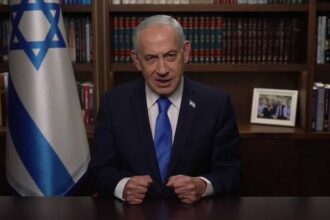
Israeli Prime Minister Benjamin Netanyahu characterised Iran as an existential threat and stated that Israel, alongside the United States, had initiated operations to neutralise that danger. He publicly thanked US President Donald Trump for what he termed historic leadership.
President Trump, in remarks posted online, condemned Iran’s leadership and vowed to dismantle its missile capabilities. He urged Iranian authorities to stand down or face severe consequences, describing the strikes as a necessary mission.
Iran’s paramilitary Islamic Revolutionary Guard Corps confirmed launching what it called a “first wave” of drones and missiles. In a statement, the group identified US bases and associated interests across the region as legitimate targets, framing the retaliation as a response to aggression.
Hardline Iranian parliamentarian Alaeddin Boroujerdi warned that Tehran would observe no “red lines” in its countermeasures. He declared that Iran would deploy all available capacities and described the response as intended to be “regret-inducing.”
Such rhetoric signals the potential for sustained escalation, particularly as civilian-adjacent infrastructure — including luxury hotels and transport hubs — becomes increasingly vulnerable.
The Burj Al Arab is not merely a hotel; it is an architectural icon synonymous with Dubai’s global identity. A strike on such a landmark carries symbolic weight far beyond its physical damage. It underscores the extent to which regional conflict is penetrating commercial and tourism centres traditionally insulated from direct military confrontation.
Security analysts suggest that targeting high-profile civilian landmarks serves dual purposes: demonstrating reach and projecting psychological impact. Even if material damage remains limited, the reputational and economic consequences could be significant.
The UAE has invested heavily in positioning itself as a secure hub for commerce, finance, and leisure. Attacks on its flagship properties risk undermining that perception, even if defence systems intercept the majority of incoming threats.
Authorities in the UAE have urged residents and visitors to remain indoors and to rely exclusively on official communications. Emergency services remain on high alert, and contingency planning is ongoing.
With missile exchanges continuing and diplomatic channels strained, the regional security environment remains volatile. The targeting of iconic civilian landmarks such as the Burj Al Arab signals that the conflict’s boundaries are widening, raising concerns about further strikes on high-visibility infrastructure.
For now, the fires have been extinguished, but the broader confrontation shows no immediate signs of abating. As military operations expand and retaliatory cycles intensify, the Gulf region faces a period of profound uncertainty — one in which even its most celebrated symbols are no longer beyond reach.