American humanitarian and Christian activist, Alex Barbir, founder of the international aid organisation Building Zion, has accused Nigerian government officials of allowing more than ₦4 billion raised for victims of the June 2025 Yelewata massacre in Benue State to disappear, leaving survivors stranded in dire conditions months after the deadly attack.
Barbir made the allegations while speaking on the humanitarian response to the massacre, which he described as one of the deadliest single-night attacks on Christian communities in recent years. According to him, the funds were donated by individuals and faith-based organisations across the world specifically to support families who lost loved ones, homes and livelihoods during the assault.
The June 2025 attack on Yelewata, a farming community in Guma Local Government Area of Benue State, reportedly claimed the lives of over 100 people in one night, with some accounts placing the death toll at more than 200. Most of the victims were women, children and elderly residents who were unable to flee as armed assailants stormed the community. The attackers have widely been described by local leaders and survivors as suspected Fulani terrorist groups.
In the aftermath of the massacre, graphic images and eyewitness accounts sparked global outrage, prompting international fundraising efforts aimed at providing emergency relief and long-term rehabilitation for survivors. Barbir said these efforts generated billions of naira in donations, intended for housing, medical care, food, sanitation and trauma support.
However, according to the Building Zion founder, the bulk of those funds never reached the intended beneficiaries.
“More than ₦4 billion was raised for the people of Yelewata,” Barbir alleged. “But when you go to the displacement camps, you still find families without toilets, without clean water, without adequate food, and without medical care. The money was collected, but the people did not see it.”
Barbir accused Nigerian authorities of failing to ensure transparency and accountability in the handling of humanitarian funds, a problem he said has plagued relief efforts in conflict-affected parts of the country for years. He said his organisation deliberately refused to channel donations through federal, state or local government structures, citing previous experiences where relief funds allegedly “could not be properly accounted for.”
“We made a clear decision not to hand over donations to government officials,” he said. “Too many times in Nigeria, money meant for victims disappears. We could not, in good conscience, allow that to happen again.”
According to Barbir, despite the scale of international donations announced in the wake of the massacre, many survivors remained confined to makeshift displacement camps months later, living in overcrowded and unsanitary conditions. He said some families lacked access to basic healthcare, while others had no shelter beyond temporary tents and abandoned buildings.
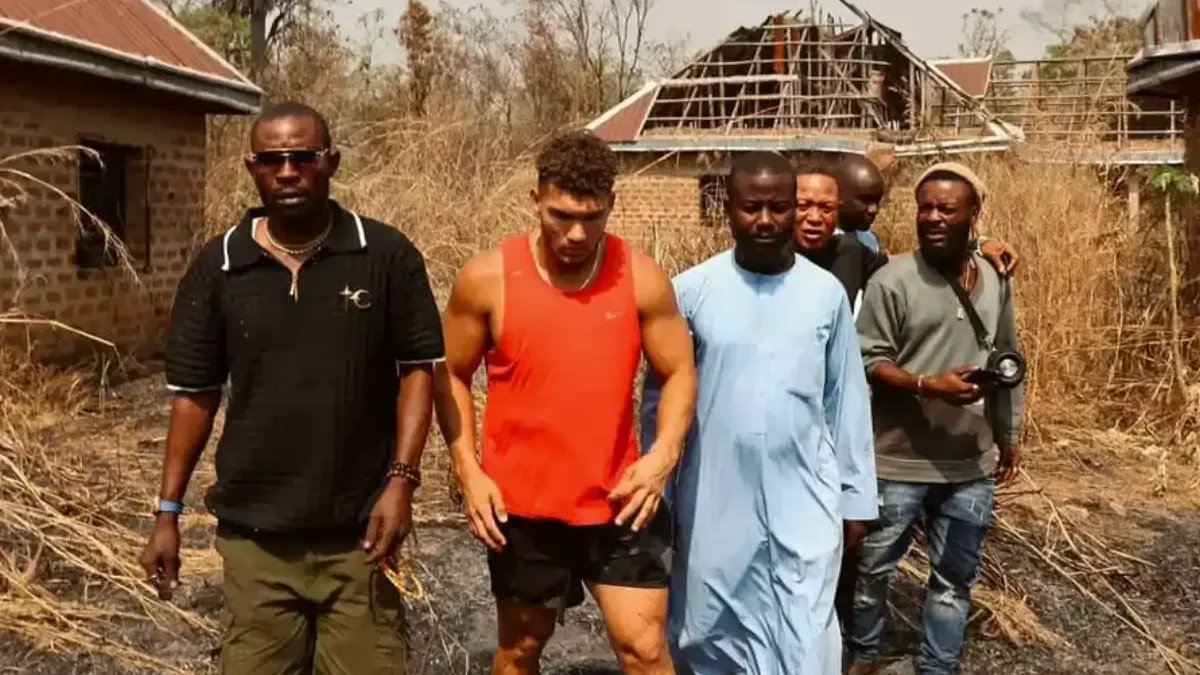
In response, Building Zion opted for a direct intervention model, overseeing projects from start to finish to ensure accountability. Barbir said the organisation personally funded and supervised the reconstruction of critical infrastructure in Yelewata, including 35 homes for displaced families, boreholes to provide clean drinking water, clinics to address urgent health needs, and churches destroyed during the attack.
“We didn’t just send money,” he said. “We stayed on the ground. We supervised every project. That is the only way to ensure that help actually reaches the people who need it.”
Barbir stressed that his intervention was not intended to embarrass the Nigerian government but to highlight what he described as systemic failures in protecting vulnerable communities and supporting victims of mass violence. He argued that the continued suffering of Yelewata survivors reflects a broader crisis of governance and security in Nigeria’s Middle Belt, where farming communities have faced repeated attacks over the past decade.
The American humanitarian also issued a warning, stating that if Yelewata comes under attack again after the reconstruction efforts, the Nigerian government would be held responsible. He claimed that the situation in the area is being closely monitored by the United States government and international observers.
“We have rebuilt, but that is not enough,” Barbir said. “If these people are attacked again, it means the government has failed in its most basic duty: to protect lives. And the world is watching.”
His comments have reignited debate over Nigeria’s handling of internally displaced persons (IDPs) and the persistent allegations of corruption surrounding humanitarian interventions. Civil society groups have long complained that funds earmarked for IDPs are often mismanaged or diverted, while camps remain underfunded and poorly equipped.
While the Nigerian government has repeatedly denied allegations of large-scale diversion of relief funds, critics argue that the conditions in many displacement camps tell a different story. In Benue State alone, thousands of people remain displaced by repeated attacks, relying heavily on charity and international aid for survival.
As of the time of filing this report, neither the Federal Government nor the Benue State Government has issued an official response to Barbir’s allegations. Efforts to reach relevant authorities for comment were unsuccessful.
For survivors of the Yelewata massacre, the controversy underscores a painful reality: while billions may be raised in their name, many continue to struggle for basic dignity and security. For observers, Barbir’s claims raise renewed questions about transparency, accountability and the role of international actors in filling gaps left by the Nigerian state.
Whether the allegations will prompt investigations or reforms remains uncertain. What is clear, however, is that the tragedy of Yelewata did not end with the massacre itself, but continues in the unresolved suffering of those who lived through it.